 English
December 17, 2025
Industrial Decarbonization: From Silos to Systems - Rethinking Thermal Management
Treating cooling and heating as siloed, disconnected systems is an outdated yet still common mindset that results in wasted energy, higher greenhouse gas emissions, and unnecessary costs. Industries can achieve substantial gains in efficiency, sustainability, and performance by transitioning to a unified thermal management approach.


A significant portion of global energy use and industrial emissions stems from heating and cooling operations. The European Environment Agency reports that heating and cooling in the industrial sector are responsible for approximately 20-25% of Europe's CO2 emissions. These systems have traditionally functioned in isolation for decades, with separate installation and management. This fragmented approach means that useful energy is often wasted, including rejected heat from cooling condensation and excess heat from heating operations. However, there's an alternative to this inefficient model.
The opportunity
A fresh approach to thermal energy production, recovery and reuse provides a direct route to reducing carbon emissions, improving efficiency, maximizing energy utilization, and decreasing operating expenses across industries. By challenging conventional thinking, integrated thermal management systems allow industrial facilities to capture, redirect and distribute thermal energy throughout their operations. This holistic perspective is essential for industrial decarbonization – lowering emissions, reducing expenses and achieving genuinely carbon-neutral operations.
A law of physics
The first law of thermodynamics states that 'energy cannot be created or destroyed; it can only be changed from one form to another.' This fundamental principle highlights the opportunity: when we think “thermally”, we see how energy rejected in one place, i.e. by the chiller, can become useful heat at another point in the processes.
Temperature control through cooling and heating is critical in food and beverage production for safeguarding food safety, preserving product quality and prolonging shelf life. Maintaining appropriate temperatures inhibits harmful bacteria and pathogen development, guaranteeing that products are safe to consume. Accurate temperature management also retains the intended texture, taste and nutritional content of food and beverages, ensuring uniform product quality.
Across other industries, heating and cooling support process consistency, material preservation and secure storage. These requirements can be fulfilled much more effectively through a comprehensive approach using an all-electric thermal management system.
Transitioning siloed heating and cooling plants into holistic thermal systems
Energy consumes more energy than any other sector globally, according to a McKinsey report. In 2017, it accounted for 149 million terajoules, with almost 45% of that total attributed to the generation of heat for industrial processes. European Heat Pump Association (EHPA) data show that process heating contributes to much of the 2,388 TWh of final energy industry uses for heating and cooling purposes.
Traditionally, heating has come from boilers burning fossil fuels, while cooling relied on electric chillers. These systems are designed and operated separately, ignoring the thermodynamic link between them. Consider the following:
- Industrial processes often require simultaneous heating and cooling.
- Chillers generate heat as a by-product of the cooling process, which is often rejected into the atmosphere or surrounding environment.
- There are often additional sources of waste energy that can be repurposed by heat pump technology, such as excess heat/cooling of compressed air, decentralized refrigeration systems, and ventilation systems.
A design in which chiller and boiler plants work alongside each other as separate systems is no longer justifiable. Heat pumps make it possible to repurpose waste heat for low and medium-temperature requirements without consuming additional fossil fuel.
Case study: Organon
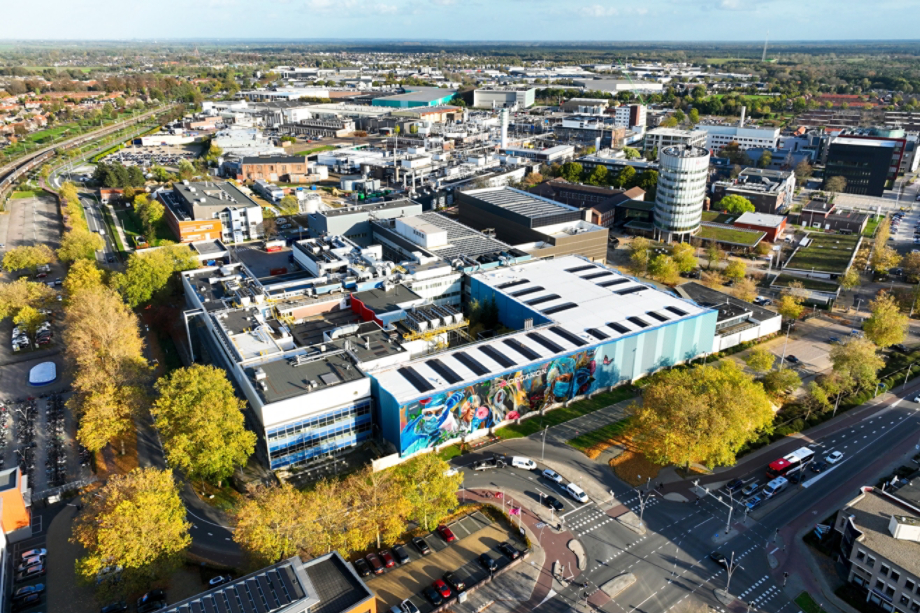
Aerial view of Organon's industrial facility in Oss, the Netherlands
Based in Oss, the Netherlands, pharmaceutical manufacturer Organon adopted a thermal management mindset, showing that integrating decentralized heat pumps can improve energy efficiency by replacing central heating boilers.
As part of its sustainability efforts, Organon is gradually installing Trane heat pumps across various buildings. The first project, completed in May 2024, involved installing two water-to-water heat pumps (RTSF 070 G) in a manufacturing facility, providing cooling for compressed air treatment and recovering the heat, which is then distributed to the central heating network.
This initiative conserves 7,700 gigajoules of energy each year, approximately equal to 243,000 cubic meters of gas. Organon intends to implement additional enhancements, such as modifying air handling units to accommodate low-temperature heating, aiming to decrease gas dependency and achieve carbon neutrality by 2035. These developments represent a major philosophical transformation: moving from fuel-dependent heating to electrified, optimized energy systems.
Creating a resource from waste heat
Excess heat isn't a problem requiring disposal; it's untapped energy ready to be harnessed. Free energy exists abundantly in our surroundings, and thermal management systems empower us to leverage this resource, creating opportunities to entirely remove fossil fuel dependence for heating purposes. These systems enable industries to reimagine how they view heat, converting what was previously wasted into a useful resource.
Although the concept of heat pumps is over one hundred years old, the heat pump has evolved through continuous advances in thermodynamic design, low-global warming potential (GWP) refrigerants and compressor and control technologies. Today, heat pumps are more viable, efficient, and reliable, providing a clean alternative to fossil-fuel manufacturing processes requiring low to medium temperatures.
Heat pumps such as the Trane® RTSF HT can elevate recovered energy to temperatures reaching 110°C, meeting diverse process requirements that extend beyond space heating, storage heating, or preheating domestic hot water. Completely electrified thermal systems provide both heated and chilled water for temperature control processes and can capture and redirect energy while producing zero on-site carbon or NOx emissions.
Systems that provide heating and cooling simultaneously operate three to four times more efficiently than conventional approaches, delivering substantial cost savings. Contemporary heat pumps can produce three to four kilowatts of usable energy for every kilowatt consumed, reaching average efficiency ratios of 300-400%, which is over three times more efficient than traditional boilers.
The benefits go beyond performance: by combining cooling and heating systems, facilities reduce upfront investments, save space, and cut operating costs. This is the systems approach in action.
Excess heat isn't a problem requiring disposal; it's untapped energy ready to be harnessed.
Changing mindsets, breaking through obstacles
Considering the process-intensive character of industrial operations, gaining comprehensive control over a facility's thermal management systems can rapidly decrease energy use, carbon output, and operating costs. Although conventional doubts and hesitation about industrial heat pump applications remain, the advantages significantly surpass the challenges. Typical concerns regarding technical complexity, investment requirements, or facility constraints frequently stem from outdated perspectives based on isolated system approaches.
- Initial Costs: While the initial costs for integrated technologies and renewable energy systems can be higher, they are offset by long-term savings. All-inclusive (heating/cooling) thermal management systems often have returns of only 2-3 years due to greater energy efficiency and operational savings.
- Complexity: Designing a net-zero facility does require careful planning and coordination among architects, engineers, and contractors, but the core infrastructure and technologies exist. The focus should be on converting to thermal systems plants and gaining market acceptance
- Site Constraints: Around 80% of current projects are retrofits, not new construction – proof that existing facilities can adopt this model.
Converting from stand-alone to integrated systems doesn’t mean reinventing the plant. It means rethinking how energy flows through it.
Case study: Saint Jean
A well-known French pasta manufacturer, Saint Jean, needed a temporary cooling capacity of 150kW to cover the additional summertime load in one of their facilities. What started as a typical project transformed the manager's mindset, which considered heating and cooling in separate silos.
During the facility assessment intended to analyze the plant's cooling requirements, aware of Saint Jean's commitment to enhancing operational energy efficiency, Trane engineers suggested heat pumps rather than recommending an extra chiller for the short-term cooling demand. This solution would not only provide the necessary additional cooling capacity but also entirely eliminate the plant's 300kW fossil fuel-powered boiler heating system – delivering substantial energy savings as a result.
Installation of two Trane City™ RTSF heat pumps, connected with the plant’s existing chillers, allowed to harness and boost the waste heat generated during cooling process.
The result was a 68% reduction in heating costs and a major drop in emissions.
Project summary:
- Cooling Capacity: 150kW
- Heating Capacity: 300kW (replacing fossil-fuel powered boilers)
- Cold Water Temperatures: -8°C to -4°C
- Hot Water Temperatures: up to 60°C
- Features: Integrated with existing chillers to reuse waste heat.
Envisioning the future: from equipment to strategy
Transforming the approach to heating and cooling system management is essential for achieving energy efficiency and sustainability goals. Thermal management has evolved beyond simply selecting appropriate boilers or chillers. It now represents a strategic collaboration focused on energy optimization, carbon reduction and operational stability.
As European manufacturers seek innovative approaches to achieve net-zero targets, the argument for integrated thermal systems becomes increasingly compelling. However, the most significant challenge is conceptual: transitioning from fragmented system models to viewing energy as fluid, recoverable and self-sufficient.
Reconceiving heating and cooling as components of a unified thermal system represents more than a technical evolution; it's a leadership transformation. By replacing siloed approaches with holistic system perspectives, industrial operators can minimize energy waste, lower emissions, and safeguard their operations for the future. This transformation is already in motion. Now is the time to expand it.
Topic Tags