 English
December 11, 2025
Where Innovation Meets Impact: 2025’s Top Healthy Spaces Episodes
In Season 5 of the Healthy Spaces podcast, Trane Technologies co-hosts Dominique Silva and Scott Tew dive into the real-world intersection of sustainability, finance and technology.
As the new year approaches, we’re looking back at the four most popular episodes of Season 5 of the Healthy Spaces podcast. Co-hosts Dominique Silva and Scott Tew sat down with finance leaders, technologists, sustainability experts and academic partners to explore what happens when bold ideas turn into real impact.
Together, these episodes provide actionable insights for business leaders at the intersection of sustainability and technology.
If you want a snapshot of how climate-smart innovation is facilitating sustainable solutions for the planet, these episodes are a great place to start.
1. The ROI of Sustainability: A CFO’s Perspective
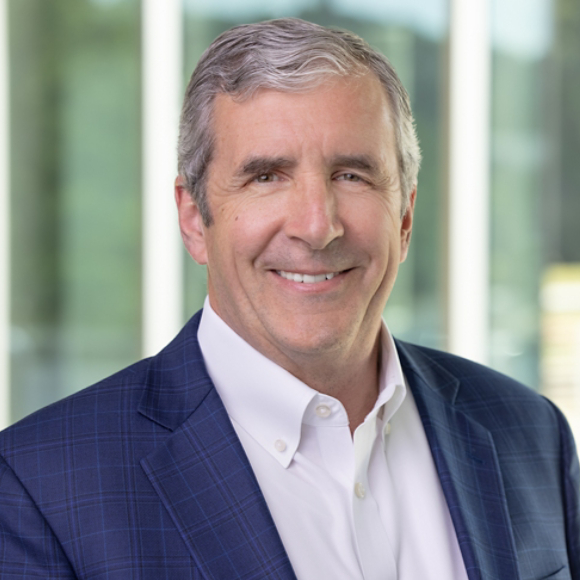
In this episode, Trane Technologies Executive Vice President and Chief Financial Officer Chris Kuehn and Trane Services Account Manager Erin Garrity unpack a topic that’s top of mind for many leaders: How sustainability can drive ROI.
Chris describes how sustainability can be a powerful engine for growth and resilience. Listeners hear how strategic decarbonization investments can strengthen the bottom line while delivering benefits for shareholders, customers and the planet. Later in the episode, Erin highlights how new service offerings and business models can amplify sustainability efforts while also creating business value.
For finance, sustainability and operations leaders, this episode offers an actionable look at how to make a compelling business case for sustainability.
There's a notion that sustainability is expensive, that it costs more. Some may even say that it doesn't pay off fast enough, but today's guest has a very different take on that topic. He says, when it comes to the choice between building a sustainability strategy and a strong bottom line, there are no trade-offs.
- That's the art of the possible. That's the, let's take some constraints off and let's talk about what we could do. If the investment dollars were almost unlimited, what could you drive in the organization?
- Here's the thing. It turns out that rather than being a barrier to growth, sustainable investments can unlock new waves of innovation. And when they're done right, everyone benefits, business shareholders, society, and the planet.
- You're listening to Healthy Spaces, the podcast where experts and disruptors explore how climate, technology, and innovation are transforming the spaces where we live, work, learn, and play. I'm Scott Tew, Global Lead of Sustainability Strategy at Trane Technologies.
- And I'm Dominique Silva, Marketing Leader here at Trane Technologies. And on season five of Healthy Spaces, we're bringing you a fresh batch of uplifting stories featuring inspiring people who are overcoming challenges to drive positive change across multiple industries. We'll explore how technology and AI can drive business growth and help the planet breathe just a little bit easier.
- Dominique, it's great to be back with you again.
- You too, Scott. And what have you got in store for us today?
- Today we're following the money.
- Okay. - We're talking about sustainability from the point of view of A CFO.
- All right, that sounds interesting. Everybody loves talking about money, but what I wanna know is how do companies actually assess sustainability investments, right? What are they looking for in such an investment? So to put it basically, Scott, I'm hoping that today you're gonna help me figure out how I can pitch my big idea to A CFO. Can you do that?
- Well, we're actually going to cover that in today's interview. Our guest is Chris Kuehn, the Chief Financial Officer at Trane Technologies.
- All right, I'm sold.
- So Chris began his career at PricewaterhouseCoopers, where he spent 12 years as a Senior Manager. He then held several leadership positions in the HVAC space and joined Ingersoll Rand in 2015. Chris was named CFO of Trane Technologies when the company was launched in 2020. And he made sure that right from the start that finance and sustainability were linked hand in hand.
- Look, I think sustainability can take multiple forms, and I'll start with people. We're right in the season within the company around talking about organizational leadership reviews. We're talking about succession planning, and that is a part of sustainability for an organization. Thinking about how we give people great roles, how we think about retention, and ultimately putting them in positions where they can achieve and be their best. I think about it in terms of our sustainability goals this year, every one of our employees has to have a sustainability goals as one of their 20, 25 performance goals,
- Right?
- And so we've just made that embedded as part of the culture of the company. But from a CFO view, I think part of it really comes down to the, the tangible assets and making sure you're extracting the value from the tangible assets you have in the company.
- Tangible typically means Chris, things people can measure, right?
- Well, things you can touch, things you can measure, touch and measure. And, and I always go back to the day that we made the investment where we put capital to work and we had a business plan and we had expectations of growth or cost avoidance. And then let's make sure we're measuring ourself against that to really come back with a return on invested capital, the ROI of a decision,
- Right?
- I think that's the most important part of a CFO's job, is to think about how do you allocate that capital so that shareholders know that you're putting it to its best use for the shareholder base.
- So I love this that you mentioned tangible things, tangible assets or things we can touch, things we can measure. I mean, there are some people I think that maybe outside of the company that think of sustainability as the intangibles. You know, it's the things that help a company maybe build reputation. It's the things that we make commitments to that seem far off in the distance. But you've already raised this issue of the tangibles things we can measure investments that we do make to improve operations. Right? But what about the intangibles? Does a finance leader care about those as well?
- Well, yeah. This is, this is actually where I think our teams, your sustainability team and the finance team, right? And I'm fortunate enough to have responsibility for our cybersecurity team and our information technology team as well. I think this is where our teams of, I think of like a Venn diagram. We've always had some level of overlap,
- Right.
- But if I look at the last five to six years, that overlap has only gotten stronger.
- Yeah, agreed.
- And I think it balances both the intangibles and the tangible. So I think about our sustainability report and we've, your team has done such a great job making that a hallmark of the company. And, and now over time we've expanded to it. I don't think it ever gets shorter.
- No. - Each, every year it always seems to get more because we have more to share. Okay, that's fair. But over time, we've added controls around some of the key measures that we report. But as you know really well, 'cause you spend a lot of time with investors, the investor questions around sustainability. What is our company doing internally? What's our company doing for customers? Those questions have only gotten stronger and deeper and more voluminous over the last five years. And our collaboration is really, this Venn diagram with the overlap is very, very strong right now between our teams,
- There's a lot of stakeholders, right? And you live in a world of, you know, high stakes expectations in terms of Wall Street and analysts who are analyzing the company and its performance. Most of our listeners would probably think of Wall Street as a very fickle group, happy one day, not so happy the next, I mean, how does someone in your world think through helping those stakeholders understand the value behind sustainable performance?
- Yeah. Well, I think it's a quarterly report card that our entire company gets, and we like focusing on the long term. But there is the practical reality of each and every quarter. You've got the report card. I think the confidence that the company's been able to demonstrate top line revenue growth, well above market growth, is the number one question we get, which is tell us how you do it and, and what's the recipe? What's the secret sauce? And we can certainly get into a lot of the reasons behind that because it really plays to the CFO's role to make sure you're making those investments that not only generate, okay, it could be cost today, but it's really gonna drive market outgrowth tomorrow. And keep seeding that so that you continuously or sustainably have that top quartile revenue growth. So after they ask the question, what's the secret sauce? The next question naturally is how long and how far into the future can you sustain that? And okay, we try to be careful around that because we, we don't wanna go too far in advance into the future, but I think each of our business units have great opportunities for growth. And what we've, what we've seen the last four years with the 12% reported revenue growth cagr, it just tells you that the, the game is not over. We haven't gotten to the end of the game. We really think, if I use a baseball analogy for our listeners out there, we're really in the first inning here of decarbonizing all this space. And now how do you make that sustainable over time? And it's sustainable for customers, it's sustainable for Trane Technologies.
- Hey Chris, you mentioned something about quarter to quarter and I mentioned that I think people sometimes think of Wall Street as very fickle: Lve you today, not so much tomorrow. Does your thinking on this subject, does it hold for when markets are down?
- Yeah, I think that you can outperform in down markets and I'll use our transport refrigeration business in the Americas as an example. You know, this is a business that has its cycles and typically when there's a down cycle, it could be 18 months in length. We happen to be in year four of an 18 month down cycle. But you can look at it as well, do I pull back on investments? There's a concept that we've been talking to investors about, which is an innovation flywheel and the investments that go in an innovation drive the market outgrowth. And we have been able to prove even in down markets that we're outperforming those down markets. And it's really driven to innovation. And you have to make sure that that continues into the future, the sustainable part of that. And that's why making and continuing those investments today, don't be episodic with the investments. Can you pivot where you want the investments to be because you're constrained? Absolutely. But at the same time, you can't cut off that new product development, that innovation flywheel, because in our example, transport markets, they're gonna come back. And I don't think we want to be going to customers with the same products we sold three, four years ago and say, here they're ready again, you want compelling new solutions. And that's why we're investing in electrification. We're investing in hybrid fuel technologies to give customers optionality and those markets will grow again. And we'll be ready for that. But I think about that throughout our portfolio.
- Is that part of the secret sauce on growth? Because I, I do wanna talk to you about growth and get your thoughts on where are we seeing growth and what do you think's behind that?
- I think it's part of the secret sauce, Scott. I really do. But once you get that flywheel going and you start driving that innovation, you don't wanna be episodic with it. And so we get a lot of questions around, is this something you would slow down? Is this something you want to advance? And, and Dave and I and the, the enterprise leadership team look at it as how do we keep advancing that. There's always room to accelerate investments into the year to drive earlier paybacks. That gives us the confidence internally to keep making those investments. 'cause we can see the market outgrowth. And right now investors are really valuing top line revenue growth. It should fall to the bottom line. Okay. Parts of it. And we like to reserve some of that profit that falls to the bottom line to invest back in the business. But if you can demonstrate that top line revenue growth, I really think you get there when you have an innovative product and you can sell that to customers.
- When you think of growth, you're obviously thinking about sustained growth. So what are you, what are you excited about? What areas?
- Well, I'm a little biased because we have, part of our business operating system in the company is to perform at a minimum twice a year innovation reviews. And we just finished those at the end of the second quarter. We're taping this in early August, so they're very much fresh on my mind. We do long range plans in the company. So I get some really strong insights as to where our bets are for the next three plus years. All of our businesses have great opportunities for growth. I walked away with, okay, the pipeline on the innovation is only getting bigger, and how do we find more ways to fund the pipeline to make it go faster? So the, the business that gets the most attention around the top line revenue growth is gonna be commercial HVAC. So
- That's the heating and air that goes into office buildings, at schools, universities, hospitals, that type of thing,
- Right? A non-residential application, and we have a great residential business, okay, and we have a great transport refrigeration business, but what we've seen, the growth in the last four to five years has really been in commercial HVAC and an estimated trillion square feet that needs to be decarbonized. Much of that is commercial space. And we're probably still in only the first inning of a baseball game here to ultimately decarbonize that space. And while data centers gets a lot of attention today, and it should, there's a lot of growth in that space. And we believe we're winning more than our fair share in the data center vertical. What's as important to us is to make sure we're investing in the product lines for all of the verticals.
- Mm. So we're not placing all of our chips on data centers.
- We're not, and we're thinking about that from a capacity perspective too. We, in theory, you could try to fill up the entire capacity with, with projects in one vertical, but that's where we stay ahead of making those capacity investments. Because, you know, we've been talking for about about four or five years now, the office vertical being down post COVID vacancy rates remain very high. But you know, there are pockets of opportunities in the office vertical as an example, moving from Class B to class A office space that landlords and, and supervisors, they want to have that ability to attract tenants. So let's make investments to do that. That's what our direct sales force does a phenomenal job with. And it's not just knowing our product super well, but they have the local experience. They know the buildings in each of these cities, they know what's inside the buildings, they know the last time it's been upgraded and they know the local incentives that ultimately we can pass on to our customers to make sure that the ROI is something we can lead with. And I'm sure we'll get into to this conversation, but, but paybacks are so important when you're, when you're the CFO and you've got 10 options in front of you. And how do you decide which one to make
- Well that's my next questions That's next question I wanted to ask about that. I think we have a lot of listeners who are wondering, I mean, I go to a lot of external events, I talk to a lot of peers of mine. A lot of companies have different way, many companies have different ways of evaluating investments in capital or investments in their own facilities. And I probably every CFO has a different litmus test about how you should evaluate one project over another. Talk about your perspective on how that's done from your, from your side of the tracks.
- We've actually break down our investments into, into a few different categories. Okay? There, there's a regulatory category, things we have to do, which things you have to do. And, and I think good example there would be the recent transition, the refrigerant transition in the US to a lower GWP refrigerant and the investments we made, not only for the product readiness, but also the, the factories to be ready to handle that refrigerant. Then I think we, we've got another category that we would call the sustaining category. And so you may have existing pieces of equipment that need certainly maintenance, but at some point in time they need to be upgraded and let's make a sustaining investment into the business. But the majority of where we measure our investments, and I look at this from a percentage basis and a dollar basis, is really growth that, that's the third category. And it could be growth, certainly top line growth, it should be market share growth as well. It could also be, there's a couple of bets on some high flyers where we don't know if that's where the market's gonna go. But if it does, we'll see outsized growth in that space. And that could be product, it could be channel, it could be people, certainly a lot around the product side, around the new product development side. It could be digital, right? More and more of our HVAC and transport world is becoming digital and digital connectedness. So what do we make investments there to support customers? A lot of our business is making sure that the products that have been installed are operating the way that they should, which comes back to the ROI conversation of let's not lose any dollars on the table that we should get in returns, but we wanna make sure that our investments are driving the majority into that growth category for the company.
- For Chris, sustainable investments need to do two things, deliver ROI and drive company growth. And that's top of mind for all businesses. Our direct sales force knows their cities, knows the buildings and local incentives and that combination means that they can lead with ROI. But it's more than just knowing products and solutions. Sustainability is part of our culture. It gives our employees pride in what they do and they pass that on to the customer.
- Hello everyone, my name is Erin Garrity and I'm a Services Account Manager for Trane Commercial based out of New York City. One of the areas that I realized I can have a tremendous impact on my customers is through our remote services that are offered through our connected buildings services agreements. So take for instance, this heat wave that we're in the middle of in New York City, right? If a client is having an emergency or a failure and we are remotely through either Tracer SC Plus or Tracer Ensemble, our team can log in completely remotely within minutes of receiving this call and begin diagnostic efforts before ever having to roll a truck. And oftentimes we can make adjustments and resolve the issue without ever needing to be on site. Which helps our customers stay comfortable, it helps their systems stay up and running and it helps everybody have a much more pleasant day on these very warm days in this heat wave. I would say along that same thread, a technology that I believe can completely revolutionize the world is the continuous, the continuation of the digitization of all things building systems, right? If you have connected systems with data that you can track and manage and work on, then you can now measure your goals and make them that much more achievable. So I would say the continued digitization of the built space is something that I'm looking forward to completely revolutionizing the built environment.
- So at this point, we understand what the life of a CFO in a sustainable organization looks like, and we've heard about how they choose investments, but great investments require innovative ideas. So now we're going to get actionable.
- Chris, I think probably there are people listening to this who are wondering, is there a recipe for pitching an innovation or a sustainability related project to A CFO or to an investment review board? And so now that I have you here on the spot, I'm sure listeners have leaned forward wondering what the answer to this is. So what's your advice to those who may be listening saying, is there a secret to pitching the right innovation project the right way?
- I don't know if there's any one secret, but here are some of the things that have worked over time. Okay, the bigger the dollar the investment, the more pre-meetings you're gonna probably wanna have, right? So, but, but if I think about long range plans, which we do at a minimum once a year and we recycle 'em, those larger projects that are being considered, you know, maybe 80 or 90% of them happen, but by the time we're having the conversation to make the approval, we've probably talked about it, Scott, for, and you know this, but we've probably talked about it at least three or four times in the company.
- That's right.
- It could have been on two prior long range plans. It could have been an operating plan review, it could have been in one of our
- This is not how creative your slide is, right? It's just not just about that, right?
- It it's not. And and by the time you get to the slide, like people should already understand the operational need.
- Yep. - And what, what part of the growth trajectory for the company and the growth strategy for the company is it supporting? And we've got strategies for each of our units and it's something we regularly review with our business units, our regions, and ultimately with Dave, our CEO. But you link it back to that strategy and how it fits into the strategy house, then okay, now it puts it into a frame of reference of, okay, we're really trying to drive this growth and this is integral to that. Okay, now I know this the context of what you want to ask me for. And then honestly, I mean I do look at the absolute value of the dollars. I'm trying to think, here comes the numbers about the numbers.
- Know your numbers,
- Know the numbers, but then the next thing I'm looking at is the payback, right? I wanna understand, obviously the assumptions that go into the payback is there's generally revenue assumptions and margin assumptions, but what does that payback look like? What's the speed to deliver? Do we have the internal resources capable to deliver on the project? All standard kind of questions, but we try to turn it around a little bit, Scott, we don't always try to ask the question, how can you do it for less? We actually ask the question, what if you had more? Could you go faster? Could this be a better business case? And we just try to turn it a little bit on its head to say, if you had more investment dollars, would it change the outcome? I think people in general are, when it's a bigger number, they're probably leaning towards, I need to go with the smaller ask. I don't know if I want to go for the big ask. But especially if we're in a long range plan conversation to me, to Dave, to our leadership team, that's the art of the possible, that's the, let's take some constraints off and let's talk about what we could do if the investment dollars were almost unlimited, what could you drive in the organization? Okay, let's bring it back to reality when we're asking for the actual dollars,
- Right?
- But by then, we've heard it a few different times.
- Yeah. - And we're getting excited about the opportunity. And now the question is how do you go faster?
- I think, I think the, I think what you just said, those steps are, I think they'll be very helpful for a lot of people. So,
- And I like dark chocolate too, Scott.
- Oh - Yeah. Right. There's, if you wanna bring some snacks to the conversation, you know, let's be clear. I mean there's some minimums that need to be brought to the table here, but I'll tell you, I I, it's actually one of the most fun parts of the job is getting ready for one of those meetings and folks wanna have a chat and they wanna run some things by you in terms of does this make sense? That makes sense. And that's one of the hallmarks of Trane Technologies. These are not businesses competing against each other for dollars. These are businesses working together to optimize the dollars that we spend. And I think about engineering, I think about new product development. It's rare that it's a silo and you know this, it's rare that it's a silo, that a new product development can only benefit one part of our business. When we think about comfort cooling and refrigeration, there's aspects that can really be leveraged across the company. And I think we do a really good job with that.
- I do too, Chris, I began this discussion with me saying I wanted to peek behind the curtain the day in the life of A CFO. And I am thinking now about a lot of your days has spent what I would call seeing around the corner. I mean, I think of sustainability a lot of times is helping a company see around the corner of what's coming in terms of expectations of how we improve. What about your perspective about seeing around the corner? How do you do that?
- I'll tell you the, while we spend a lot of time with investors and they ask a lot of questions of us, we get the opportunity to turn it around to them as well. They get a chance to see a lot of different companies and, and evaluate our growth prospects against others.
- You mean you ask them questions? - We get the chance to, we let them go first to be fair, Scott. But I'll tell you with with with shareholders and our great shareholders that we have, they're always willing to kind of share their insights in terms of what they think success could be. So that's one way to kind of get intelligence from, from a broader market view. I've got a few outside groups that I stay very well connected with. There's actually a really good Charlotte group here of CFOs that get together here at least once a quarter and really bad around ideas in terms of what we're working on.
- Yeah.
- But I think it's so much more outside of the finance function. We have so many things that finance can deliver on or IT or cybersecurity. It really is staying close to the business. So my one-on-ones with our regional presidents in each of the businesses making sure I'm getting out and seeing a few of our site locations each and every year. Where can our finance team get closer to being the business partner? Those are areas that gives me a lot more confidence on looking around corners. But from an investor perspective, they're really wondering how are you gonna spend all the cash that you generate? And, and I would tell you that by all the long range plans that we do and our annual operating plans, the number one place we wanna spend that money is to invest back in the business.
- That's sort of the driver for our long range plan, right?
- It is, it is. I mean it starts with the top line growth and while it's being well regarded today, and it should be for, for, for very, very long time, we gotta make sure that innovation flywheel keeps getting funded and that will be consistent. Okay? It's been a hallmark of the company for 15 years and we keep adding to it. We're gonna keep doing it. It creates that DNA in the company and the culture in the company where we want to keep innovating, but let's keep investing back in the business and good things will happen. And then we have other ways to benefit shareholders as well with the cash. But to me that gives great optionality to our employees. They're part of a growth company, which means new opportunities for roles and exciting things to work on. I know your team and my team, we spent a lot of time together and how do we explain our roadmap to investors, to our shareholders around what we're doing inside the company and outside the company and, and we get a lot of compelling interest in that dialogue.
- Well I think it means something to our employees, Chris. I think the culture here, you probably would agree, is it's pretty unique in terms of, but I think it's because of those things are always in front of us. This innovation to grow as well as to do it the right way sustainably.
- I think we are in the business of going to our customers and showing them what is possible with the existing systems they have or if you wanna do further upgrades or swap out, we have that capability too. But there's a lot we can do with your existing systems,
- Right?
- With great ROIs. Right? Great paybacks. And for any CFO listening to this conversation, if you've got building assets in your portfolio and we know if you, over 30% of energy is wasted after the meter.
- That's right.
- We're gonna spend a lot of time around demand side management. How do you optimize your existing applications and systems and assets to reduce that waste? To me, as a CFO, you're looking for those opportunities for waste and I'd rather go after those costs and have more painful conversations, right? Let's go after those costs. We're seeing waste today. And then you can take those dollars and decide how you want to balance it. Do I wanna put that to the bottom line or does that help fuel the innovation flywheel that I'm trying to drive in other parts of the business? To me it's an absolute home run.
- I love how you kept the ROI of sustainability from beginning to end of this conversation. So thank you for that.
- Yeah. I think it's, it's part of the culture of of being the CFO and we've been able to keep showing demonstrated returns for our own shareholders. But the fun part is working with a customer on a multi-year journey and we get a lot of insight to that with our teams, you know, across the US and the globe. But it's rarely a one and done application, right? It's generally a multi-year journey.
- It becomes a relationship.
- It becomes a relationship. Yeah. We want that customer for life. We think about our applied solutions, very complex solutions that require a lot of service and maintenance over that period of time and upgrades. But they're such compelling returns. I know you had Jose La Loggia on a recent episode, right? And you know, three years or less paybacks and I think as any CFO, those are very compelling numbers to go look at to say, okay, why don't we go after and get those savings.
- I've gotta tell you, Dominique, I thought this conversation was really insightful.
- Yeah, me too. And it was so refreshing to hear A CFO speak so openly and candidly about how a company makes sustainable investments to drive growth. That was cool.
- Yeah. What I felt most insightful really was Chris's genuine view that you get the right people in the room and they'll make the right decision. Whether it's finance leaders or sustainability leaders or business leaders.
- Yep. And while you were talking, I was taking notes, so I'm gonna be using all of Chris's pointers to write the pitch.
- Oh yeah.
- For my next big idea, Scott. It's gonna be big. And actually on that note, I'd like to hear from our listeners, so what parts do sustainable investments play at your company right now? And how do you think that focus will change in the future? Got a thought, leave us a comment. We'd love to know.
- And that's it for this time. This has been The Healthy Spaces podcast with me, Scott Tew and my co-host Dominique Silva. To learn more, check the links in the show notes. Wanna stay on the front line of innovation and sustainable growth? Subscribe to the Temp Check newsletter on LinkedIn to stay in the loop. We are back in two weeks, so be sure to lie and subscribe so you don't miss out. And thanks for joining. We'll see you next time.
2. Connecting the Dots: Unlocking Innovation with Systems Thinking
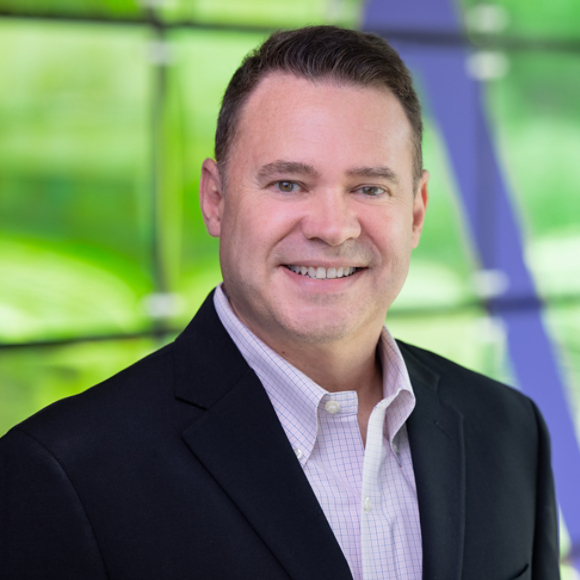
In this episode, Trane Technologies Senior Vice President and Chief Technology and Sustainability Officer Mauro J. Atalla and Sustainability Engagement Program Manager Hannah Black talk about what happens when leaders use systems thinking to link sustainability, technology and innovation.
Mauro shares how taking a holistic perspective helps teams spot connections across products, services, supply chains and the built environment — and why creating those linkages matters for decarbonization. Instead of focusing on one-off projects, he encourages listeners to build portfolios of solutions that work together, support each other and grow over time. Culture matters, too: Hannah highlights practical ways to motivate teammates to become sustainability advocates and make the connection between sustainability efforts and customer needs.
For leaders building a decarbonization roadmap or driving change inside large organizations, the conversation offers a real-world guide to linking strategy, culture and innovation while keeping both people and the planet in focus.
-The business of tomorrow needs to be sustainable. But when you're starting out, the learning curve can be steep. However, something magical happens when you turn sustainability on its head, you stop looking at the mountain and all the barriers in front of you, and you see the pathways and the opportunities. What it takes is a shift in perspective. And many times that starts with a visionary leader.
- It is a culture that combined with mission that you know is, is around sustainability, gives the employee the opportunity to feel that they can make a difference, right? It is a culture where every, everyone that I speak to here feels like they have something they can do to make the environment better, our customers better, the company better.
- Putting sustainability at the center of the business is about more than just a pledge on the wall. It means creating an uplifting and supportive culture full of passionate people who know that their contributions are making a difference.
- You're listening to Healthy Spaces, the podcast where experts and disruptors explore how climate, technology and innovation are transforming the spaces where we live, work, learn, and play. I'm Scott Tew, Sustainability Leader at Trane Technologies.
- And I'm Dominique Silva, Marketing Leader here at Trane Technologies. And on Season Five of Healthy Spaces, we're bringing you a fresh batch of uplifting stories featuring inspiring people who are overcoming challenges to drive positive change across multiple industries. We'll explore how technology and AI can drive business growth and help the planet breathe just a little bit easier.
- Hey Dominique. So before we get started today, just a heads up, today's episode is a little bit different.
- Oh, Scott, I've already heard all about it, and I'm actually kind of jealous. They actually let you take this show outside?
- They did. They sure did.
- How is that even possible?
- This episode is one that our listeners might want to check out on our YouTube channel. I was down by the lake, Trane Technologies campus in Davidson, North Carolina. It's the perfect open sky location for a big picture thinking conversation.
- Aw, you're so lucky, Scott. And great weather too. Well let it be noted to the producers, totally on the record, I'll be waiting for my turn with the film crew.
- I'm sure they can make that happen. This interview was particularly special to me because of my guest, Mauro Atalla, who is the new Chief Technology and Sustainability Officer at Trane Technologies.
- And as you just said, so Mauro is a new addition to the Trane Technologies community. So, he only joined the company at the beginning of this year. So this interview is actually a great opportunity for all of us to get to know him.
- And you know, he's developed quite a unique perspective throughout his career on this intersection of all the topics we'll talk about sustainability, technology, and how people are engaged.
- Those are three heavy hitting topics. Should we get right into it?
- Yeah, let's do it. Welcome to Healthy Spaces. I'm Scott Tew, I lead sustainability for Trane Technologies, and today I'm excited to have this episode where we talk about career, we talk about sustainability, we talk about technology, and all the intersections of those things with my special guest Mauro, who's here with me. And if you are listening to us and you can't see where I'm sitting, you should, if you hear strange sounds, it'll be the birds overhead, maybe geese swimming by, as we sit outside on the Davidson, North Carolina campus for Trane Technologies. We also are recording this on a very warm summer day. We are in the middle of a heat wave like many other parts of the world. And that's something that Trane Technologies knows a lot about. So it's very appropriate that my guest Mauro joins me to talk about all things technology and sustainability. Welcome.
- Thank you very much, Scott. It's, it's nice to be outside.
- It is, but it's early.
- It's early, which is good. And it's humid, it reminds me a lot from Brazil, right? From
- That's right.
- you know, where I came from.
- Well, you just opened with something that I wanna ask you about. So Mauro, you recently joined the company. You're pretty new to the company, January of this year, and you come to us with a lot of background and perspectives, not just from your career, professional career, but also you're Brazilian. So can you help our listeners understand first your background, career wise, things that interest you on the career side, and then we'll switch over to the personal.
- All right, so career wise, I have a fairly, I guess, unusual career. I spent about 10, 12 years in academia, so that's what I was doing, you know, basic research, getting my Masters, my PhD here in the U.S. So, and then I spent another 10 years or so doing more applied technology development. So that's where I worked at a company that used to be called United Technologies, where I had the opportunity to work on everything related to buildings, from elevators, air conditioning, fire surveillance systems,
- So all the mechanical systems.
- All the mechanical systems in the building, but more from a technology development, think of that as advanced concepts,
- Right.
- Right. For, for those businesses and systems. And then I spent another 10 or so years in aerospace. So, I moved to the other side of the corporation and I had the opportunity to work on aerospace, which is really, really different. So I was in a part of the company where we developed systems for aircraft. Essentially almost everything that's inside an aircraft was part of that portfolio.
- And now you've got it all wrapped up into one big ball with Trane Technologies. You joined, you're responsible now for innovation for the company. You're responsible for engineering and technology. You're also responsible for sustainability.
- Yes.
- So tell me about the first six months or so with the company. What's your perspective on the company you've joined?
- Look, I mean, when, when you decide to make a change in career, like I did, right? One of the very important things that at least I was looking for is like cultural fit, Right? Because you need to be in an environment where you're able to realize the potential, where you can use the knowledge, experience that you have, and have a positive impact. So if, you know, getting to your question about the six months, it will exceed my expectations, right? It is-
- The culture?
- Yes, the culture, but also how important it is, you know, technology and product to what the company delivers to our customers. It is also about, like you said, part of my role is to be responsible for sustainability. It was also about how sustainability is embedded in the business, is not something that's on the side, it is how we, you know, run the business, it is how we deliver value to our customers. But, but all enabled by the culture. Right?
- Let's talk about the intersection, that intersection of technology and sustainability. I mean, you've got a, a you've got a career behind you. You've now joined a company that we talk a lot about that intersection. What's your view given your background as well as how it, how you think things are with Trane Technologies?
- So sustainability's a very broad topic.
- Yep.
- Right? And there is no-
- So is, so is technology, right?
- Exactly, and, and, and there are multiple intersections.
- Right.
- But there is no one solution, right? That's gonna address sustainability. So when you look at that problem, you need to think about the entire system. So you need to think about how you design the products, what you use to, you know, to manufacture the products and, and how you manufacture the products. It is how the products perform in the field. You need to look at all those things to be able to have a meaningful impact. The good thing about what I've seen the first six months is that we are looking at all these different factors. I haven't seen one that I say there is a gap here. I, and, and conversely, there are a lot of opportunities, right? It's not a solved challenge by a long shot, so there is a lot to be done still, and, and I'm excited. I mean, there's a lot that we can accomplish.
- A lot of our listeners, Mauro, probably have heard this whole concept that there's big opportunities with the systems thinking. I know that you are a, you're a, sort of a constant learner, and I know that you're a systems thinker. So what is the big deal about the systems thinking that listeners might not understand? You think?
- Well, I, I'll probably give you two examples. So one is in, in a certain type of building, there are several of those. You wanna have cooling certain parts of the building and you may need to have heating in other parts of the building. So what has been done traditionally is that you use a cooling solution, think about a, a, a hotel in the guest rooms and you use heating for the kitchen or the laundry.
- So they're both, they're both on at the same time.
- They're both on at the same time. They're both rejecting energy. Because you think about HVAC, it's all about thermo system. It's all about moving energy from one place to another. So you have the guest rooms where you're taking energy out of the room and, and, and pushing it outside the building. And you have the laundry where you're burning fossil fuel to generate heat. And that heat's also being dissipated somewhere. And if you think about that and you look at the whole building, why can't you take the heat that you are taking out of the guest room and use it-
- Pull it back into-
- Somewhere inside the building, right? So why waste energy? So you need to look at the entire application. So that's one example. The other one I would say, if you think about data centers or any industrial process where you need to either cool very much or right, you need to take the heat out of the data center in that example. You can use that in the community that may be near the data center. You can use that for something that's called district heating. You can take that heat, that warm water and use it for the community, right? That's next to it. Instead of just rejecting the heat to the-
- Just really stepping back and finding all of the opportunities.
- Exactly. So you need to understand what problem you're trying to solve, not just a specific thing that's ahead of you.
- Right.
- Because then you can, you're gonna be able to potentially create new solutions that are, were not obvious at the beginning, right? If you only look at that narrow scope.
- So Mauro, you're joining the company at a very special time. We're at the midpoint of the 2030 commitments. One of those commitments was something we call the Gigaton Challenge, which was essentially about reducing the emissions when our products are being used with our customers. We committed to reduce the emissions by a billion metric tons by 2030. We're making great progress, but you know, you've just come into the company, you've been spending a lot of time in our factories, spending a lot of time with our associates, spending a lot of time with our engineers. What's exciting to you about this Gigaton Challenge?
- It is interesting, right? Because I think first of all, by the way, you were here, you were instrumental to creating that challenge, right? Back in 2019. I believe back in the day, you can confirm if I'm wrong, but I believe back in the day, we didn't have this all roadmapped.
- No, not at all.
- Right? So it was a challenge. It was something that we didn't quite know how to get there. We, the company knew it would make a difference to the environment, to our customers. So it is grounded on what customers need and value. It's, it has a positive impact on the environment. It was far from something that we were certain that we could do.
- Correct.
- Now it is interesting because it's very simple, right? In terms of articulating, explaining what it is. But at the same time, it, it brings all different elements together because it brings the technology, right? We need to figure out how to make our product more efficient. It also motivates all the employees to think about different ways of doing things.
- Yep. So that's linked to innovation first.
- Exactly. I mean, it's a catalyst, right? And it's, I find it powerful because in its simplicity and its relevance. And you don't have to be explaining all the details and all. It's very, very simple and clear. And it continues to be a challenge. We're halfway through. There's a lot of work to be done still.
- Exactly. Okay. So Mauro, a lot of your day is spent at Trane Technologies focused on the built environment. 'Cause we do, we have so many solutions for the built environment, whether we're talking efficiency or cooling and comfort, a host of things. Can you, can you gimme your thoughts about a specific type of building that's on people's minds right now, that's data centers. It's on people's minds, because there's a lot of talk about AI and digitalization, how companies and individuals are using AI and the tools, but we also know that data centers come with a downside because they are highly energy intensive. What are your thoughts about better buildings and especially better data centers?
- I think buildings in general, right? I think we continue to operate using the thermodynamic cycle, right? That the physics haven't changed.
- Very technical term.
- Yes. Sorry. So it's about how you move energy from one space to another and how you use refrigerants to take that energy and move it around, right? And, and transfer that. And the physics are not gonna change, but how we go about doing that and moving that energy, we can continue to make that more and more efficient. So whether it's a traditional building, it's in how we choose what refrigerants we use, it's about what information do we use to control the equipment that's cooling or heating that building. So for example, an air conditioning in a building or a home, it knows about the temperatures, it knows about how fast fluid is moving around, it knows about pressures. But if we could also provide information about what is the weather gonna be like three hours, six hours from now, right? What are the electricity rates gonna be like three hours, six hours from now? That helps us make better decisions, right? For that building. And that leads to less energy use, which better for the environment, right?
- So it plays also into the design of those buildings as well as how they're operated, right?
- Exactly. Exactly. So you need to step back and look at the whole system, and taking even one step further back is like, what information's not there that I can bring from other places to help me do a better job?
- Can you gimme your thoughts about what's the concern with data centers and what are some of the ways to solve those concerns?
- So data centers are exciting in, in the sense that they push the boundaries of what the technology can do from an efficiency perspective. So, one way to think about data centers is you bring energy into that building, electricity,
- Right?
- you do a lot of calculations and all that energy came in essentially becomes heat, right?
- And, and the chips, like your home computer that has a fan, needs to be capped under a certain temperature. The same is true in data centers.
- Is that something we would call waste heat?
- It becomes waste heat, right? Because you wanna cool that, those chips, those racks. And as you move energy from inside the data hall to the outside, then you have waste heat, which is the, you know, we rejected energy, you know, outside. So it pushes the limits of what we can do today because these data centers are becoming more and more powerful,
- Right?
- And so they become more energy intensive.
- Meaning hotter.
- Meaning hotter, right? And you wanna make sure, number one, that back to the conversation about efficiency, sustainability, that every watt of energy that comes into the building is used for computing, not dissipated as heat. So if you look at the entire data center, you wanna make sure that you're as efficient as you can be. And cooling those racks is a type of system that needs energy to run,
- Right?
- You want them to be as efficient as possible, right? In moving that energy from the rack to outside the building. And we talked about systems before, it's one of those where you can step back and say, so what do you do with all that energy? Right? You can look for ways to repurpose that energy. You can try to run through what's called a district heating loop. So if there's a community nearby, you can use that warm temperature water to go heat that community.
- So we're rethinking this whole concept of waste, in terms of waste heat, and maybe it becomes something else that's not wasted.
- That is true. And a different way also to look at data centers and some of the trends in technology, as they become more powerful, they run hotter, the temperature of that water that comes back from the data hall, right? Is higher, the temperature is higher. And what we're finding is oftentimes that water temperature now is higher than the outdoor temperature. So then what you can do, it can do what's called, you know, free cooling. It essentially you run that water, right, through, you know, heat exchangers like you have outside your home, and fans. And you drop that water temperature that way using fans, which consume a lot less energy than compressors.
- So the loop, the loop becomes something that is more efficient and there's less waste.
- Exactly. I mean, we, we have done, worked very closely with our customers to look at their system and their needs and develop solutions that use free cooling, that save like 40% of the energy that are traditional systems that use only compressors would have used.
- Hearing you describe that Mauro I, I've been working with you for a while now, and one of the things that I've learned is that you, yourself are a constant learner, sort of encouraging all of us that work with you to stretch our thinking around how to solve certain things, and so I'll put that back on you now, what are you, what are you learning right now? What are you excited about learning?
- You're right. I like to learn different things and, and I've, I've been very lucky that in my career I've been able to touch many technical disciplines. Not just my, my formal mechanical engineering background, but a bunch of other things. What I'm more interested right now, it's around machine learning.
- Hmm.
- And understanding how robust is it, how mature is it?
- What's machine learning for our listeners who may have never heard that term?
- Think about AI. So machine learning is the underlying mathematics that allows you to learn from all the data that's available and do things what ChatGPT does today.
- So the machines themselves become smarter and part of the solution.
- Exactly. So going back a very long time, right, into the past. When I was doing my graduate study, I was using what was called neural networks machine learning, AI, which they don't even teach that today it's so basic, right? So I've been following that field and I believe that now given all the acceleration coming from the processors that enable much more sophisticated algorithms to be run. We are at a point now where there's a lot of knowledge that can made avail, be made available to folks. And how is that gonna change what we do? It's just something, regardless of my job today, but part of, also of my job, but just understanding how does that, how is that gonna change? What is that gonna enable? So that's one that I keep playing all the time with.
- You know, AI and data centers are just like, for some people they're way out there. And part of your job as a CTO, as a Chief Technology Officer, is to think about horizon. Like what's, what's emerging, what's on the horizon? What are, what are your thoughts today in an exciting year where there's many things going on. And on this hot day that we're, we're experiencing here, and some of our listeners are, what are your thoughts about things on the horizon that we should have our eyes on?
- I think, so speaking, we talked about how, how humid it is, how hot it is, right? So if you think about the energy that an air conditioning uses, a part of it is to dehumidify that air, that's in that space-
- Which makes the air more comfortable, right?
- Exactly. Right. And, and so you need to reduce the temperature, reduce the moisture content. So one of the areas that we need, we are looking and working on that's on the horizon, is how you remove moisture from the air before it comes into your building or before it goes into your cooling system, so that that cooling system now uses less energy to cool
- Sort of pretreated.
- Pretreated, exactly.
- Hmm.
- So how do you remove that moisture in an energy efficient way to do that? That's one area we're looking at. There's a lot of work going on in controls. So how are, how do we get smarter about controlling not only our equipment with information about what the weather's gonna be like or what the electricity cost is gonna be like, but also how do we coordinate how our system operates in conjunction with other systems that may be in that building, hotel, hospital, data centers?
- So connecting all the dots of the system
- So when one's going up, we maybe coming down, when we know there is energy flow coming from there, we can do something different. So just look at the entire picture of how do we control that system is another area where there is a lot of benefits still to be gained. Because if you think about it, about 30% of the energy that is after the meter, right? It's inside the, the, the built environment, the built space, about 30% of that is wasted because of, you know, the deficiency of the systems. So anything we can do to waste less, it's a huge benefit that also reduces the burden on the grid, or reduces the burden on the-
- It's like a long term, it's like a long term impact.
- Exactly. Exactly.
- Speaking of long term impacts, a lot of our viewers and listeners, Mauro, on this Healthy Spaces podcast, they have a personal value in sustainability. I think that sustainability means different things to different people, but for many it's very personal, the things that they care about. What's your, what's your view, what's your, what does sustainability personally mean to you?
- It's interesting, right? So I I I, I grew up in Brazil and I've lived in a bunch of different places. So I've been from probably the hottest place I've been was, was in Brazil where I was born in Belo Horizonte, and the coldest when I lived in Minneapolis. Right?
- Two extremes.
- Two extremes. Yeah, from 40 C to minus 40 C. But it is in, in my lifespan, it is visible how the environment has changed. Right? I remember growing up the, the winters in Sao Paulo, they were always foggy, always rainy. That doesn't exist anymore. How even the weather patterns have changed since I've, I've lived in the U.S. I have two children, one is now gonna be 23, you know, in a couple months, the other one's 21. They're gonna see probably a lot more change if we don't continue to work in this area. So for me, it's both the realization, what I've seen in terms of change, and if I just think about in forecasting, if nothing gets done, what this may lead to, right? Because the earth, the planet's a very complex system, we don't fully understand it. There is always a risk that we may go through some tipping point that accelerates processes that we may not fully understand. So whatever we can do to keep this in control, under control, the better for everybody.
- And Mauro, no matter where our listeners are right now, they all have some perspective on the culture they're in. It could be a, in a classroom, could be in a NGO, could be in a large organization. All of those have very distinct cultures. You mentioned earlier something about integrating sustainability. How important is culture to integrating it?
- It's probably the most important thing. So over my career, I've been part of companies that acquire many other companies. When it was the first time I realized how different cultures can be in companies.
- You get to see it there.
- You get to see it, and you get to see how bringing cultures together is hard.
- Yeah.
- There are no equations for that. There is no closed form solution. Right?
- You don't just send out a memo, do you?
- You can't. Right? That's not enough by a long shot. And it drives everything. It drives the behaviors, it drives the measurement systems, it drives how employees feel when they come to work and, and how productive and, and they feel and they are. So what I observed here at Trane Technologies is the culture here is very, very healthy in the sense that, and what I mean that is, it is very inclusive. So coming in here from the outside, I ask a bunch of, you know, dumb questions, but very inclusive, very open, and very supportive. And it is a culture that combined with mission that you know, is, is around sustainability, gives the employee the opportunity to feel that they can make a difference, right? It is a culture where every, everyone that I speak to here feels like they have something they can do to make the environment better, our customers better, the company better.
- They feel connected to something else.
- Absolutely. Right? And what I also see is that we're investing in it, you know, we're just completing the first cohort of managers that we nominated to go to a new program that we co-developed with the Harvard Business School. Right? On how you do sustainable, you know, business leadership.
- Right.
- Right? So how can you be a leader in this industry and think about sustainability, the customer, the business. So you invest in building that capability, and then ultimately, right, you have all the processes that we use to run the company that have sustainability built into it, but they're all like, it, it's, it's amazing how seamlessly integrated it is with the culture, right? It's not, you don't see people asking, so how is this aligned with that? It's all makes sense.
- Does this work with a growth mindset? Because some out there, some of our listeners may think that doesn't really work with a growth mindset. What is your view?
- Oh, it does. I mean, it's, it, I actually think that's necessary, right? For growth. If, if you have everyone feeling that, you know, they're engaged, it can make a difference. If we have the Gigaton Challenge and other challenge that we have that give everybody focus and purpose, and that challenge then is grounded on customer needs and, and the environmental impact on sustainability. These are all aligned. They all build on each other, so there is no trade off here.
- Mauro, thank you. It's been fantastic to have you on Healthy Spaces. I know that our listeners will agree that your perspective, long-term perspective, based on your background is really refreshing. So thank you.
- Thank you very much, Scott. It's been great to participate. It's great to be part of this new season where we now are not just media audio but we have video, we're gonna have diff, you know, different channels to disseminate information. And it is great that we did here. I don't think we could have picked a better place.
- Very nice.
- Thank you.
- Thank you.
- That was Mauro Atalla and it was such a delight to interview him. One of the things that Mauro spoke about was the importance of the work environment and culture where people uplift each other and feel empowered in what they do. It's the actions of many that make an impact, even if they're small actions, together. It's a huge impact on our planet and in our communities. And here to talk a little bit more about that is Hannah Black. Hannah is the Sustainability Engagement Program Manager at Trane Technologies.
- Hi, my name's Hannah Black and I'm based in Cincinnati, Ohio. I'm a part of Trane Technology Center for Energy Efficiency and Sustainability Team. And, in my role as a Sustainability Engagement Program Manager, I get to wear many hats related to sustainability from working with our comms team to make sure we're putting out sustainability reports with accurate data, with strategy transparency, as well as working across the businesses with leaders to help them understand how we're gonna get towards our 2030 sustainability commitments. But where I find the most reward and impact in my work is to develop our employees on sustainability. We have a group of, almost one thousand employees are part of our Sustainability Ambassador Network. And this past year I helped to champion a new steering committee of employees that are going to lead the strategy of the, the Sustainability Ambassador Network. And the purpose of this network is for employees that are really passionate about sustainability, to have a community that can not only help educate them on some of these more complicated sustainability topics and terminology, but also to give them the right tools and resources for them to be advocates in their community, with customers and with their colleagues on what our 2030 sustainability commitments are, and how they each can contribute to them. It has been fantastic to see the transformation of this group, and how having so many more minds coming together to develop a plan to support these employees has just blossomed so quickly. We got the results of our Earth Month challenge that, again, historically I led. Now we've seen almost a 65% increase in engagement and a huge growth in how many people participated this year. Thanks to, again, those 25 global employees that are steering this group and making sure the word's getting out there, that they, that any employee can get engaged and have an impact on our 2030 sustainability commitments.
- Thanks to Hannah, she's as wonderful as she sounded in this episode, and she's a great team member, so happy to have her on the team. And so that's a wrap on this episode, episode five of Healthy Spaces. Dominique, what are your thoughts?
- Well, Scott, that was an amazing interview. And not only because it was held in the open air, congrats on that again, but what I really liked was how the conversation proved the importance of systems thinking. So when it comes to some of the emerging challenges that we're facing today in the built environment, especially really complex environments like data centers, we just can't separate things into silos anymore. And a great leader is someone who is able to connect all of those dots together.
- Yeah, exactly. And Mauro also made that point of underlining how important employee engagement is. I mean, when we talk about the alignment of sustainability and business goals, the other key piece of this is engaging our people. The experiences and the perspectives of team members actually strengthen our ability to develop innovative solutions for these system problems and ultimately to drive growth.
- I couldn't have said it better myself, Scott. And you know what, I'd like to hear what our listeners out there think. So how do you or your coworkers participate in sustainability initiatives at your workplace? Leave us a comment, let us know.
- And that's it for this time. This has been The Healthy Spaces Podcast with me, Scott Tew and my co-host and friend Dominique Silva. If you want to know more about the topics covered today, you can find all the links in the show notes. We are back in two weeks with another episode, so be sure to like and subscribe so you don't miss out. Thanks for joining. We'll see you next time.
3. AI for the Planet: From Tech Labs to Real Life
Artificial intelligence (AI) often feels abstract, but in this episode, guest co-host Rebecca Handfield, VP of Marketing at BrainBox AI and host Dominique Silva ground this technology in real-world decarbonization solutions.
Guests Jean-Simon Venne (BrainBox AI co-founder and CEO) and Dr. David Rolnick (McGill University assistant professor and co-founder of Climate Change AI) discuss how AI can help tackle complex climate challenges — from optimizing building performance to supporting biodiversity. The episode also takes listeners inside the new Trane Technologies AI Lab in Montreal, where teams are developing the next generation of AI-powered innovations for the built environment.
For anyone curious about the role of AI in decarbonization, this episode offers a deeper look at how connected intelligence and human expertise can work together to accelerate sustainable innovation.
Artificial intelligence is everywhere right now. We hear about it, writing essays, creating art, even generating entire conversations. But beyond all that hype, what if AI has a part to play in solving one of humanity's biggest challenges, climate change.
If there's one sentence that you, you need to remember is we're gonna be creating the future of hvac. This is gonna be pivotal for our sustainability goal, so let's put AI to work to make sure that we're not only gonna meet our commitment but exceed them.
From making buildings smarter and predicting weather patterns to discovering entirely new species, AI is beginning to play a surprising role in protecting our planet.
The opportunities are enormous, but so are the questions like, how do we use AI responsibly? How do we balance its benefits with its own energy demands, and how can we make sure that it's making a real impact today? You're listening to Healthy Spaces, the podcast where experts and disruptors explore how climate, technology, and innovation are transforming the spaces where we live, work, learn, and play.
I'm Dominique Silva. Marketing leader at Trane Technologies and on season five of Healthy Spaces, we're bringing you a fresh batch of uplifting stories featuring inspiring people who are overcoming challenges to drive positive change across multiple industries. We'll explore how technology and AI can drive business growth and help the planet breathe just a little bit easier.
Hello listeners. Hello viewers. Now you may have noticed something different. That's right. Scott is taking a very well deserved break, but don't worry, I have got the perfect co-host to help me with today's story. Hello, Reb.
Hey, Dominique. Thank you so much for inviting me. I'm really excited to be here.
No, the pleasure is all mine.
Now, please do go ahead and tell our audience who you are and what it is that you do.
Yes, sure. So my name is Rebecca Handfield. I'm the VP of Marketing and Public Relations at BrainBox AI, and I'm actually the co-host of the BrainBox AI podcast.
I can't believe it. We have so many things in common, Reb so many podcasts,
And aside from all of our similarities, I think this makes you the perfect person for this episode because Reb, let me tell you, all season long our guests have been talking about how excited they are about AI and let's be honest, right?
Artificial intelligence and automation, it's everywhere right now. But it still kind of feels a little bit theoretical. So on your show, what are people really talking about?
Yeah, podcasts, we try to really emphasize and give examples of AI being applied to the real world. So real technologies that exist right now and can make a difference in buildings.
That exist that people work in and play in and operate in. Um, we cover topics like automated emissions reductions, algorithms that were deployed recently in uni. In a university, we talk about autonomous control technologies and just like a slew of energy optimization solutions that we're bringing to market.
I love that it's less about the hype and more about the real stuff. That's so cool. And actually that's why I spoke to your colleague, Jean Simone Venne, who is the Chief Technology Officer and co-founder of BrainBox AI. And I've already said it five times as I so Reb. What is BrainBox?
Yeah, BrainBox AI is a lot of things.
Uh, but if I had to summarize in one sentence, it's an organization that develops solutions, uh, using advanced artificial intelligence technology to make buildings better, uh, make them more energy efficient, make them more sustainable, um, and just allow, help make better environments for the people that operate.
And live in them. And there's probably nobody better in this world to explain what or who BrainBox AI is than Jean Simon. So I'll let him take it from here.
Perfect segue. What an excellent segue. Let's hear from Jean Simon.
All right. Well, I'm Jean. I'm one of the founder of BrainBox AI. I am now leading the BrainBox AI business unit within Trane Technologies.
And what is BrainBox AI doing? Well, we're using AI techniques, to optimize the way we are operating and maintaining all of the HVAC equipment on the planet. Um, and the goal of doing this is to reduce the quantity of energy that these equipment are consuming every day, and at the same time reduce the emission that these equipment are indirectly generating by consuming energy that been produced somewhere else.
I would love to dive into that a little bit more. Right. We know that our built environment is a big contributor to climate change, and it feels like a very manmade problem, and it feels like a very manual problem to solve. How is AI actually improving the energy efficiency of building?
Well, it's, if I start by, like when you look at a HVAC equipment, they're not fully optimized.
And the reason they're not fully optimized is because to optimize them, it would require that you and me, we basically sit in front of the equipment and we keep tweaking it in real time. So it always follow the optimal configuration, right? So unfortunately we don't have that kind of army of people being able to do that.
So we use template. And as soon as you use template, you're kind of saying to the equipment, this is the ultimate way you should run yourself. Because I'm not gonna be there to tell you what to do every second. Right? So. This is what we call the control sequence. And these control sequence, they operate 24 hours, seven days a week.
And they are doing a good job in a sense that the temperature is maintained at the desired temperature in all of the different zone of the building, but at what cost? So when we start to bring AI capability, we're basically starting to say, okay, we're not gonna follow that template anymore. We're gonna use AI technique and operational research technique. Also, it's a combination of how do we optimize the operation of that equipment right now? And we're using AI to basically give us the predictive aspect of it. So AI is very good at, if it's properly trained, to basically tell you what will be happening because I've been trained on all of the different possible combination of thing that could happen to that equipment.
And I know that when these things happen, I know that in 15 minute here, what's gonna be happening in two hours with so. So that prediction is then used by other algorithm to say, how should I operate that equipment right now to basically craft a better future? So. When you do that you're kind of shaving 15, 20, 25, 30% of the energy being consumed without any human in the loop.
Wow. So that's what we call optimization of asset.
Really interesting to me in what you're saying, Jean Simone is, you know, you're talking about so much change that happens within the building envelope and outside of the building envelope. Right. Which is a little bit the reason why the, the HVAC equipment is constantly not running at its optimal.
But there are so many things that change because buildings are not static things. Right? Yep. Can you give us some examples of what kind of data are your AI models using and digesting in order to actually deliver better results? Right, to fine tune the way the equipment operates.
So yeah, absolutely. You need to combine all of the telemetry coming from the existing controller on the HVAC side of the building, and that's truly that.
That's why it made like such a great story to have BrainBox AI and Trane Technologies combining for us because Trane over the last years, already spent a lot of energy and investment to connect all of the controllers or most of them that are in the building to the cloud. So the data is already there, already available.
And then we come on our side with the brain box technique saying, okay, we're gonna take that telemetry data and we're gonna ingest it, because that is kind of the, a good part of the equation. To answer your question, the other part of the equation is what is happening outside and that data about the weather and that is readily available, right?
So all of these parameter goes in into the mix of being able to train AI model like LSTM, deep Learning Network, which give us a prediction very accurately. So we know that in your room it's gonna be too odd in two hours. Um, right. And of course we know what the template's gonna do to compensate the fact that it's becoming too odd.
It will react. Right? So we're flipping from reactive control. Predictive control with the objective to save energy emission and cycling of equipment. That's a very important aspect that we bring to the table. Yes. Is when you're in a reactive mode, you're doing a lot of stop start because you, you're being, you're caught up, right?
Like it's already to, I need to do something, so I'm starting a machine. Right. I need to turn it on faster, and we're always changing this. That point because we're never satisfied. Oh God, every of my life.
If you do too much of sub start cycling, you're gonna have to change that motor sooner than you envision.
And of course that's a CapEx investment. CFO usually not too happy about that. Um, right. If you reduce the cycling and you operate the equipment in a smoother fashion, you're prolonging the life of that equipment and you're reducing the maintenance costs also.
You said, look, you know, the, the equipment itself is already, you know, equipped with high tech controls and all of this data is feeding into the cloud.
So what you're effectively doing with the Brain Box AI solution is sort of layering that on top with these AI models that are gonna take that data, take external data, and then you're basically sending commands back to the unit. So it actually means that because of this layered technology. It doesn't have to be a major investment.
Right. If building owners are looking to upgrade their building. So can you talk us through a little bit of, of that, like what are the main questions, right. That building operators or facility managers should be asking themselves today to know whether or not they are ready to bring AI into their building management system.
The number one question is always, can we access the data of your controller? So that's the number one question, but you're right, it's kind of a layer that you put on top once you have access to the data, which is really like a very, very small investment, and then you get, you get the benefit of taking that data that you already have and create additional value with it.
Um, now the challenge Is the change management. And I'm gonna give you one example. Sometimes customer call us and they say, well, something is wrong. I said, what do you mean something is wrong? Well. I'm at the set point in my room. Um, so everything is fine, but still the system is starting cooling and then people have to remind themselves like, if we're starting the cooling right now and the temperature is already at set point, it's probably because we're starting to cancel an event that is coming in the future.
This is predictive control, which is recrafting the present to cancel something bad happening in the near future. So it's a bit like the movie Back to the Future. We have the ability to go in the future and see, oh my God, this is super bad. So we come back in the present and we go, let's change a couple of things and then we go back in the future to say, yeah, that was the right thing to do to make a better future.
I love how you've talked about how AI can actually help energy efficiency in buildings, but there's a lot of talk about the flip side of. AI also consumes a lot of energy. Mm-hmm. Right. Can you maybe talk to us a little bit more about. Any work that you may be doing to reduce the energy usage of ai?
When we look at what we're consuming on the cloud, because we're not dealing with image movie songs, we're really like very small data set.
When you think about it, like it's like. On off, it's temperature, it's humidity level, it's percentage of opening of a damper. So if you compare to a Netflix movie, um, that like, even though we do a lot of calculation, we, our footprint is relatively small, but still that's, that's, we're not gonna just stop there.
So we, we've been working with, Mila here in Montreal, which one of the biggest, AI research lab in the world. There, there are about a thousand PhD strong. And what we give them as a mandate, let's work on how can we reduce the training of AI model in term of computing and energy that they consume.
And we came with this, this technique called neural, ODE, and we basically combine the, the typical neural net technique, but we put it physical constraint. We're basically telling the, the neural network, you don't need to learn all of the possible combination that might exist, but just limit yourself to a cone, to a cone of the real possibility.
In other word, you don't need to train yourself on what will be happening if the room is at 200 Fahrenheit. Because honestly if that happen, we have other problem than to figure out if we should optimize the equipment in that room. Um, you should just call the fire department at that point. Yeah, so, so we reduced and what we managed to do with neur OD is to cut by half the energy being consumed, to train the same model, to give us the same prediction.
So we reduce a footprint of using AI technique in the cloud. Ongoing, and, and it's actually one of the mission that the AI lab's gonna have that we're putting together here in Montreal saying we wanna make sure that we're gonna keep pushing the envelope to have AI technique, which are not only creating great impact to reduce the emission and the energy being consumed by building on the planet, but also these technique themself get the same result, but are using a lot less energy to reach that results.
Can you tell us a little bit more about this new initiative? What is this AI lab all about?
Well, if you, if there's one sentence that you, you need to remember is like, this is where we're gonna be creating the future of hvac. AI is still exploding extremely rapidly in term of capability. And we are gonna, basically take all of these capability that already exists and all the one that will basically start to keep evolving over the next few years and put them to work.
So put them to work. So we make sure that Trane Technologies stays at the leading edge of how we're using AI to make sure that we have the best product, the best service that our customer could benefit from in term of value creation. And at the same time, make sure that we have all of the ethical and the guardrail in place on right, using these tool, these technique in the right way.
For our employee, but for our customer and for our all of the human society. Um, this is gonna be pivotal for our sustainability goal, that we wanna make our commitment for 2030. So let's put AI to work to make sure that we're not only gonna meet our commitment, but exceed them and, and be the the best company around in the HVAC world.
We've been talking so far about how BrainBox AI has been bringing AI into buildings, right? To improve energy efficiency. There's so many places where we could be applying AI in so many different sectors, so many different processes. But I guess the AI lab has to start somewhere and be focused on some things.
So what would you say are the guiding principles that the BrainBox AI Lab is based on?
We like to summarize it like the four pillars. First of all, it's all about product and service creation. So we need to put the next gen from an idea or from a suggestion to something that is working in the lab and then goes outside in the real world.
We need to keep generating new ideas. So research and development is really the second pillar. So that research and development, like how can we use these technique and brainstorm to create like on paper, a suggestion of innovation and then push the research and the development to see if it really gonna work.
So putting ideas to reality, ethical and guardrail is becoming, extremely important. Especially with no human in the loop AI technique, which means that the AI is evaluating a situation, doing the root cause analysis, and then taking a decision and executing on that decision. And I would say that the last pillar is sustainability. So all this needs to be wrapped up into the global objective of basically helping doing our contribution in term of the HVAC world to rate make this planet more sustainable.
I think one interesting thing of what you mentioned that caught me is, you know, when we tend to say lab and laboratory, we tend to think about, oh, it's the academic, it's the exercise, it's the papers, right?
But the very first thing that you said when I asked you what are your guiding principles, you set products, right? Are there any ones that you're personally excited about? Maybe you can already share us some examples of products that you have launched more, more recently, and that can give us an example.
I would say like the, when I look at area, which is another area where we're pushing the envelope very rapidly, we're getting into this world of the agent and the multi-agent where, where we're gonna have the capability of reasoning is gonna be augmented very rapidly.
What is area for some of our listeners?
You might not be familiar with that.
Well, we put it together and launch it. It's the first, virtual mechanical engineer in the world. It's extremely specialized on hvac. So don't ever ask Aria what is the best recipe to do blueberry cheesecake because it will not know. But if you're asking Aria what is the issue with my rooftop right now. It will do the root cause analysis and come back to me very rapidly saying I looked at all of the parameter. I look at the trend, I look at everything that I get in terms of data coming from that rooftop, and you should change the belt right now with this model.
Because that belt is done. So right, it makes the life of a technician like extremely productive. It's reduced the truck roll and it make the, the root cause analysis time that you're spending on it optimize to a point where you could do a lot more troubleshooting and calls, trouble calls or tickets in a day than you used to do before.
I think really important in what you described in that, 'cause we hear that a lot with AI and people being scared that AI is gonna replace all of our jobs, but in this particular industry. You still need the service technician, right? We have to keep in mind, like, like in North America, there's an incredible shortage of technician on hvac.
And we have a lot of people that are starting to retire. All of these people that really know, they have the know how, they know how to do maintenance of equipment. They're starting to retire in a massive scale. So every time one of these person retired, we're losing that knowledge.
With ARIA, you're basically gonna be able to do the, the same quantity of, of job, but faster. So a technician will be able to do more calls in the day. So the goal here is not to replace a human. The goal here is to augment the capability of the human in a sector where there's a huge shortage of labor.
But keep in mind also that when a technician has to go two times in a building, the first time to do the root cause analysis, and the next day to come back to replace the part, um, and you managed to cut that, those two truck visit by one visit. So. Impact on the sustainability to say there.
Jean Simone gave us a clear picture of how AI can make buildings smarter by cutting wasted energy, extending equipment life, and lowering costs without sacrificing comfort.
So what stood out for you? Reb.
Yeah, such an interesting conversation. I think there's really two pieces that are game changing that were raised in, in the conversation. The first is train AI control, right? Mm-hmm. And it's, it's such an interesting solution because it's the cornerstone of Trane Technologies and BrainBox AI.
It's kind of the first real collaboration that's coming out of our partnership. And, it's going to dramatically change the way in which buildings. Manage their energy and just reduce energy consumption dramatically. And the second is ARIA. ARIA is, you know, the brand new game changing virtual building agent that was recently launched.
And it's just gonna change the paradigm that exists between buildings and facility management, just making it so much more efficient. So both super exciting.
Well, I'm personally super excited, but I also acknowledge that people are worried about ai. Mm-hmm. Right? It's automation, it's job insecurity.
It's even losing their own voice to algorithms. But here's the paradox that I'm seeing, right? Because just by talking about it, debating it, reflecting on it, we're doing exactly what humans have always done to solve big problems.
Yeah, AI and human nature. There's a lot of similarities there. It's interesting.
I think what's important is that in organizations like our AI lab, we are really putting AI ethics and AI safety at the forefront. We wanna make sure that when we're developing and deploying AI solutions, we're doing it with responsible AI principles in mind, as well as safeguards to ensure that AI becomes.
The tool that we need. It's a tool. It's not something that's going to take over everything. It's there. It's something that's there to help humans and it has to be responsible and it, we have to do it carefully and intentionally, and that's why it's such a core tenant of the AI lab.
AI and ethics, and that is the perfect segue to our next guest who is Professor David Rolnick, because buildings are just one piece of the puzzle.
AI is also being applied to the natural world from forests and oceans to the tiniest ecosystems that keep the planet in balance.
I'm so happy. I'm so happy you spoke with Dr. Rolnick. What an incredible human and such interesting projects, and I love his way of combining climate change and artificial intelligence.
Two huge pieces that I know if you bring them together, can create this very interesting dynamic.
You're right, and it was such a fun interview. So for our listeners, David is an assistant professor of computer science at McGill University and Mila Quebec AI Institute, and he is also the co-founder of the nonprofit Climate Change AI.
That all sounds like pretty niche stuff. So the first question on my mind was, where does his passion even come from?
Well, I actually started out as a mathematician. I got my degrees in math and for a while I was working on the mathematics of AI and deep learning. So how it, how it works, which surprisingly, we really don't understand very well.
But even before that, I was out in nature catching moths and butterflies and looking at birds, and after I started looping around to using mathematical tools to understand ai, I realized that the AI algorithms I was working on could actually be really useful in context. Around biodiversity and climate.
And this coincided with a time when people were talking a lot about AI for good, which is a term I hate by the way. So I and others played a role in framing the space of AI for good. What it meant to think about AI in the context of climate action and connecting work that was already being done, starting to be done across energy, across biodiversity, across climate science.
With the mobilizing the AI and tech community to use these tools in these kinds of contexts.
Yeah. Well, it's really interesting the amount of times you brought up AI. I know you don't like the expression AI for good, right. But in the context that you explained it, it makes some sense. I think, you know, recently when people couple AI and environment, it hasn't really been in a positive way and we'll touch on that.
So, let's go to a moment in time. So it's 2019 and you together with some of your research peers have published a paper called Tackling Climate Change with Machine Learning. Right. And, can you give our listeners a bit of an overview of what were your key areas of research?
Yeah, so this was an overview paper that was really designed to provide that call to arms to say, Hey, there's this great work that's being done across these different areas, and there's potential for more work.
Use your tools to make a difference here. There are many different sectors involved here, but just some key themes for how AI can be relevant in helping tackle climate change are, first of all, in distilling large. Amounts of unstructured data into useful information. So that could be, for example, taking satellite images of the earth and picking out where is deforestation happening in real time, or where are floods endangering people's lives.
So where should the interventions be scoped? The second theme that we saw is in forecasting. So making predictions on the basis of the past. For example, with solar and wind power, the amount of electricity available varies from moment to moment, and so you need to know how much the sun is gonna shine, how much the wind is going to blow, or else you're.
Going to have to use fossil fuels as backups and similarly predict the amount of demand for power down to ideally very narrow timescales. The third thing we saw is in optimizing complicated systems. For example, in industrial settings where there are automated systems managing a factory, how do you turn those knobs to use the least energy or the least raw materials, for example, in manufacturing, cement or steel?
And that ties in with our work on optimizing buildings to use less energy in heating and cooling systems. That's, you know, one of the key ways that you can imagine using AI to help operate a system more efficiently.
It's because of his current groundbreaking work all about. Bugs, really. So protecting the biodiversity of species and overall ecosystem health is key to mitigating the effects of climate change.
And insects, believe it or not, are an important part of that from pollination in agriculture to the health of forests and fisheries. David explains more.
So you can think about it as we care about biodiversity for itself, or you can think about it very selfishly as like, we need biodiversity to survive as a human species.
So this is impacted by climate change and then the other way round as. Biodiversity declines. That also decreases our ability to fight climate change. Because actually one of the biggest tools that we have at, at our disposal in fighting climate change is land use and healthy ecosystems. And a major part of that is insects.
Because half of old species on earth are insect. That is including, it's including plants, it's including fungi, bacteria. Half of all the species are insects. And we've been seeing over the past years, an insect apocalypse is how it's often called. Huge, huge declines in insect population. You know, most insects are not insects that you want to disappear.
They're the pollinators that are pollinating your crops. They're the food for the birds. They are the decomposers that are making sure that we don't have like. Dead animals just lying around. And, for all of those reasons, and also for intrinsic biodiversity reasons, we really need to understand and arguably prevent insect apocalypses.
And there's very little data. So how do you gather that data? Well, we are building AI enabled systems that are already being deployed around the world to track insects autonomously. And so these are solar powered in many cases, autonomous. Camera traps that will attract nocturnal insects with light and photograph them.
And then that harvest system, there are various different versions of it built by our partners. We build the software, that software is for identifying particular species, and that information can go directly into, um, making insights about how populations are changing, when they're invasive species, when species are declining and like I said, we're using these in Canada now. We're using these in very biodiverse areas. I just came back from the rainforest in Panama. We were testing our systems, uh, in the cloud forest. So it's very exciting to see the growth of scalable technology enabled insect monitoring.
Yeah, that, that actually sounds really fun and fascinating.
And now, I feel really bad for all of those fruit flies I swatted, you know, maybe they have a, a important purpose as, as, as well. I wanna go back to your Panama. You know, you just got back from Panama. Did you have any big discoveries there? I don't know. What, what, what did you leave?
So one of the challenges when one works with insect identification is that 80% of all insect species in the world have never been discovered before. And AI algorithm, can you say that again?
80% of insects are unknown. That's a conservative estimate. It might actually be a greater number that haven't been discovered.
But, anyway, and remember this is, we've already got a million known species of insect. And in case you think that this is like sort of technical discoveries or maybe this is a new species. I mean these are really important species. For example, there are a lot of species of parasitic wasps that are unknown, which are incredibly important in preventing pest species from exploding.
But we don't know many of those species. But digression, so we were in Panama, and we were testing our AI enabled identification systems and focusing on moths, which are readily attracted to light. And within about a week, we had found 2000 species of moths at our, at our lights. And the AI algorithms can identify some of them.
They don't identify all of them well, and that's partly because one half of those 2000 species of moth are probably new to science. Nobody's ever recorded them before. Um, that's really tricky for, for AI because generally AI algorithms just sort of make the best guess out of the things that they've seen before, just like a person would.
And so you have to specifically design algorithms that will flag something that looks like it's new. So that's one of the challenges we're facing right now. But it's a challenge which is matched to. A really big opportunity, right? Finding the next 5 million species...
Right. And I love that, you know, you started talking about your research in the context of, you know, there's a biodiversity gap and we need to understand this gap better so that we can close it.
But you know, you're thanks to your algorithms and your work, you're actually discovering new species, right? Of the 80% we didn't even know existed. So that, that's really exciting. Are you planning on potentially naming a new species after yourself? You know, leave a legacy?
My understanding, and I'm not a taxonomist, is that it's considered bad form nowadays to name species after yourself.
So, oh gosh. You know,
oh, okay. Let's, let's about You just have to a friend, a friend of our team. And, you know, maybe, maybe if you, if you have a really, a really good podcast about, about our work, then, you know, maybe, maybe we can find a moth.
Okay. Well, if I read in the news that a new moth has been discovered called a Rolnick.
I'll know it was you, David. Awesome. So, hey, just to, to wrap things up a little bit here. So, you know, we've, we've talked a lot about AI in this context of how predictive AI can really help tackle climate change by understanding better and, and solving for specific problems. But it's not a silver bullet.
Right? So in your view, what else do we need to be doing effectively to be able to tackle climate change?
Yeah, so AI is not the most important thing out there for tackling climate change. It's a tool that I am working on because it's a tool that I have at my disposal, but I'm certainly, I certainly wouldn't encourage, say, a student just starting out or somebody who's thinking about working in the climate space overall to, you know, drop everything and go work on AI for climate change.
There are so many ways that we can, we can work together to solve these important problems. And I think that it's really a situation of using the tools that you have at your disposal. Mm-hmm. Whether those tools are through law or policy or art or writing, like so many different ways that we need really all hands on deck.
In the case of of AI for, for climate action too. There are many different ways that one can think about using technological tools in a climate aligned way. But there are many other ways that AI is making climate change worse, there are applications of AI ubiquitous across, across digital advertising, which are in some cases encouraging things like fast fashion consumption.
Which is really huge contributor to climate change. And so thinking about how to align different uses of technology with climate action is, is much more than just. How do we add new good applications on top of business as usual? And that's one of the reasons why I dislike terms like AI for good, because really we should be thinking about technology alignment rather than like good applications of technology alongside normal applications of technology.
You don't get all the way there by just like adding some good. You get there by thinking about, you know, how do we have viable businesses which are also aligned with societal goals. And maybe that's where I wanna leave things and thinking about, you know, you can steer what you are doing towards climate goals without having it be sort of a for climate application.
Ah, Dominique, I have to say, I did not expect to have an AI podcast that talks so much about insects and species and bugs, but it's actually kind of hits close to home for me because fun fact, my father is actually an entomologist here in Canada, so I'm gonna have to send him this interview once we're done.
Wow. Well, that's really cool that we have something that could even entertain your father. And I mean, who knew that moths and algorithms would ever share the spotlight? I did not see that one coming. And it actually proves that AI isn't just about efficiency. It's really all about discovery and, and using it in the right way.
With the right goals.
Yeah, and I, I think what's important to keep in mind is that AI is a tool, right? There's a lot of things that need to happen for us to win this fight against climate change. There's a lot of elements to this, to this puzzle, but AI can be very, very powerful in this fight.
Exactly. So it's really about using technology responsibly, ethically, right.
As you mentioned before, and just making sure that every step we take is aligned with the more sustainable future.
Yeah. So maybe, I'd like to throw a question out there to the Healthy Spaces listeners. Go ahead. Which AI application are making a difference in your organization? Leave us a comment.
We wanna know.
Oh, alright. And that's it for this time. This has been The Healthy Spaces Podcast with me, Dominique Silva and my co-host, Rebecca Handfield. To learn more. Check the links in our show notes. You wanna stay on the front line of innovation and sustainable growth. Subscribe to the temp check newsletter on LinkedIn to stay in the loop.
We're back in two weeks with another episode, so be sure to like and subscribe so that you don't miss out. Thank you for joining. We'll see you next time.
4. Cooling the Cloud: Innovation at the Heart of Data Centers
Behind every video call, favorite streaming series or AI breakthrough is a network of data centers working in the background. These facilities are now a core part of modern infrastructure, and their growing energy demands pose challenges for organizations trying to meet decarbonization goals.
In this episode, Scott Smith, Director of Mission Critical Offerings at Trane Technologies, joins Dr. Dereje Agonafer, Presidential Distinguished Professor of Mechanical and Aerospace Engineering at the University of Texas at Arlington, to discuss how advances in climate technology can help increase the sector's energy efficiency.
For data center operators, IT leaders and building owners, the message is clear: with AI driving steady increases in energy use, digital climate technology will play a central role in shaping a more resilient and sustainable connected future.
- The digital world is expanding at lightning speed. Every AI tool, every search, every streaming service depends on vast data centers working behind the scenes. These facilities have become the power plants of the information age, but with that power comes an enormous challenge.
- The opportunities for liquid cooling is just now growing exponentially, right? I think it's important to keep in mind is the technology we're utilizing, is this sustainable?
- It's a race unlike anything that we've seen before. Data centers are helping us crunch data, amplify growth and fuel research and innovation. But the technology's moving so fast that operators are asking, will the facilities that we built today even be relevant in two years? That's why innovation and cooling, smarter, more efficient, more sustainable, it's not just a nice to have, it's the only way forward.
- You're listening to "Healthy Spaces", the podcast where experts and disruptors explore how climate, technology and innovation are transforming the spaces where we live, work, learn and play. I'm Dominique Silva, Marketing Leader at Trane Technologies.
- And I'm Scott Tew, Sustainability Leader at Trane Technologies, and on season five of "Healthy Spaces", we're bringing you a fresh batch of uplifting stories featuring inspiring people who are overcoming challenges that drive positive change across multiple industries. We'll explore how technology and AI can drive business growth and help the planet breathe a little bit easier.
- Hey, Scott. Welcome back.
- Hello. I'm glad to be back. You know, I miss hanging out with the "Healthy Spaces" team, but I loved hearing about AI, especially the focus on BrainBox AI.
- Yeah, it was super interesting, and today we're kind of staying in the same area, Scott, because this massive boom in AI has caused a huge growth in another area, data centers.
- I hear so much about data centers in my world of sustainability. I still can't get over the size of these things. Some of them are buildings the size of football fields, they're filled--
- Right.
- Wall to wall, floor to ceiling with servers, all of them generating a massive amount of heat.
- Yep. And now with the rise of AI data centers, the need for energy efficiency is increasing even more. And that's actually raising the bar for thermal management systems as well. It's not enough anymore to just keep the servers from overheating. Companies are having to rethink how the entire system runs.
- Hmm. So speaking of rethinking things, who's going to help break this down for us?
- All right, so our first guest today is Scott Smith, who is, get this word title, the Director of Mission Critical Offerings at Trane. I feel like he should have a movie, right? Like just for himself. So Scott works directly with data center operators, and so he's seeing really up close how this boom is reshaping the industry.
- All right, I'm looking forward to this.
- We started, you go back to the original cloud searches and, you know, searching for things on the internet. Those are actually relatively simple transactions, if you will. Compare that to the, what we're seeing today with AI, incredibly complex, just in terms of the computational power that's required. So as you think about it, that growth, that migration to more and more complex transactions, that's really what has spawned this. You think about AI six, nine months ago, AI, nobody used AI. Very few people did. Now you and I, we probably use it every single day.
- That's right.
- You do a search and before you know it, it's actually coming back with an AI response. Every one of those requires computational horsepower. That computational horsepower is taking place inside of a data center. And so, you know, you have these massive data centers, huge number of racks containing either GPUs or CPUs, again, doing that computational horsepower. That's really what's driving all of this.
- From your experience in working with these clients, right? Every single day, what do you think keeps data center operators awake at night with an industry that is changing so fast?
- Yeah. Dominique, there's two things that I hear about all the time. One is, it's a rate at which they can develop new capacity. It used to be a race of how could they get the equipment? Now it's a race to how quickly can they bring them online? And so you've got a lot of folks looking at ways to, Hey, how can we pretest, pre-commission the units, our cooling units before they arrive on site? Again, it's all to bring the site up from, you know, bare dirt to an operational data center as fast as possible. And the other one I think that keeps people up at night is how long is the design gonna be valid for? You know?
- Right.
- Again, this technology is changing very quickly. Are they building a data center that in 18 or 24 months might be somewhat obsolete?
- So you were talking about these data centers, they're housing all of this. You called it computational horsepower, which I love. 'cause I just imagine these like thousands of horses, right? So they're generating all of this heat, which we need to remove, right? What role does the cooling equipment play in keeping these data centers functioning?
- So at the base of these are these chips, and these chips, again, they're doing the computations. They're generating heat. Okay. That heat has to get away from the chip or else the chip will overheat and eventually it'll just shut down. So that heat can be removed a couple of different ways. The traditional way was through air, through convection. And so what would happen is that air would get blown across the chip. That hot air would get removed out of the data hall through some form of heat rejection. It would get removed out of the data hall. What's happened though, recently, as the densities have increased, we're starting to see a lot more customers migrate over to what's called liquid cooling or direct to chip. And that's where, again, the chip directly sink to a cold plate. So instead of convection cooling, you now have conduction. And so that coolant, that fluid removes the heat away from the chip and eventually out of the data hall.
- Are there ways that we can continue to cool down data centers, but in a more efficient and sustainable way?
- There's a couple of things I'll just highlight here. The first is taking an existing center, an existing design, and how can they simply operate it more efficiently? Okay. And that's really trimming, you know, that two, three, 4% kind of numbers, whether that be through thermal storage, whether that, you know, demand shaving. There's several ways that it can be done, but I'll tell you, that's not transformational. Some transformational stuff that's taking place. You've got people looking at nuclear, small nuclear reactors. Onsite generation of power is happening. People are actively exploring that. The other thing that people are doing, you see a lot of this out west, is this idea of tapping into natural gas. We got huge natural gas basins. And so the question is how difficult would it be for a large data center to get natural gas out of the ground into a turbine creating power off the grid? So, tremendous opportunities again, but they've gotta find a way to create their own power.
- When I started studying a little bit the data center industry, one thing that I noticed is that many data centers were actually located in the north of Europe. And one thing that the north of Europe has in common is the climate, right? It tends to be a little bit cooler. And so I started hearing a lot about this concept called free cooling for data centers. Can you explain to me? 'Cause in my mind, nothing comes from free, right? I'm Portuguese. So can you explain to our listeners, what does this free cooling exactly mean?
- So free cooling, it's a relatively simple technique, but instead of using the vapor compression cycle using a refrigerant, a compressor, all of these things that consume a lot of power, the concept of free cooling is just this. You have coils and you have a fan. Essentially what it does is it the fan will suck the air across the coil and exit whatever free cooling design you might have. It works very well in low temperature or low ambient conditions, as your example in Northern Europe. Doesn't work nearly as well as you get into southern Europe or less southern United States, which are even hotter.
- Let me turn it around, Scott, because we've been talking a lot about heat. You know, we've kind of been talking about the traditional format, which is reject heat, and typically when we reject heat, we're either sending it to the air or into the lake, you know, whatever that is. But, I mean, heat, right? Heat is energy. I mean, couldn't we be using that energy for something else?
- The concept of heat recovery is not new. We've been doing various forms of heat recovery within Trane for years, both on air cooled chillers and, or water cooled chillers. The challenge is, what do you do with that? That recovered heat? That energy doesn't travel very well. Who's gonna need that heat or that energy? Again, long distances, very difficult. As you get closer and closer and you start building up around data centers, this opportunity for heat recovery I think is gonna become more and more obvious. The other thing that's happening, and you've already seen it in Europe, I suspect the North American regulatory groups will follow, is it will be become law. There will be a need to recover that wasted heat, that wasted energy.
- Right.
- Exactly what's done with it, yet to be seen. But we have seen some of our larger customers start to inquire about our capabilities in this space.
- Right. And I guess again, right? Comparing Europe to North America, Europe is a lot more dense. And so in a lot of cases, as we see a boom in data centers, they are having to be built, right? Close to communities, close to cities. So that thing that you mentioned there about, you know, we've got all this heat, but who's going to take it? It makes a lot of sense, especially in many countries in Europe where you already have established district heating networks. You can now use the data centers right? To feed into those districts heating networks rather than turning on your hot water plants. So it becomes really interesting, not just from an economical perspective, not just from an environmental perspective, but it even changes a little bit the perception, right? That we as society have of data centers, right? These big massive things that are just destroying our ecosystem, they can actually have a net positive value, right? You probably understood, I love talking about heat recovery, right? And it's just because as the mechanical engineer that I am, whenever people talk about rejecting heat, I always answer, ask the question, "Where is that heat going, and where could it be going instead?" So Scott, you have been in the cooling industry for quite a long time. You've been in the data center industry for five years, which today is kind of equivalent to 50 at the pace that things have been going. In five years time what do you think this is gonna look like? Where is the cooling technology heading? What do you see coming in the horizon?
- So this is kind of an interesting question, right? You kind of go back to Moore's law and the rate at which things are progressing, it's only speeding up. All of the chip makers, they're talking about development cycles getting faster and faster. And so what I suspect is gonna happen is the cooling technologies are gonna have to also develop faster and faster. Direct to chip or liquid cooling is relatively new. I would say it's come on in the last 18, 24 months. What we're seeing on the horizon is what we call two-phase direct to chip. Instead of using water or some variation of water, you actually use refrigerant, and it's an even more efficient way to remove heat. So you actually get a two-phase, a phase change that takes place with the refrigerant. As it sees that heat and pulls that heat away from the chip, it actually flashes to a vapor as a way to, again, remove that heat. After that, what's on the horizon is immersion. And so this is where the chip is actually emerged in a fluid. A lot of infrastructure costs associated with that. So I'm not sure if it'll really catch on as much as two-phase directed chip, but in an even more efficient way to remove heat.
- All right. So Scott, you have been in the cooling industry for quite a long time. You've been in the data center industry for five years, which today is kind of equivalent to 50 at the pace that things have been going. Are there any cool projects that you've worked on or are working on that you feel is really pushing the boundaries of what is possible?
- Yeah, there's a couple that we've been actively working on. Data centers have gotten larger, and these customers of ours, they wanna simplify their infrastructure if they can. So they want larger and larger equipment from us. And we recently announced a three megawatt, or about 850 ton air cooled chiller as an example. Prior to that, kind of the industry norm was closer to two megawatts. So truly, you know, transformational. We've also have one of the largest, if not the largest water cool chiller in the industry at almost 18 to 20 megawatts. And then lastly, CDUs, which are used for direct to chip, we're also seeing the same thing happening. So one megawatt was the kind of the industry standard. We've seen that start to grow. We recently announced a two and a half megawatt that is scalable up to 10 megawatts. And so all of this again, is designed to match that computing density. The size of the data hall is getting bigger, that overall size getting bigger.
- So I'm curious to hear from you, Scott, if you think that there are potentially other industries, other types of building that are gonna benefit from all this innovation that has been created, data centers. Do you see any sort of technology that can be transferred?
- Dominique, there's two things that come to my mind when you ask that question. The first is probably around controls. So controls and specifically autonomous controls. How do you operate and control your equipment, your building, your data hall most efficiently? This isn't necessarily something that started in data centers, but I think data centers are gonna push that technology further and further. And the reason being, again, anything savings, any power savings, energy efficiency savings can be converted back to IT and computational effort. The other technology that I'll touch on just quickly is that of thermal storage. Thermal storage, there's lots of techniques for this, but the idea of hey, how do I ride my way through peaks and valleys of heat and energy rejection? And something, again, it's been around for a while, we're seeing more and more applications for it in data centers. Again, we're gonna push it, it's not just gonna be using ice, but there'll be other phase change materials. Again, we will likely find its way back into comfort cooling.
- Scott Smith gave us a clear picture of the scale of the challenge, data centers growing at breakneck speed and the pressure that that puts on cooling. Our next guest has dedicated his career to this very problem. Dr. Dereje Agonafer is a presidential distinguished Professor of Mechanical and Aerospace Engineering at the University of Texas at Arlington. He's also one of the pioneers of data center cooling research. After 15 years at IBM leading thermal innovations for computer systems, he moved into the academic world where he's now training in new generation of engineers and has driven breakthroughs in chip cooling and thermal management. To kick off today's interview, I asked him to give me the cold hard facts. How big is our challenge around AI chips?
- So these AI chips are, or accelerators are made out of GPUs, graphical processing units, and they consist of thousands of cores. You know, thousands of cores. There's cores, very energy efficient, but also power hungry. So let me give you a number. The Blackwell, you've heard about it. Big news, the Nvidia Blackwell. 2024 to 2025, it's about 1,200 watts, you know, teaches you, right? 1.2 kilowatt.
- In a single chip?
- Yes, yes.
- Wow!
- And then in 2026, '27, expected to be about 1,800. And then fast forward to 2030, we're talking about 2,000 watts.
- Generally, how much would a rack have? How many chips are we looking at per rack?
- A flagship GPU racks, right? This is the kind of AI racks, whatever you wanna call them, right? They rose from 2020, 40 kilowatts. 40 kilowatts air cool. Absolutely air cool. Now, the Blackwell system projection is 600 kilowatts. However, very soon we are going to be talking about one megawatt. We're really talking about liquid cooling. What kind of liquid cooling we can discuss that.
- That's a perfect segue for what I wanted to ask you. What are the most promising approaches to cooling down these chips sustainably and efficiently?
- First, let me give you some scary numbers. The State of Virginia, and the State of Virginia is sort of like the data center of the world. 26% of the electricity used in the State of Virginia is by data centers. Fast forward to 2030, is projected to be 46%.
- Almost half.
- Yeah, it's almost half. Yes, exactly. So now let's talk about State of Texas currently is about 4.5%. It's probably gonna be between 10 and 12%. So there's gonna be significant increase. So energy efficiency is absolutely and totally critical.
- I think it's very clear, and you pointed it out, right? That the traditional way of doing it is not gonna be sustainable.
- To put in perspective, if you use, we call it direct evaporative cooling. This is really what Facebook was using in Print Bill Oregon and so on. To cool one megawatts a rack using this kind of technology, it requires 6.6 million gallons of water per year, right? So it's very, very both water and power intensive. So, so we are now moving to liquid cooling. You have different types of liquid cooling technologies. So we have what we call direct to chip cooling, or cold plate technology. So in this particular case, you mount it on top of this high power devices, it takes the heat just from that region. About 80% of the power is really on this high power devices, the CPUs and GPUs. So you use cold plates to do that and maybe air cooling for the rest of the system. So there's a cold plate that it's called direct to chip. My view is that's gonna be around for a while. Why I say that is there's a lot of opportunity to improve.
- Now, you do a lot of groundbreaking research, right? What do you see as the biggest holes or maybe gaps in the current cooling technology that innovation still needs to solve for?
- At the end of the day, we have a system. We have a server where we put all these fancy components in there and then we have manifolds that take it to the rack and then there's chillers. So those CDUs, cooling distribution units there really, which kind of takes that heat away from the rack, there's a lot of work in there, a lot of innovation. Currently most folks have 200 KW, 200 kilowatt racks, but a lot of people right now are working one, 1.5 and higher this megawatt. So CDUs are a challenge. We have commissioned over 15 CDUs in our lab. The traditional approach academic research is really do something very fundamental, very basic, right? Maybe how can I improve, how can I come up with better micro-channel cold plates? How do I make maybe the hydraulic diameter smaller and so on? Those days are really gone or should be gone. What's need to happen is we in academia need to go to a higher technology readiness level. We happen to have eight racks. Each rack is 25 KW, but we've been able to do all kind of tests and luckily be able to commission the whole liquid cooling process. Not just cold plates, we talk about CDUs, you know, and so on and so forth. So we need to broaden that up. The relationship between academia and industry, it needs to be more of a partnership role.
- So if I kind of pull it back, right? To how do we keep pushing the envelope on what's possible for data center cooling. The two things that I've sort of heard you say is, one, you know, innovation at a component level is gonna keep happening, right? And that's great. What we need to see even more of is innovation at a system level. So more integration, and you can only do that if there is closer collaboration between industry and academia, right? And it's not just the chip maker, it's the chiller manufacturers as well. And it's really everyone working together in this close ecosystem to push the boundaries of what's possible.
- Absolutely. First, I don't wanna discount the component level. We are working on a two-phase technology we're very excited about. It's called direct to chip evaporative cooling. There is funding we received, about $2.84 million from ARPA-E, is a cooler chips program. So my team is leading it, but we collaborating with the University of Maryland College Park, University of Illinois Urbana-Champaign and Illinois Institute of Technology. And we have a great partner, ex-IBM-er, who's a consultant, Dr. Roger Schmidt. So we are working on that. We are very excited about it. We think we can reach far higher power density. It's not really just the power. If someone tells you I'm cooling this much power, it's really vague. They better tell you how much area.
- Now, again, we keep talking about more power, right? And less space. So I wanna pick your brain on another topic, which is, we've been talking about cooling, right? Which is essentially removing heat will allow these chips to keep operating. That heat has to go somewhere, right?
- Yeah.
- Because energy cannot be destroyed. It can only be transferred.
- Almost 100% of it.
- So what role do you see heat recovery playing in the future of thermal management for data center?
- Actually that's gonna be a big part of our new lab. You know, we really talk about heat recovery, taking that heat. See, in thermodynamics we have this thing called exergy. So if you can have the temperature, the coolant coming out at a very high temperature, then relative to room temperature, you have a lot of exergy, so where you can extract whatever you want. You know, power, you can use that to generate electricity. We are building a new lab, which I think is gonna be probably one of the biggest for academia in the nation. It's about 9,600 square feet, and we're planned to have between six to eight megawatts of power. With that, there are many, many companies we're talking to that are interested in coming and having some of that real estate. CDUs, I told you, we've been helping commissions. They're very, very important things, cooling distribution units. But now we can move to stuff like chillers. And so we can be a really, a fair and unbiased place to test these units. And some companies are even thinking about making some interesting stuff like thermal energy storage systems. Very, very important when we talk about this sustainability, right?
- Can you talk me through, you know, thermal energy systems? Why is this an important innovation for data centers? Can you talk us through the thinking there a little bit?
- Different people do use in different ways, but use sort of face change materials which change the state either to liquid or solid. And so you are storing energy and use it as needed. So you can significantly decrease the requirement for, you know, the chillers for example, right? Instead of having 1,000 ton chiller, you might end up needing 800 ton chiller. You can be talk about being a lot more energy-efficient. So there's a lot of work in energy efficiency. The other thing is that people are doing a great job and my colleagues at IBM and Switzerland and elsewhere in Europe, utilizing waste heat from data centers to heat local homes and so on and so forth, right? Heat reuse is going to be a very important component in our new lab.
- I think we've got a lot of exciting things ahead of us. Can I ask you one last question, Dr. Agonafer? I know you're very, very busy, but I'm curious to know, what keeps you up at night in terms of challenges, things that you're not sure if we're really gonna solve? And on the flip side, what gets you out of bed in the morning? So so what are you most excited about when you think about future prospects for this industry?
- I think that the opportunities for liquid cooling, it just started by the way, just in the last three years or so. Look, it's just now growing exponentially, right? I think it's important to keep in mind is the technology we're utilizing, is this sustainable? Right? That is something I think about. In fact, when I teach thermo, we have a section, 25% of the grades that are on renewable energy. So they do a special projects. You know, it could be, you know, solar, whatever it is, and come up with some ideas what they would like to do. So yes, I think the current direction of power increase is crazy. We can't just look at those charts and just say, you know what? We're just gonna have to accept it. But on the other hand, liquid cooling is just starting. So it's very exciting to be involved in it. You asked me what keeps me up? I don't stay up that late, but I'm, at 5:00 a.m. I'm up in the morning. And I'm always excited. I'm not kidding you. Probably way too much. You know. I keep saying, industry interaction is critical. One other example in this RPE Project, we work with a company called Excelsius, who have a two-phase, 250 KW CDU equivalent distribution unit. Without them, we couldn't do it. I also want to acknowledge in this new technology that we're developing, for example, two phase, Trane has been really instrumental. They donated two 50 ton chillers worth over $600,000, brand new. Without that, we're not able to scale up what we do right now. We need to really have a better dialogue between academia and the industry, and that's really the way I think our nation can, you know, succeed.
- I couldn't agree more. And I'd love to hear from our listeners, what innovations in cooling or energy efficiency are you most excited about, and do you think that could change the way that your facilities operate? Leave us a comment and let us know.
- And that's it for this time. This has been the "Healthy Spaces Podcast" with me, Dominique Silva and my wonderful co-host Scott Tew. If you want to know more about the topics covered today, you'll find all the links in the show notes. We're back in two weeks with another episode, so be sure to like and subscribe so that you don't miss out. Thank you for joining. We'll see you next time.
Subscribe to keep exploring
These four episodes are just a starting point. From new circularity models to cross-industry collaborations, Season 5 of Healthy Spaces showcases actionable strategies to decarbonize the built environment while creating business value.
Across the season, you’ll hear everything from CFO perspectives on sustainability to stories about AI labs and climate technology for data centers.
Subscribe to Healthy Spaces on your favorite podcast platforms or explore the full episode library on the Trane Technologies website.




The future is ours to create.
Explore careers that make an impact at Trane Technologies
Topic Tags