 English
February 16, 2026
Smart Buildings: Leveraging Sustainable AI to Reduce Carbon and Costs
From energy use and asset management to the workplace experience, smart buildings use AI-enabled intelligence to reduce costs and turn sustainability goals into operational outcomes.

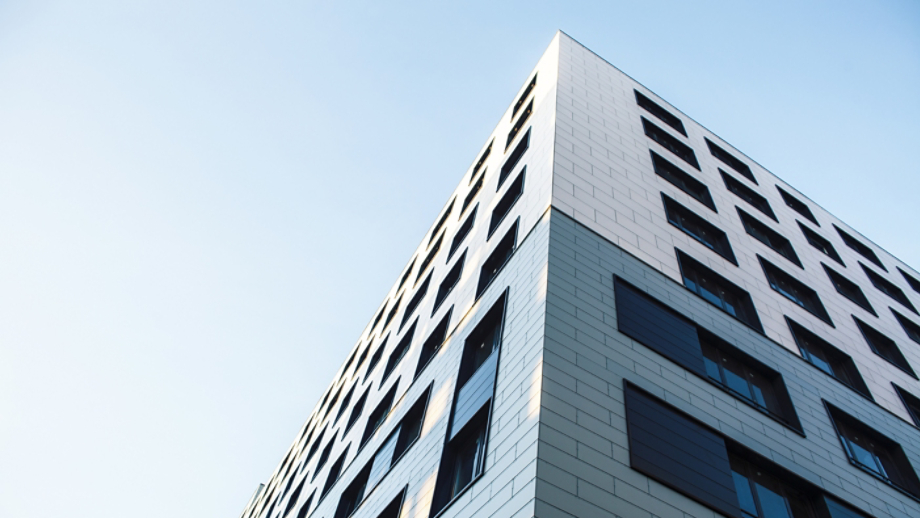
For decades, buildings were treated as static infrastructure. Heating and cooling systems ran on fixed schedules. Space was planned once and then rarely (if ever) revisited. Energy use was tracked after the fact rather than optimized in real-time.
That model no longer fits how we operate today. Work patterns have changed. Occupancy is fluid. Assets are more complex. Expectations around comfort, efficiency and sustainability are higher. Organizations are also under pressure to reduce energy use and operating costs while extending the life of critical equipment.
Smart buildings rely on the integration of many technologies—from HVAC and building automation to IoT sensors, controls, and AI analytics. An Integrated Workplace Management System (IWMS) plays a key role in this ecosystem by connecting the data, processes and workflows that allow these technologies to work together. An IWMS provides the operational backbone that helps organizations optimize maintenance, space use and asset decisions across their portfolio.
That is the space where Nuvolo has built our expertise. Recognized as a leader in next-generation connected workplace and enterprise management solutions, Nuvolo gives organizations a unified way to manage space, assets, maintenance and the workplace experience across their portfolio. In 2023, Nuvolo joined the Trane Technologies family of organizations to help meet the growing demand for intelligent workplace and asset management solutions.
Some companies talk about sustainability, while others talk about operations and costs. Very few look at that picture holistically. What makes our model different is that we are intentionally solving for both performance and decarbonization across the building lifecycle. We are not just optimizing a single system or metric; we are helping customers manage how the built environment is designed, operated and experienced. The result is powerful: a single cohesive framework that links how smart buildings perform with how people actually use them, so that decisions about cost, comfort and sustainability are made together instead of in silos.
What is a smart building?
A smart building is one that is optimized for day-to-day efficiency and comfort along with long-term goals like operating cost reduction, capital planning, lease management, utilization reporting and tenant satisfaction. Integrating tools like IWMS, building automation and AI-powered advanced analytics can help organizations manage systems, energy use and occupancy, improving everything from energy costs to desk and room use. These tools also help track and maintain assets and equipment to support preventive maintenance and integrate asset lifecycle data that can help optimize replacement or upgrade timing and cost. At the same time, they support the workplace experience for employees, ranging from room bookings to comfort or service requests.
One of the biggest misconceptions is that a building can become “smart” one device at a time. But you can have a smart HVAC unit, a smart lighting system and a smart elevator network, and still make suboptimal operations decisions if those systems are not coordinated. Many buildings are “efficient on paper” but waste resources in practice because of poor coordination, underutilization and outdated operating assumptions. Whole-building intelligence means moving away from the model of optimizing devices individually, and instead focusing on balancing the needs of people, equipment, costs and sustainability across the entire building ecosystem.
Fully optimizing buildings for longevity, efficiency and sustainability would not be possible without AI. The volume of data involved, from equipment performance to occupancy patterns, is simply too great for humans to process on their own. AI works in two complementary ways in smart buildings. On a daily basis, it can correlate thousands of data points to automate actions that increase efficiency and comfort while reducing costs. Over the long term, it can look at performance data for the entire portfolio to help answer big questions like when to replace versus repair and which investments will have the biggest impact on expenses and emissions.
Smart buildings can save money while increasing sustainability impact. When you optimize your largest assets, you reduce both costs and emissions at the same time.

Smart buildings in practice
At heart, smart buildings are about making the places where we spend our days feel as intuitive and responsive as the smartphones in our pockets. In a real-life example, at a laboratory operating across more than 20 locations, facilities teams needed a better way to manage a portfolio of complex building systems while maintaining the right environment for the highly specialized work. Using Nuvolo’s IWMS platform as the operational hub, the organization centralized the management of critical assets (including HVAC, electrical systems, elevators and escalators) into a single smart building system.
By digitizing maintenance workflows and improving visibility into asset performance, the lab was able to respond more quickly to temperature and environmental control needs, while optimizing operational efficiency and preventive maintenance. The result was a more resilient operation that supports both critical research and the everyday comfort of the people conducting it.
In another example, we saw firsthand how inefficient systems impact the bottom line. In the former Nuvolo headquarters in Wellesley, Massachusetts, the building looked efficient on an energy-per-square-foot basis. But when we looked at the data using smart building technology, we realized that only a handful of people were fully leveraging the 150-desk office. Measured in energy use per person, the picture was completely different, and that data gave us the tools to better align our operating costs with how our teams actually worked. That’s the power of smart buildings.
The people perspective
In a smart building, automation, controls and mobile tools enhance comfort and usability. An IWMS complements these technologies by coordinating service requests, maintenance and space needs behind the scenes. People don’t need to remember to turn lights off; they respond automatically. If someone checks in on their app and notes they’ll arrive at 2:30, their office will adjust comfort settings accordingly. Meetings are no longer uncomfortable because a room is too hot or too cold: the environment is quietly managed in the background so that people can focus on their work, not the building.
Beyond making life easier for occupants, smart buildings also improve the day-to-day reality for technicians and facilities teams. Too often, these teams are buried in paperwork and emergency service requests. By leveraging an IWMS and AI to proactively identify maintenance needs and suggest actions, technicians and building managers can move from reactive responses to proactive performance.
These seemingly small shifts have a measurable impact on employee satisfaction and talent retention. When smart buildings remove friction from the workday by eliminating distractions, delays and discomfort, they create an environment where people can focus on their work without expending energy managing the space around them. Across every industry, technology has raised expectations for comfort, efficiency and sustainability. Smart buildings simply reflect that shift, using intelligence to improve comfort while reducing cost, waste and environmental impact.
The future of intelligent buildings
Decarbonizing the built environment can’t be accomplished through equipment upgrades alone. It also requires continuous operational intelligence that can coordinate maintenance, energy, space and asset performance in real time. Smart systems like these are about creating environments where people can do their best work while using less energy and fewer resources. They are about giving facilities and real estate teams the information they need to make better, faster decisions. Most of all, they are about turning big-picture sustainability commitments into everyday outcomes, one building and one asset at a time.
At Trane Technologies and Nuvolo, we are committed to leveraging AI and digital climate technology to boldly challenge what is possible for a sustainable world. Smart building solutions like these will continue to propel us toward our Gigaton Challenge, our commitment to help eliminate one gigaton of emissions from our customers’ carbon footprint by 2030.
By catalyzing smart building technologies, we can help our customers and partners build a future where financial performance and sustainability outcomes reinforce each other. That is the promise of smart buildings: an operating model that aligns cost savings, comfort and sustainability.
The future is ours to create.
Explore careers that make an impact at Trane Technologies
Topic Tags