 English
March 19, 2026
Powering the Future of Energy Smart Data Centers
As AI demand grows, data centers are becoming some of the world’s most energy-intensive facilities. Learn how Trane Technologies is collaborating with organizations like ES2 to advance energy-smart data centers through breakthrough cooling innovation, AI-driven optimization and sustainable digital infrastructure solutions.

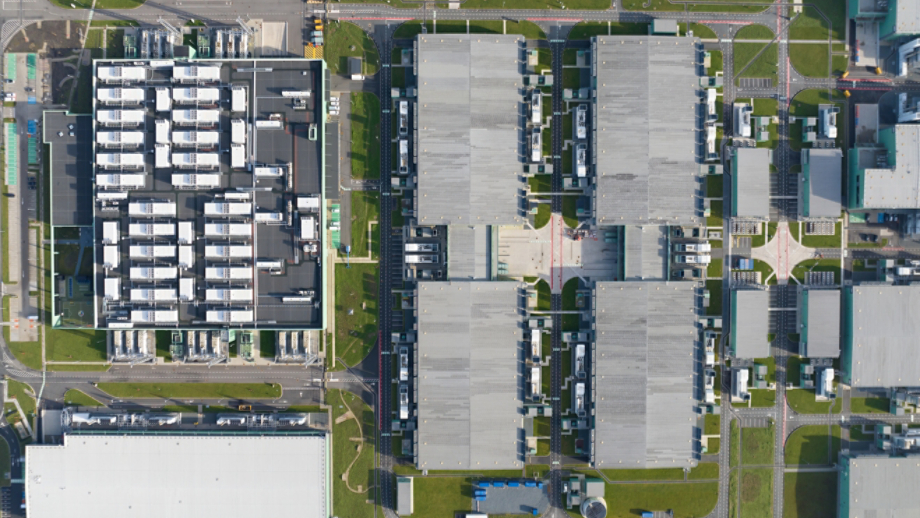
As AI adoption accelerates and global digital demand skyrockets, data centers are becoming some of the world’s most energy-intensive facilities. Improving data center energy efficiency has never been more essential. That’s why Trane Technologies is proud to be a member of the Center for Energy-Smart Electronic Systems (ES2), a National Science Foundation Industry and University Cooperative Research Center that is reshaping how data centers operate.
ES2 brings together academia, government and industry to develop next-generation methods for optimizing electronic systems — reducing energy use, improving cooling performance and enabling the sustainable, high-density digital infrastructure the world relies on.
Through research funding and advisory board participation, our membership in ES2 underscores our commitment to climate innovation and our role in advancing data center decarbonization.
Why data center energy efficiency is critical for a sustainable future
Modern data centers face a new set of challenges: higher thermal loads, AI-driven compute spikes, rising energy costs and the need for low-carbon operations. Improving sustainability and performance requires both efficiency and intelligent resource management.
ES2 addresses these needs by researching systems and controls that:
- reduce cooling energy consumption
- improve data center thermal management energy efficiency
- enable higher server density
- support low-carbon operations
- increase operational resilience
The conversation around sustainable data centers has shifted. It’s no longer about whether we should optimize data center performance — it’s about how quickly we can deploy smarter, more sustainable solutions.

The benefits of energy smart systems
Energy smart data centers don’t just reduce emissions, they boost performance, lower operational costs and increase reliability. ES2’s research spans the full ecosystem of data center cooling, power distribution and intelligent controls, delivering real-world solutions that create measurable impact. Key areas of research include:
1. Holistic IT Load Management and Predictive Control
Advanced algorithms forecast workloads and distribute computing across the ideal number of servers. This minimizes energy waste and ensures cooling is aligned with real-time IT demand — essential for supporting high-power AI systems efficiently.
2. Advanced Air Cooling Technologies
ES2 models airflow, containment, active tiles and close-coupled cooling to enhance data center air management. Validated predictive models help operators dynamically adjust airflow and temperature for optimal performance.
3. Intelligent Thermal Controls
By incorporating real-time sensor data (temperature, pressure, airflow), ES2 researchers develop AI-enabled controls that improve cooling strategies, enhance reliability and reduce operating costs.
4. Warm Water Liquid Cooling
High-density compute environments demand more efficient solutions. Research into warm water liquid cooling enables compressorless systems and reduced energy use — ideal for AI clusters and dense server racks.
5. Two-phase and Immersion Cooling
As rack power increases, immersion and two-phase cooling help push performance boundaries. ES2 advances evaporator performance and immersion system design to support next-generation chips and AI workloads.
6. Waste Heat Recovery
Data centers generate substantial thermal energy. ES2 explores ways to capture and reuse this heat, reducing energy loads and supporting circular thermal systems.
7. Power Distribution and Energy Storage
Optimized power electronics and control systems support peak shaving, first-level backup and improved energy efficiency across the entire facility.
8. Embedded Cooling
Chip-level cooling research explores advanced direct contact technologies to improve heat transfer at the module and component level — crucial for enabling future high-power processors.
9. Data Center Environmental Metrics
Tools like ES2’s open source Data Center Environmental Calculator help organizations measure Scope 3 carbon and water scarcity impacts, enabling more strategic sustainability planning.
ES2 in Action: Real-world impact for digital infrastructure
Just as electrification is transforming buildings and transport, ES2 is transforming the digital backbone of our economy. ES2 research enables:
- improved energy efficiency for high-density racks
- lower total cooling energy use
- smarter controls for fluctuating compute demands
- solutions that support renewable-powered operations
- greater resilience in the face of rising energy costs
These advancements help data centers achieve sustainability goals while maintaining the performance and uptime modern workloads require.
What’s next for sustainable data center design?
The next era of digital infrastructure will be defined by AI-optimized data center cooling, low-carbon thermal management systems, advanced liquid cooling technologies, integrated power and cooling controls and high-density, high-efficiency compute environments
ES2 is leading the research that makes these innovations possible. With high-temperature liquid cooling, predictive control systems and real-time optimization, the future of sustainable data center technology is already taking shape.
Every breakthrough developed through ES2 brings us closer to a world where data centers are high-performing, low-carbon and resilient. By designing for efficiency and sustainability today, we enable the digital infrastructure needed for tomorrow’s economy.
Topic Tags