 English
October 06, 2026
How Electrification and AxlePower Drive a More Sustainable Cold Chain
Electrification and e-axle solutions are reshaping refrigerated transport by recovering energy and lowering fuel and maintenance costs.

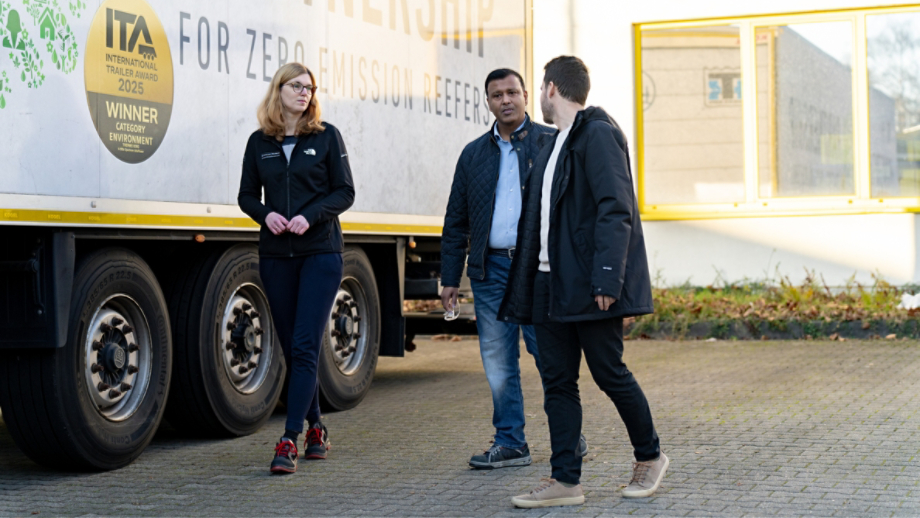
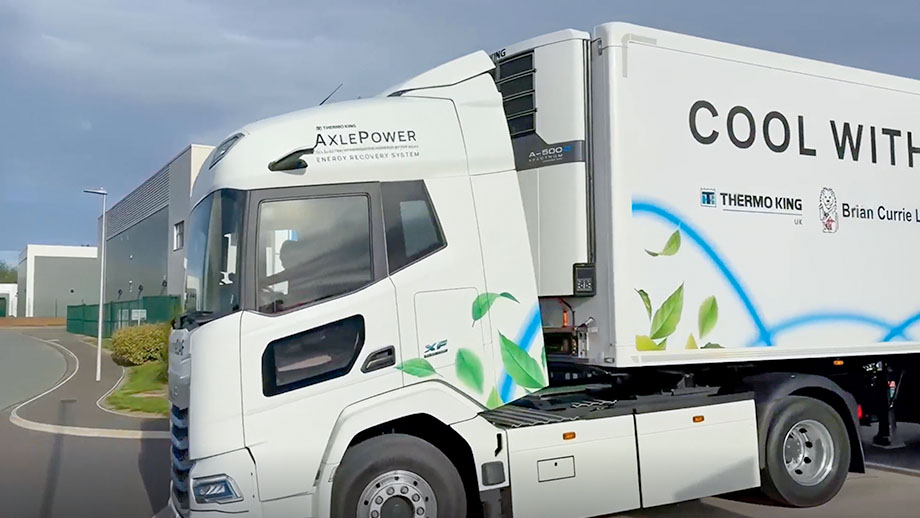
Few people consider where the power for a refrigerated trailer's cooling unit comes from. Our work and innovation focus precisely on that question. The Thermo King Advancer AxlePower electric axle solution is redefining how refrigerated transport is powered through electrification, by delivering a system that is more efficient, sustainable and economical.
At very simple terms, like you could break the system into two subsystems. You've got an axle with generators mounted, and it's helping to convert the mechanical energy or the motion energy into electrical power. Then you've got another subsystem, we call it an electrical control smart subsystem, which is saying, hey, I've got the electrical power, let me store it in a battery. And I'm ready to provide electrical power to the refrigeration unit. So these two soft systems are so well integrated and smart that they only pull the power when required and store the power as much as required and then are available to provide power to the refrigeration unit. So basically you can run your refrigeration unit in full electric mode as much as possible. When we were testing this electric axle solution, we had almost 18 different test profiles going across Europe. There was multiple times these drivers were breaking, people were going up and down on the terrain, and all this is recuperative energy. So if you don't use this energy, basically you're losing it in heat. Even when initially we would think we should size large generators to just generate more energy, we said, no, we need to find a smart system to actually store the lost energy. And this is the advantage of the Axlepower solution. So you are able to store the braking energy and use it later for your other electrical loads, let's say. It's always this challenge when people are saying, hey, electric solution is an expensive solution. What am I gaining out of it? My current refrigeration unit is doing the job. But I think from an electric solution perspective, they are missing that point where, hey, today I am spending money for the diesel. Today I'm spending for the maintenance of my refrigeration unit, which is not so obvious when you buy just a product. But over the life of a product, you're having a lot of operational costs, which is which is normal for a mechanical diesel engine solution. But you switch over to electric, they have less maintenance. They don't need to worry about fuel. And in almost more than 50% of the use cases, they don't need to connect to the grid. So basically, they can have much less operational costs. When we speak to the customers, we said, look, we have looked at your last one year of your usage. We have our telematics and we see that this is the amount of energy you need on a daily basis. All of our tests shows in the last two years, more than 80 to 90% of the customers don't even use half the capacity available over the day. We realized that with electrification we have opportunity to innovate, not just buy products and assemble and say, look, here's an electric solution. Today what you see is that ground up, we design our own power electronics, we build our own software, we integrate all the systems, and that's why we were able to make a differentiation with an Axlepower solution. It was not simply packaged together and to say that this works. In terms of the future long-haul transportation, the best solution is a fully integrated solution. Power agnostics have enough capacity to meet most of your energy needs, be able to connect to a solar on an ePTO or an E-axle. The more added value is adding the smart intelligence on top of that, you are able to customize and optimize your product based on your daily and your application needs. So it's just not a single product you buy, but you're buying a product and an experience which you can use it over, over, over and over again.
Two subsystems, one integrated solution
The architecture of the AxlePower solution can be understood as two closely integrated subsystems.
The first consists of generators mounted directly on the vehicle's axle, converting the mechanical energy of motion into electrical power. The second is our electrical control subsystem, an intelligent energy management system that stores power in a battery and delivers it to the refrigeration unit precisely when needed.
Because these subsystems communicate so effectively, the system draws and stores only the power required at any given moment. This level of coordination allows the refrigeration unit to operate in full electric mode for most of its duty cycle.
Recovering energy that would otherwise be lost
During development, we validated this solution across 18 distinct road test profiles throughout Europe. Braking events and elevation changes generate substantial recuperative energy that, without heat recovery, is simply dissipated as heat.
Our initial instinct was to compensate for increasing energy needs by specifying larger generators. Instead, we determined the more effective engineering solution was a system to capture and store that recuperated energy for use.
This is the core advantage of the AxlePower solution: it operates much like an electric thermal energy storage system, recovering braking energy and making it available to meet the refrigeration unit’s cooling demands, rather than letting it go to waste.
A better total cost of ownership through electrification
A common objection to electric solutions is upfront cost, often framed as: my current refrigeration unit already performs adequately, so what am I gaining? This perspective overlooks the full cost structure. Diesel fuel and ongoing maintenance are continuous expenses that accumulate over the product's operating life, a reality inherent to mechanical systems.
Electric systems substantially reduce that burden. They require less maintenance, can eliminate fuel costs, and in more than half of real-world use cases, do not require a grid connection at all. The result is a meaningfully lower total cost of ownership.
When addressing range anxiety, we demonstrate this directly to customers using their own data. By reviewing a full year of usage through our digital solutions and telematics platform, we can show precisely how much energy a given operation actually requires. Across two years of testing, we have consistently found that 80 to 90 percent of customers utilize less than half of the available energy capacity.
An engineered system, not an assembled one
Electrification presented an opportunity to innovate at a fundamental level, rather than simply integrating off-the-shelf components under a new label. We design our own power electronics, develop our own software and integrate every system in-house. This ground-up approach is what enables genuine differentiation in the AxlePower solution.
The most effective solution for long-haul transportation will be a fully integrated one: a power-agnostic platform with sufficient capacity to meet most energy demands, capable of interfacing with sustainable energy solutions like solar, an electric power take-off (ePTO) system or an e-axle. And, the greatest value will be delivered by layering intelligent controls on top of that foundation, enabling customers to optimize performance for their specific applications.
Electrification

Topic Tags