 English
September 24, 2026
Energy Management: Lessons from London Climate Action Week
Lessons from London Climate Action Week on how we can apply AI and energy-efficient solutions to buildings, data centers and the energy systems that power our world.

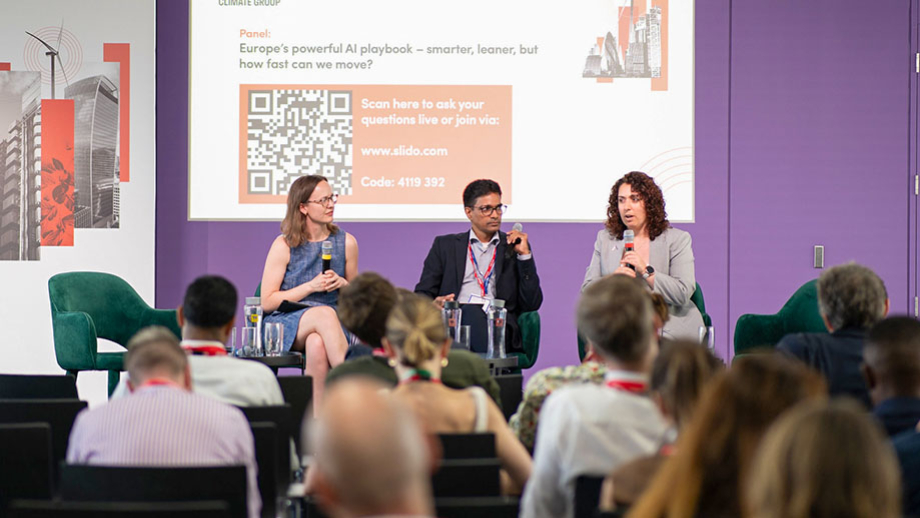
During the 2026 London Climate Action Week, a key question emerged: As energy demand grows, how can we make better use of the energy we already produce? One of the most promising paths we have available is to make the structures and systems that consume energy more efficient and intelligent.
With innovative AI-powered tools and efficient technologies, we now have the opportunity to bring intelligent building energy management to a whole new level. By applying AI control and energy-efficient technologies to the systems and structures that power our economy, from buildings and the cold chain to data centers and grids, we can make our existing energy resources work more effectively. If we focus on the spaces where performance and resilience matter most, these tools can become drivers of sustainable growth.
New tools for energy demand management
We are in the midst of an exciting time for energy management. AI tools and efficient technologies can help us understand when, where and why energy is being consumed — and give us the ability to improve that usage. Leveraging these tools for energy demand management is like putting a smartwatch on an asset: giving operators a better view of how energy is being used, identifying hard-to-see patterns and supporting incremental improvements. We can use these tools to create a tailored energy demand “health plan" over time and then refine that plan as operations and needs change.
Smart buildings show how this works in practice. In a smart building, AI-powered controls can analyze everything from weather patterns to occupancy, then adjust heating and cooling to better manage energy demand. In a recent deployment, BrainBox AI, a Trane Technologies’ company, implemented its AI Control solution across 616 retail stores and saved the customer over $1 million in costs in 12 months, reducing electricity consumption by almost 8 million kWh.
The same principle can support improvements in data center energy usage, and we’re already seeing results from real-world applications of efficient data center cooling technology. In India, Trane® custom-engineered a data center cooling solution that reduced a hyperscale data center’s energy use by 18% and cut CO2e emissions by 33,000 tons. And in Beijing, Trane’s advanced data center cooling solutions reduced the electricity use by over 16.5 million kWh.
The technologies used to manage heating and cooling in a retail store and the solutions used to reduce data center energy usage may look different, but the underlying principle is the same: understand how business needs and conditions impact energy requirements and then use that understanding to improve energy demand management. These examples demonstrate a broader shift in energy management: from reacting to problems after they occur to predicting and optimizing proactively.
AI is unlocking new opportunities for energy optimization in buildings. Predictive modeling based on real data - that’s the game changer.
Dominique Silva
Marketing Leader EMEA, Trane Technologies
From reactive systems to predictive performance
My key takeaways from London Climate Action Week are that energy strategy is business strategy, and AI is unlocking new opportunities by enabling our energy management systems to move from reactive to predictive.
By giving us the tools to predict and proactively manage energy demand, we can make the energy we already produce work harder everywhere from residential heating to hyperscale data center energy usage. When we apply it to operating challenges, AI can help reveal opportunities that conventional systems might miss, helping reduce waste, manage demand and improve performance. Finally, energy-efficient technologies can turn those insights into action, translating data into measurable performance improvements.
This shift from reactive to predictive performance gives organizations a new set of tools for managing energy demand. By combining real-time data, AI and efficient technologies, we can better understand how systems are performing and where improvements can be made.
Scaling what works
London Climate Action Week reinforced that many of the technologies we need for energy management, from AI-enabled building controls to data center cooling and heat recovery solutions, already exist. The challenge is to scale them across systems and sectors.
Scaling these solutions must begin with clearly defined goals. Where is energy being wasted? Where could better data, more efficient technology or predictive insights improve the outcomes? Starting with these questions will help organizations select the right technology and develop a practical path to implementation. Human expertise needs to remain integrated into this process, because people are needed to bring the required context, experience and judgment to turn information into action.
We can bring more energy intelligence to the systems already around us, moving from reactive operations to predictive performance and from isolated improvements to coordinated energy management. By applying AI and efficient technologies, we can help every unit of energy create more value for businesses and communities.
Learn how we are continuing to lead the way in climate innovation.
Read our latest Sustainability Report
Tomorrow is full of possibilities, and they're ours to engineer.
Ready to make an impact? Explore careers at Trane Technologies
Topic Tags