 English
September 08, 2026
Built Differently: The New Rules of Data Center Design
Season 6 Episode 1: How scalable data center cooling and infrastructure design are enabling data centers to adapt to changing technologies and growing demand.
We're building high-performance machines and systems for our customers and for these data centers so that they can operate most efficiently and have this flexibility that's needed into the future.
A lot of the basics on how you run a data center can be standardized, and then you adapt to the geographical situation.
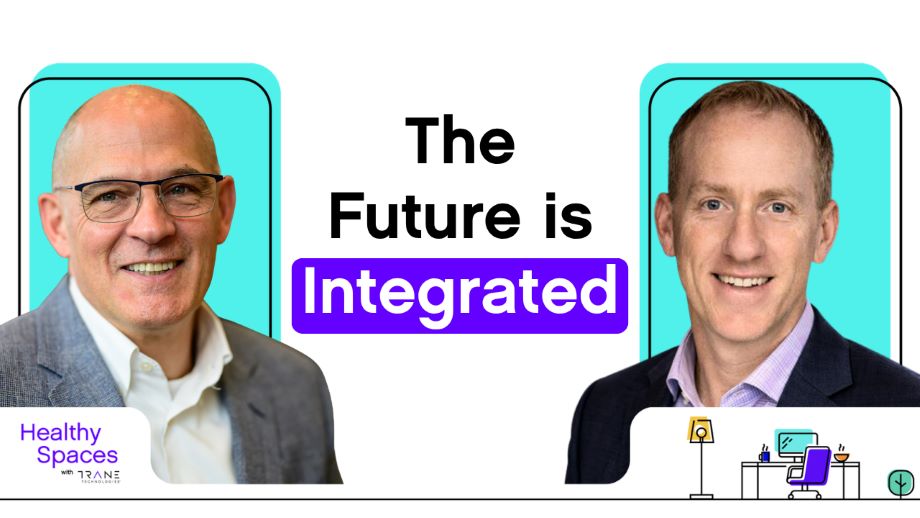
The era of the standard data center is over.
Okay, that's a big statement, Dominique.
Scott, just think about it, right? The technology is evolving so fast, whether that's cooling technology, the chip technology, even the demand, right, around AI. It's all changing so fast, we just can't standardize.
Innovation always happens when we view things as a problem that need a solution. And this is actually one of those moments where data centers are more complicated. We have to design them differently, so it's ripe for sustainable innovation.
Wherever there is a challenge, there's always an opportunity.
I love your thinking there.
So, if we've left behind this standard way of doing data centers, what's the new way forward?
Well, to find out, I spoke to Oakley Roberts. He's the president of data centers at Trane Technologies. Let's get into it.
I'm Dominique Silva.
And I'm Scott Tew, and this is "Healthy Spaces," conversations at the frontier of sustainable technology.
Yeah, I started working with data centers back in 2019, and it was a different world then. It was before ChatGPT was a household name, and things were very standardized. We're building, today, data center structures that are designed to last decades of time, but the chips that we're putting inside of those data centers, they last a much shorter amount of time, and it's creating an environment of engineered flexibility. And the data center is a physical creature. It has to sweat, breathe, reject heat, and you have to match the lungs to the local climate, or the machine fails. So, if you think about London with a milder, kind of, more human climate versus Texas that's dry and hot, if you think about the thermal swings of the climate in Texas, it's a very diverse, you know, thermal environment, and that's very different than what you find in London. The result is you have to apply, you know, very different design architectures to these locations.
Well, let's dive a little bit into this notion of different places, different answers, right? We were kind of just talking about climate, but it goes far beyond that. You move into the other factors, like regulatory environment, and, you know, just take, like, Europe in general, but if you come back to Texas, it's a big state, and a lot of these data centers in Texas are seeking opportunities to help find their land, so open land, but also power. Power constraints is obviously one of the driving factors in the infrastructure build-out. And there's a lot of energy in Texas, you know. We're seeing the approach to "How do we solve the power generation challenge?" is a different opportunity there because of the source that's available. And that creates different design opportunities around cooling data centers. Those gas turbines that are being used to help supply power put off high-temperature, high-grade heat. And you can do things like absorption chilling. You can actually capture that heat and use technology to create more cooling. What excites me, whether you're talking about our example in London or Europe or in a very different place like Texas, it's a system design challenge, and it's the opportunity to think about, "How do we reduce waste?"
Well, maybe let's double-click a little bit on that whole cooling aspect, right? You've already alluded, right, to the thermal management complexity and the fact that we're even looking to heat waste as a power source, ultimately. So, can you help me and our listeners sort of break down, "What does the cooling process for a data center actually look like?" Right?
As we got into the AI era and the silicon and the servers and the compute technology required to meet that demand, it changed the amount of heat that's coming off of that due to these chips. And the chips then had to be cooled in a different way. You couldn't just blow air over a chip to cool it. You had to start to use liquid, and that revolutionized the way that data center infrastructure is being designed. And so, the technology that's being deployed in a modern AI data center today is primarily liquid-cooled, direct-to-chip technology. So, you're actually taking water and cooling it, and then it has to go through a thermal system that arrives at the chip, where it then gets heated up by the chip. And then you have to reject that heat to the atmosphere. One way to think about it is "chip to atmosphere" type of thermal management. And that creates an opportunity to really think about how you break that system down to provide the best way to deliver liquid to the chip and get it out to the atmosphere. And so, even the design is broken down now. So, if you're inside of what's called the data hall, where these servers sit and these chips are being cooled by liquid, we use part of our system called a CDU, or cooling distribution unit, to manage what's called the technical water loop. And it's very specific to optimize delivering the flow rates to the chips. And that CDU gets connected to another liquid cooling loop that's much larger, called the facility loop, that's connected to a chiller. And all that is connected to a heat rejection device that allows you to release that heat to the atmosphere. As we were just talking about, you can actually use that to say, "How do we capture that heat and not release it to the atmosphere and try to do something more useful with it?" So, it's very complicated, and it requires a very high level of system engineering and optimization to make that work. And liquid doesn't cool everything. We still have to use traditional methods of what we call, like, air cooling because there's many other things besides the chip that produce heat. We have space that it needs heat removed. So, it's become a hybrid environment where some of that air cooling technology that's been around for a very long time is being combined with this liquid cooling technology.
You know, the other day, I had to explain the difference between air cooling and liquid cooling to a friend of mine who works in IT and doesn't understand anything about cooling. And I was feeling particularly inspired. So, I said, you know, "You're going to go to the beach. It suddenly gets very hot. You've been fanning yourself for a very long time, but if you're not feeling cooler, what are you going to do?" And I say, "I'm going to go dip into the water, right, swim." I was like, "Aha! You have just uncovered liquid cooling, right? But you can't stay under the water for too long, right? You still got to peep up your head because you still got to breathe. So, what do you do? You fan yourself." So, anyway, I think they understood.
I could take your analogy in another way that's really relevant to what's going on in data centers. So, what you described is actually evaporative cooling. Water usage is a very important topic within data centers because we have to minimize the amount of water that a data center uses to help. In history, one of the ways that you actually cool the data center was just like what you described. What you're doing is spraying or cascading water over these heat-exchanging devices to use that cooling effect. But that uses water because that water evaporates, and then it's not back. It's not in the environment. And so, a different way of cooling yourself from jumping in the water is a cooling vest that is a closed-loop system, you know, and you could actually connect it to a cooling source that circulates cold water, right? And there's different ways of doing that, but you're not evaporating water. So, in a data center, we're doing a very similar thing now. We put primarily what's called a dry cooler device instead of a water cooling device. And a dry cooler device is nothing more than just a closed loop. So, you're not evaporating water, you're just recirculating water and then using the air or the environment to actually just remove heat from that radiator device. That sounds simple, but it's a very complicated system, but what it does is it removes the need to jump into the pool to cool off.
Well, I still want to jump into the pool, but I want to ask you another question. We opened up this conversation talking about the fact that chip technology is evolving very fast, right? And we're building data centers that are expected to be around for, let's just say, decades, right, for the most part. The technology that goes into these data centers can change, which will ultimately have an impact on how they are cooled, right? So, in your experience, how are Trane Technologies helping operators prepare for a future that they don't really know what it's going to look like?
It comes back to this concept of engineering flexibility and thinking through the system in terms of what is possible and changing the variables without having to change your capital investment. A couple simple ones you could think about is like, "Well, how much liquid cooling do I need versus air cooling? What's the temperature of the liquid cooling? What's the mix of the air versus liquid?" All these things have to be designed very specifically for today, but you can think about tomorrow and just say, "Well, could I change it by 10%? Could I change it by 20%? How wide of a range could I have so that my capital investment has that flexibility in the future?" And so, we spend a lot of time thinking about that with our customers. And it starts when you're at day zero, like before you break ground. And what that turns into is more hybrid architecture. So, it's more heterogeneous in terms of the technology that we're using to provide that flexibility. Think about, like, digital and controls and then, "How do you even use artificial intelligence to help artificial intelligence?" And we're building, like, very high-performance machines and systems for our customers and for these data centers so that they can operate most efficiently, so they can have this flexibility that's needed into the future, so it can meet those local demands of Texas versus London.
You know, Dominique, the discussion with Oakley really struck me because he used this term, "engineering flexibility." We're engineering today for very diverse situations in very unique places. Every place, every local place we place a data center requires an engineering customization because there are different requirements: water, energy, climatic conditions. And so, we're engineering at times for uncertainty. I mean, we can't predict where tech is headed. We just know it's moving faster, and this pace of change really makes this flexibility that Oakley spoke about more and more important.
And do you know who else is feeling the heat? Policy makers. I mean, amidst all of this rapid change, policy is also trying to catch up, right? Because all over the world, governments have spoken about their ambitions: "We need to scale data center capacity." In Europe, for example, I don't know if you saw the headline, Scott, Europe earlier this year announced that they're planning to triple their data center capacity in just the next seven years, right? Can you imagine that?
Well, I thought it was impossible for us to double that infrastructure, and now we're talking tripling.
And so, we also want to do that in the right way, and that's usually what regulations and policies are for. So, how do we balance this need to meet AI demand, to scale data center construction, but do it in the right way, the sustainable way, the resource-efficient way?
And be careful not to let regulations push us in a corner.
Right. And you know who knows a lot about that? My next guest. To answer the question of how Europe is going to triple its data center capacity, I spoke to Michael Winterson, Secretary General of the European Data Center Association.
Very potted history to get to where we are today. Ursula von der Leyen, so she first became president of the European Commission in the beginning of 2020. And they leaked very early on both the Green Deal, which we all know about, "Europe will be carbon neutral by 2050," but they also leaked something that no one really read except us geeks, which was "A Europe fit for the digital age." And they made a statement in 2020 that this was going to be Europe's Digital Decade. And I can tell you very clearly that both we humans and them policymakers see that, so far, the needle has not moved. And in fact, since then, we've seen things such as Mario Draghi's competitiveness report, where he's talking about Europe's failure to be productive like America, predominantly due to the failure to adopt technology. And then, last year, we heard from a senior executive vice president, Virkkunen, who stated that she wanted to see the tripling of data center capacity in seven years. And so, the idea behind the Cloud and AI Development Act is to define the ways in with which Europe and its member states can subsidize, support, and develop this market space. So, each member state will be asked to write effectively a digital strategy and then, behind that, a digital infrastructure plan. And then that will, in theory, receive funding and support from the European Union.
Why do you think Europe needs this now?
If I ever want to get a regulator riled up, I usually tell them that their digital brain is about half the size of the North American digital brain. That usually bothers someone. And then you explain, you say:
That would do it.
You explain that compute capacity in Europe is roughly half the size of North American installed compute capacity. And American businesses adopt technology faster and quicker and have benefited from it more than European businesses have. And so, Europe sees that they fundamentally need to change the game, and that has multiple issues. One is cost of infrastructure, where Europe is still more expensive on a variety of fronts, including raising capital and energy, two very important issues for us data center operators. But the other one is actually making sure that the technology is available and can be used. And in a world of geopolitical issues, you realize that Europe actually can't depend upon remote technology. And then the next thing, which has become a major, major issue, and we're seeing it quite publicly, is this whole issue of energy. And we've been putting up our hand for over two years now, saying, "We are now being told to wait seven to 10 years to connect to an electricity grid." So, that's private industry taking its capital and investing that capital in sustainable energy generation. And we can't connect our solar farms and our wind farms to the grid, and we can't connect our data centers to the grid. So, we cannot deliver sustainable IT in Europe because grids are basically saying, "Sorry, we're shut for business." And we've been talking about this with the European Commission for a while now. And so, it's driving us as an industry to look at other markets besides our primary five markets. And so, we're aggressively pursuing growth strategies in the Nordics and in Italy, Spain, Portugal. Poland is now coming up, Switzerland and Belgium. So, all of these markets are now becoming very interesting to us because they represent access to energy. And, in a certain way, that's actually good because we're bringing the technology closer to the markets that are using that technology.
And I'd love to also talk to you a little bit about that because building a data center in Norway is going to look very different from building a data center in Spain, right? And we know in Europe, when we like to create regulations, it's usually with the intents of trying to standardize.
Yes.
What's your take on that for the data center industry? Is it possible?
So, to be fair, in a certain sense, this is a yes and a no type answer to your question. At a very high level, there are some basic concepts that we can standardize, but you are absolutely right that there are going to be specific differences in geographies in that you pick certain design criteria at the very highest of level: construction materials, levels of redundancy in mechanical and electrical equipment, cooling methodologies, such as adopting free-air cooling and variable cooling. So, a lot of the basics in how you run a data center can be standardized, and then you adapt to the geographical situation. When we run data centers in Dubai, we spend a lot of time humidifying because it doesn't matter how your air conditioning's working if humidity levels are zero. And that actually is the same problem in Norway in the wintertime. And then the other side is in, we are trying to adopt models where we transfer our heat to a demand. And we typically see that demand drops as you get into warmer climates. However, one of our members just announced a partnership with a heat network that's being built in Milan. And so, there is going to be an exchange of heat directly to a heat network, which benefits both because not only are we obsessed with becoming carbon neutral by 2030, these 100-year-old heat networks have to decarbonize themselves between now and 2040, something like that. So, they're also desperately seeking new ways to get heat.
Well, we've spent a bit of time talking about heating, but this heat only exists because, in fact, we have a need to cool. I think, specifically in the data center space, the speed of innovation has been unlike what I've ever seen, right? Even in the built industry. And it also means we've ended up with a very wide and complex range of different cooling solutions that data centers can use today. What's your take on this, and how do you see this playing out?
I think some people think of data centers being built for liquid cooling versus data centers being built with air cooling. I think, in most cases, it's going to be a hybrid, and data centers are going to have to build with both circuits available, and we see this happening. And in most cases, we are actually able to share a single cooling circuit and break out both liquid and air cooling systems on the same loop. That's the dream that we're moving towards, and many of us are heading in that direction.
I think it's really interesting that we talked a lot about standardization, and then our conversation sort of morphed into the need for flexibility, but these aren't different concepts that can coexist.
The standardization is we all agree the need to do a hybrid data center, and we all agree that there are two or three ways to do it. And then we engage the suppliers in our industry, saying, "We may build this way, option A, option B, or option C, depending on cost and location." And so, those vendors are taking that standardized optionality, if you want to call it that, and they're designing their products to fit that, which is great. That's a novel way of us working together, which we didn't in the past. In the past, our cycles of innovation were very slow because we weren't sharing information across each other at the supplier level or at the customer level. And even the engineering companies that were in the middle doing the design and the build weren't collating the information and sharing it. So, we're accelerating the design cycle through this idea of allowing for optionality, but quickly picking best practice and then adopting it across the board.
And hopefully, this new model of collaboration and partnership will inspire other industries as well, right? They could be very fragmented.
So, you say "hope"; this is real. And in fact, we get a lot of stick in the press, but one of the major good news stories that's happening is that where we are innovating in areas of mechanical, electrical and heating and cooling, we are forcing our vendors to adopt new technologies, and we are effectively funding the research and development of these products on our backs, which they then incorporate into technologies that they take across industry. And this has already happened.
Now, Michael, I'm going to appeal a little bit here to your sense of vision, right? And as someone who has been in the industry for quite a few years now, if you have to imagine what's going to happen, especially in terms of data center capacity in the next seven years, what would be your best guess? Where do you see this is going?
So, luckily, it's not just reading tea leaves, though I am drinking a cup of tea. So, if you want, I can do that. It's convenient. No, we are running an annual research report. What the data basically says is that from two years ago to this last year's report, we saw money being invested in the ground, not just some of the high-level stuff of "I'm going to build a five-gigawatt something-or-other," but real money announced being deployed. We saw that amount of capital double in 12 months from about 80 billion euros to about 170 billion euros. And so, I think there was this real clear signal to the world that Europe is ready to invest in technology. And if you wanted to sell in Europe, you better be here in Europe.
All right. Well, Michael, since you mentioned at the beginning how much you thoroughly enjoy influencing policymakers and regulators—
Yes. I want to give you the platform one more time and ask you, what is that one thing you just wish that policymakers understood? What would make your job easier?
I think policymakers understand this, but they are currently being pushed to act by, I'm going to say, a journalistic story that's not fundamentally true. So, the whole thing today is that somehow data centers are taking all the electricity and raising energy prices, oh, and that we're taking all the water. The reality is our innovation in cooling technologies is such that we actually take very little water, less than golf courses, and we reuse that water, we recycle that water. In the case of electricity, we represent a huge growth opportunity. We're not the cause of a grid problem. We are a symptom of an underinvestment in the grid. We represent less than 9% of the increase on the grid that needs to happen for all of transportation, all of heating and cooling, heavy industry, light industry, three times larger each. So, we're not the cause of a problem. We are showing that an underinvestment in grids over the past 40 or 50 years is going to fundamentally make it impossible for regulators to achieve their Green Deal. They need to be making a radical investment in grids. And I understand it's hard. These grids are regulated. It's hard to raise capital. It's hard to deploy the capital at pace, but the speed with which these grids need to be grown to, not just for us, but for everybody, is two or three times faster than what the grids are currently forecasting.
You wish that policymakers would understand the urgent, critical need to invest even more in our grid capacity, our grid resilience.
Absolutely.
Rather than trying to stall the developments of industries that are contributing to the growth.
Yes, because currently we are being asked to swallow more cost, which will slow down innovation, slow down investment. So, yes, it's either you want this Green Deal and you want Europe to have a competitive sustainable market, or you are going to be unwilling to do it to the timeframe because you're not willing to invest in these grids. We're here to help. We have capital. We have technology. We are willing to take some of the risk, but this is an all-of-society problem. It's not a data center problem.
You know what really struck me about Michael's sort of reframe of the data center situation is that, given all the pushback, there's actually a lot of opportunity here. There's a lot of pressure. I mean, we have the speed pressure, we have the scaling, tripling, for instance. We have the demand for AI, and there's also communities that have expectations. And what that's really doing is forcing some true innovation. Innovation in cooling and how we reuse and think about heat, how we improve the grid, all of this simultaneously. I mean, the interesting thing here is that solving the data center problem will help us solve some other sustainability issues. That gives us a gain, an overall gain. These innovations can be applied to other areas of our economy, of the world. Things like hospitals, factories, schools all stand to gain because of the innovations that we're in the middle of right now because of data centers.
So, both Michael and Oakley actually landed on the same point. The answer is all about making it a hybrid of technologies. There's no such thing as one-size-fits-all. It's also about designing smarter systems, spoiler alert for the next episode. It's an opportunity to design intelligent AI controls that respond to requirements in real time, and this opportunity is huge. To be fairly honest with you, I don't think there's ever been a more exciting time to be an engineer. And on that thought, let's go back to Oakley to hear what speed really means for his teams. And that includes engineers, but also customers, that whole data center ecosystem.
It's an AI race. You hear that a lot. People say that, and it is a race. The race is about speed to deployment, and the race is to get to the finish line because at the finish line is a tremendous demand from all of us, humans, businesses, everyone that's demanding access to AI. And so, that race is about speed and speed to deployment. And how you get there is a big driver of how we think about system design. And the way that you take all those things and actually make it happen faster is through things like modular manufacturing. Recently, we acquired a company called Stellar Energy, which is a company that's a leader in modular manufacturing for data centers. So, you're able to package all this technology instead of thinking through, like, "Well, how do I deploy that in a construction project onsite in Texas or onsite in Michigan or onsite in Virginia," which are very different environments. And when you move it into a modular manufacturing approach, which means that when you're designing the system, you're actually designing it to be built in a controlled environment that can be replicated consistently over time and fast. On the thermal side, we take all that system engineering expertise. We're able to put it into a package that we can tweak and nudge for these different sites and then ship those modules to the data center site and then put them together and get them running. And it creates a differentiated speed to deployment.
It's really important, not only tackling this issue of speed of deployment, "We got to go faster," but I'm guessing, and correct me if I'm wrong, Oakley, it also sounds like it's much more iterative as well, right?
There's a convergence of a couple of these topics, and the future's a little bit closer to us than in this data center industry because of the speed. It's also about, "How do we get speed to deployment?" Things have to be iterative. You have innovation around the chip sets and the silicon that's coming out within the timeline of, "Hey, I've located and identified a site that I'm going to develop into a data center." If that's kind of like day zero and the finish line is the data center is running and operating and producing, what happens in between those two dates is very dynamic because the technology can change within those dates. The regulations can change within those dates. The way the community wants to work with the data center can change. So, there's so many things changing within what used to be, like, that was very rigid. In between the start and finish, that's pretty fixed. Like, things don't change, right? Things change outside of those two bookends. And that's not the case anymore. So, that flexibility is so important now, and it comes back to, like, we're talking about modular manufacturing. Well, if you've designed a system to be modular, if something changes, it's much easier to tweak, nudge, adjust than if you're trying to do a one-off construction project. It's a different way of, you know, to modify and change things. So, innovation pace is so fast here that you have to be super engaged in it, but you have to be very flexible within that, even within that process, because the future actually arises inside of those two bookends.
Okay, that is a wrap. And I love where this landed. The era of the standard data center really is over, and what replaces it is engineering flexibility. It's consistent enough to repeat. It's modular enough to adapt wherever it's being built. And the part that excites me, doing that fast is also our chance to do it sustainably. We're not waiting for the future to arrive. We're building it in every climate alongside our customers. I want to say a big thank you to our guests, Oakley Roberts and Michael Winterson.
And thank you for listening. This has been "Healthy Spaces" with me, Scott Tew, and my co-host, Dominique Silva. We're back in two weeks with another episode, so please be sure to like and subscribe so you don't miss out.
Data center cooling design for a changing AI landscape
As AI rapidly transforms data centers, the challenge is designing data center cooling and infrastructure that can keep pace with rising compute demands, increasing heat loads and long asset lifecycles.
In this episode, Oakley Roberts, President of Data Centers at Trane Technologies, discusses how teams are adapting through climate-responsive cooling strategies, the balance of liquid and air cooling, lower water use and modular system design, while Michael Winterson, Secretary General of the European Data Centre Association, explores the broader implications of Europe’s expanding data center capacity, including grid constraints, energy demand, regulation and decarbonization.
Together, they highlight a fundamental shift in data center design: building systems that balance speed, repeatability and flexibility while adapting to evolving technologies, local conditions and infrastructure needs.
Key moments
- 0:00: Why the era of the standard data center is over
- 03:26: How AI is changing data center cooling
- 06:45: Rethinking data center water usage
- 11:36: Europe's ambitions for the digital decade
- 19:52: How data center innovation benefits the whole economy
Featured in this Episode:
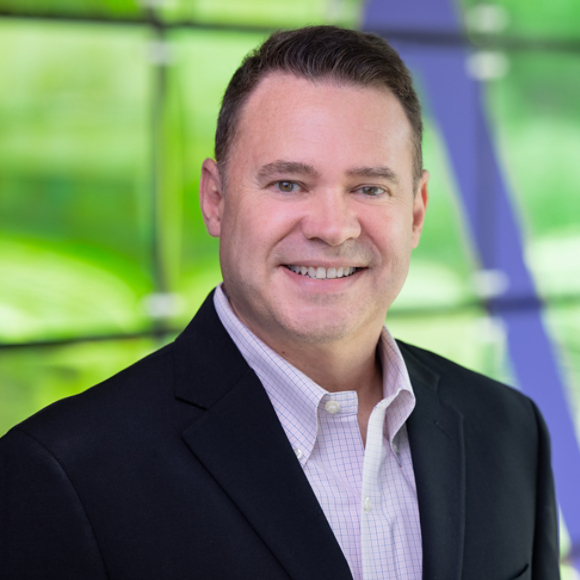
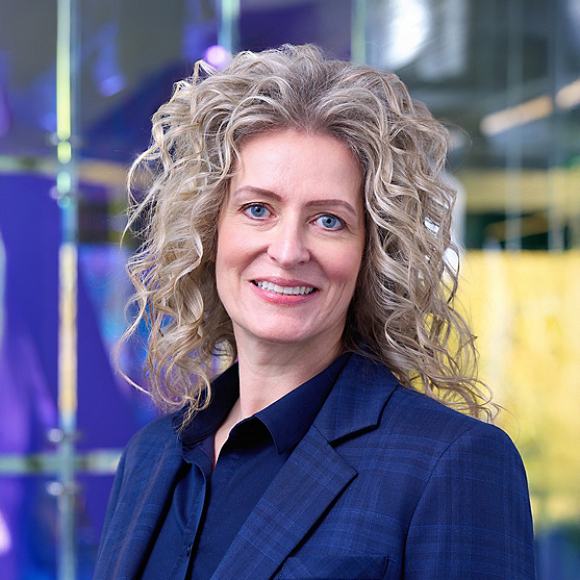
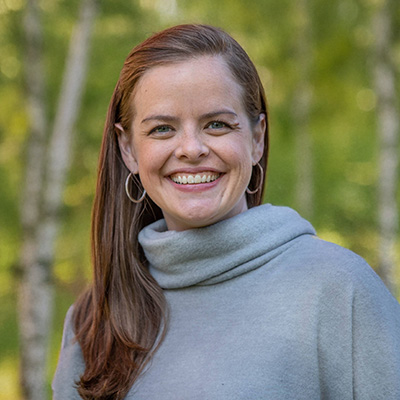
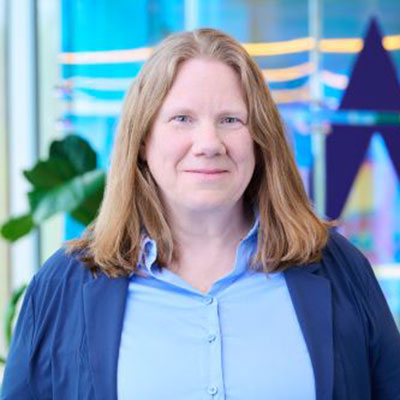
Hosts:
-

Marketing Leader EMEA, Trane Technologies
-
Global Head and VP, Sustainability Strategy, Trane Technologies

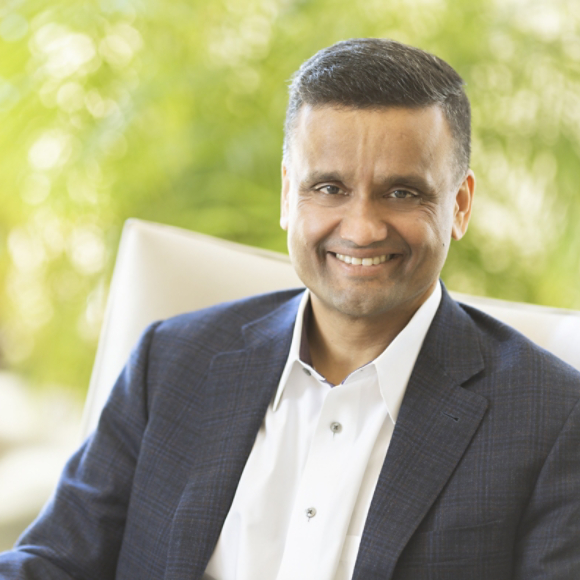
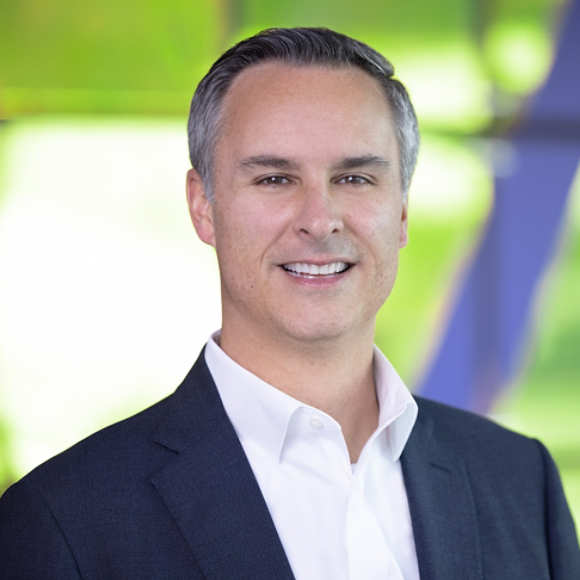
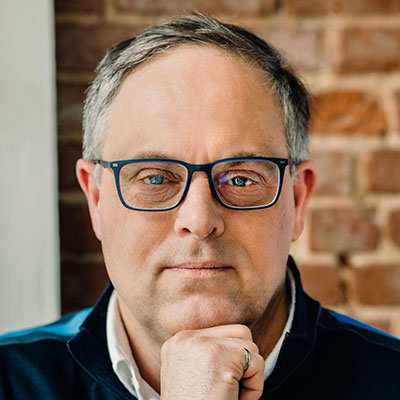
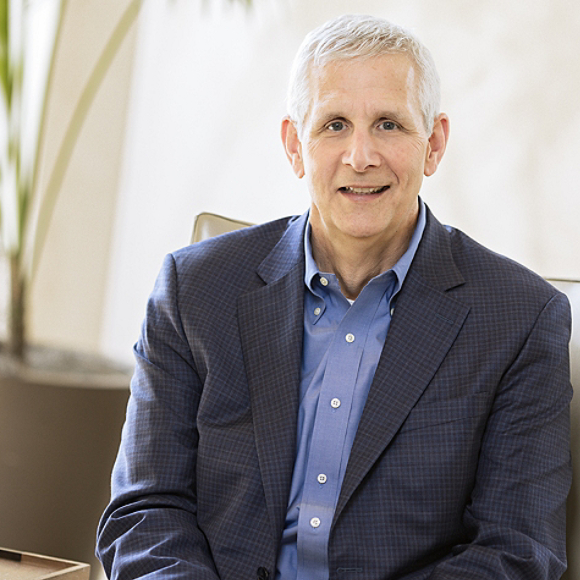
Guests:
-

President, Data Centers, Trane Technologies
-
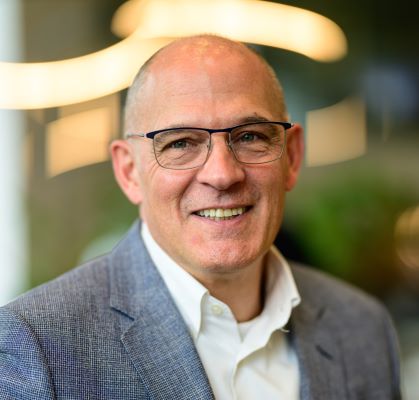
Secretary General, European Data Centre Association (EUDCA)
About Healthy Spaces
Healthy Spaces, a podcast by Trane Technologies, brings together engineers, innovators and industry leaders for bold conversations at the frontier of sustainable technology.
In Season 6, we zero in on the moment when innovation becomes infrastructure - when breakthroughs move beyond the lab and start transforming industries.
From pioneering AI research and next-generation data center cooling to climate-resilient cities and pathways to decarbonization, each episode explores the innovations at the cutting-edge of sustainable technology.
Designed for leaders, builders and anyone with a stake in the future of sustainable technology, the series offers a front-row seat to the ideas and innovations shaping what comes next.
The challenges are real. The solutions are being built now.




Topic Tags