 English
October 07, 2026
Decarbonizing the Cold Chain: Waste Less, Recover More
Season 6 Episode 3: Decarbonization strategies in the cold chain start with linking food preservation to smarter, lower-emission transport and storage. From reducing food loss and waste to leveraging digital solutions, AI and energy recovery technologies, this episode highlights how infrastructure, service and skilled people can create a cold chain that is more efficient, resilient and sustainable.
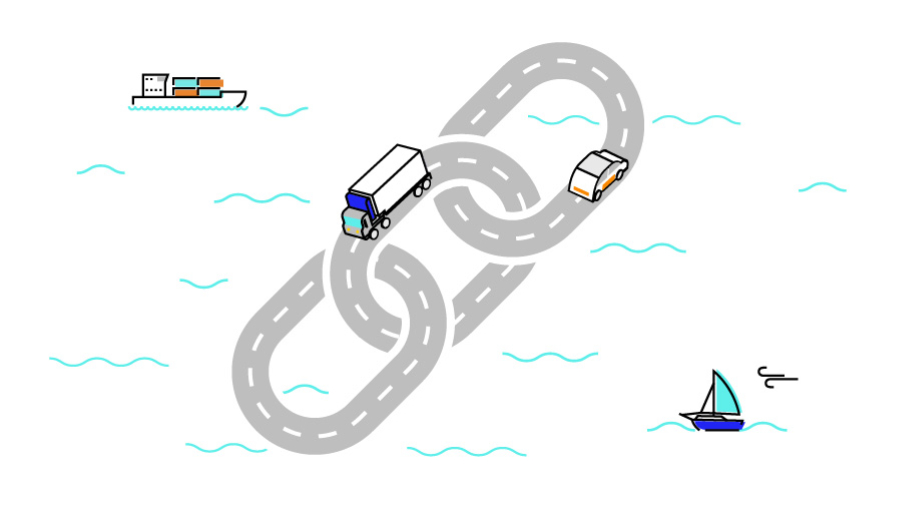
Every step adds complexity because the cold chain is only as strong as its weakest link. Our job in this business is to make sure that products are transported at the exact right temperature.
Whether it’s a third or 40%, it’s huge. It’s costing the economy, the environment and us socially. Some of the most wasted foods are the things that have got lots of nutrients in them, so we need to [act] from that point of view.
Dominique Silva:
The apple that I had for breakfast took me all of five minutes to eat, but it may have spent weeks in the cold chain just getting to me. Someone had to plant the tree, harvest the apple, bring it to the logistics center, transport it all the way to the supermarket until eventually it came to my fridge.
Scott Tew:
And you forgot to mention that it has to stay temperature controlled the entire time. This requires a lot of precision. It also requires a lot of efficiency.
Dominique Silva:
Aha. The magic word, efficiency. And as we keep innovating across the cold chain, we have an opportunity to always look at how we can improve on that efficiency. And it's not just about consuming less, it's also about reducing waste.
Scott Tew:
I mean, that's huge. And so the question is, how do we do it?
Dominique Silva:
All right. Well, all is going to be revealed in this episode. First up, we spoke to Dr. Liz Goodwin. She is the director of Food Loss and Waste at the World Resources Institute. She has spent her entire career highlighting a really important issue that most of us never see.
I'm Dominique Silva.
Scott Tew:
And I'm Scott Tew, and this is Healthy Spaces, conversations at the frontier of sustainable technology.
Dr. Liz Goodwin:
The larger figure and the larger estimates came from some work that was done by WWF. And the reason that the number is bigger than people have though in the past is because they've actually included stuff that's, say for example, on farm. Lots of farmers, when it gets to harvest time, decide it's not worth harvesting their crop because they're not going to get the money for it and so why spend the money harvesting it if you're not going to get the income back when you sell it? So there's a lot of uncounted food that is grown, but never actually gets into the supply chain. So that's the main reason why the number's bigger.
But actually the quality of our data is really not very good anywhere. And there's an awful lot of estimates and extrapolations and modeling. We do want to see more data and we want to see it better analyzed and better understood, but actually getting hung up too much on the numbers stops you doing something and really we've got to just get on and do something. Whatever the number, whether it's 1/3, 40%, it's huge. And it's costing the economy, it's costing the environment, it's costing us socially. There's so many impacts. We've just got to get on with it.
Dominique Silva:
Now let's talk a little bit about some common assumptions or myths. A lot of times I have this conversation with my friends and family and they're just like, "Well, the answer is simple. Just put a cold chain everywhere." What do you think about this? Is cold chain the solution to everything?
Dr. Liz Goodwin:
It can be a solution to specific problems, but we need to think about the whole food system. And the food system is very complicated and it's very diverse. In lots of places, for example, in Africa, supply chains are still quite informal and there's a lot of informal markets. And really cold chains work best when you've got formal markets, you've got guaranteed off takes, you've got contracts in place, you've got a degree of sophistication that we haven't got yet in Africa and we haven't even got in lots of other countries in India, in China. So cold chain doesn't always work. It's fine if you're looking at a highly developed country like somewhere in Europe where we know the supermarket is going to buy a certain amount of product and we know the farmer's going to produce a certain amount. You can slot in a cold chain there to make sure that the food gets through the supply chain in the best way it can.
But if you've just got a bunch of farmers who are taking their produce to the market to sell on a daily basis, providing them with a cold storage isn't necessarily going to help them because they have to pay for that cold storage and there's no guaranteed end market. We've seen lots of investments often with the best will in the world going into places like Africa, which are just not used. They become white elephants because they're sitting there without a farmer who wants it and without a market that's going to demand the product.
Dominique Silva:
What you're opening my eyes to is the fact that the cold chain isn't just a technology challenge. There's a lot more factors. And so before we jump to the solution, maybe let's spend some time breaking through where do these losses occur and how does the challenge look different depending where we are in the world?
Dr. Liz Goodwin:
Farmers have loss everywhere, all around the world. You'll get losses at the harvesting stage, you'll get damage as things are going through the early parts of supply chain review. You grow a crop of tomatoes, some of them get squashed. It's about how you get the food from the farm into supply chain and then all the way through. So you go to the warehouse and it's packaged and distributed, you'll get damage there and you'll get losses there. And then we buy this food and we put it in our fridge, we forget about it, we waste it. So we as households are a large part of the problem and certainly in the global north, in the UK it's still up in that high 60, 70% of all the wastage that happens from the food system in the UK comes from our households because we buy too much, we don't plan properly, and then we end up wasting the food or we cook too much and then we don't want to use the leftovers.
Some of the solutions are really simple. I always say the most simple things are plan your meals, write a shopping list when you're going shopping, try to remember what you've got in your fridge, try to understand the date labels because date labels are very confusing, but planning is fundamental.
Dominique Silva:
You mentioned farming and then we went to sort of the extreme of the consumer. Probably not a lot of people are aware of everything that happens in between, even in terms of transportation. If you want to transport strawberries from Spain to Belgium, for example, you need to make sure that you also have temperature controlled transport refrigeration and that requires a lot. It requires drivers, it requires good systems and control. It's so complex. And so Liz, a provocative question for you. When we throw away that banana that is too brown to be eaten, do you think that people understand just how much energy and emissions go into the cold chain today?
Dr. Liz Goodwin:
No, they don't. And it's going into all parts of the supply chain, not just the cold chain taking your banana as the example, the fact that the farmer had to harvest that banana and then they had to make sure that it got into a supply chain, it got transported. And as you say, through the refrigerated lorry, with the drivers who were trained, with all the maintenance people required around the whole exercise, our food system is a massive emitter of greenhouse gas emissions. It's a massive use of water, it's a massive use of land. And all those things, you have to add them all up as you're going through the supply chain to come out with the actual footprint of your banana that's arrived in your home. It's like the tip of an iceberg. You see the banana, but actually there's a whole mass under the water that is all the impacts and all the effort and the time and resources that went to make it.
Dominique Silva:
Is there any evidence that we've moved the needle in the past?
Dr. Liz Goodwin:
Yeah, we can move the needle, it really does require lots of little different changes because there are so many people involved. We need the governments to have the right policies, to prioritize it, to recognize the importance of roles that it plays. We need industry to do the right thing. We need farmers to do things. We need all the community groups to make sure that communities understand the value of the food. We need all of us to do things.
During COVID, there was clear evidence that household food waste in the UK went down by about 25% because we were all at home and we were able to plan our meals and we were cooking for our families. So we did actually reduce food waste quite a lot in the UK. And I cite that because I know the work was done in the UK, but I bet the same was true elsewhere. Sadly, as we came out of lockdown, the numbers went back up again.
Dominique Silva:
And I think the issue of shortage... We take everything for granted. You just gave the great example of COVID, but you brought up climate change and this is having an impact on food production as well, right? Farmers, they can't plant crops. We're unable to grow them. They're dying. Every summer you hear more and more farmers alerting to the issue around food shortage. So we can't wait for another crisis, we can't wait for another pandemic. I think it's really important that we all look to across the food chain and not just as consumers, but I work for a climate technology company. We develop technology that helps to keep food cool, well, temperature controlled throughout. So there's a lot of things that we can do all around.
Now, Liz, I'm going to give you a stage, right? Imagine you're in a room and you've got someone representing the consumers, the voice of the people. You've got someone on the side of the government, just generic, not going to be very specific. And then you've got the industry, those technology providers. If you were to give each of these three personas a sort of, "Hey, this is your biggest opportunity, this is what you need to be doing now so that we can continue to have a positive dent on this problem," what would you tell them?
Dr. Liz Goodwin:
We need to recognize that actually we need to have a sustainable food system. It's got to be sustainable because we've been running the food system as though it was just a bottomless pit. We could forever carry on with deforestation and converting more land into agriculture and grow more and more crops with the associated loss and wastage. We have got to get that food system under control because if we don't, we will have runaway climate change. We will have societies that feel the need to migrate to other countries because their country is suddenly no longer habitable. We will have businesses that cannot operate.
So it's really important for businesses, for governments and for people that we have a system that is sustainable and we can actually achieve that because we know what the solutions are, we've just got to make that link to it being important enough alongside all the other things that are really important, education and health and all those things. But actually having a good sustainable food system is really important as part of those. We are not going to have food security if we don't sort out the fact that the food system is not sustainable. We're not going to have nutritious diets for all our children if we don't sort out the food system.
Dominique Silva:
You brought out two terms there, one being food security, and we talked a little bit about the food shortage and how we take it for granted that we have available food today, but the other part is the nutrition. And so a big part of the sustainable food system is also preserving the quality of the ingredients. What needs to be done differently to also ensure that the nutrition part is being part of that discussion of sustainable food systems?
Dr. Liz Goodwin:
Some of the most wasted foods are the things that have got lots of nutrients in them, so we need to do it from that point of view. I think the more we can weave together some of these agendas, the more we'll see that reducing food waste isn't an end in itself. It's a way to ensure that everybody has a nutritious diet. It's a way to ensure we actually have food security and everyone can get the food they need. So it's a way to reach that overall goal and it's about maximizing the effectiveness of the food system. So it's not about we must reduce food waste because it's a bad thing. It's about all the benefits that we're going to get as a result of it.
Scott Tew:
So Liz reframed the whole thing for me. I mean, the answer is not a cold chain on every corner, she was really clear that we need a system. I mean, where there's no market to sell into, then refrigeration on its own is not going to be enough.
Dominique Silva:
You're right, Scott, but the transport system that keeps this going is mostly still running on diesel today. And you know what's absurd, Scott?
Scott Tew:
I'm sure you're going to tell me.
Dominique Silva:
A lot of the diesel is basically being used to help create kinetic energy, and a lot of this kinetic energy is then wasted as thermal energy. What happens to that energy? Our next guest is going to help us find out. So to make all of this a lot more concrete, I spoke to Claudio Zanframundo. He is the president of Thermo King EMEA and Asia Pacific. And in the meantime, I'm going to grab another apple.
Claudio Zanframundo:
The complexity of the cold chain is given by the number of steps that this apple needs to pass through from the moment it is harvested to the moment it is on our table. And you can imagine that the very first step is the harvesting, but then when you're harvesting a product, whatever it is, an apple or a banana, you need to immediately control the temperature for avoiding the ripening of the product. Then you need to think about the transport of the product. Now you can imagine products like the bananas, mangoes, avocados that are typically imported from Latin America, Central America, for example. They need to spend several days on a vessel for arriving in Europe, US, in a logistics center.
Now these transfers are taking weeks. It's a matter not about a few days, but if you have goods on a vessel, they easily take three, four weeks before moving from the center where they are collected to the first logistics center. Now what you have to do is to control the temperature, but also to control the ripening of the product. So we have devices that are also controlling the level of ripening in a way that is helping basically the device to control the level of oxygen, of nitrogen internally in the box. So this is helping to delay the ripening of the fluids. Otherwise, we would have just the fluids that are coming to our table completely spoiled.
Now, this is the first step, but when you arrive into a logistics center, imagine the vessel that is arriving on the port, the goods, the container full of products needs to be dispatched to another logistics center when then the goods are packet and then moved to the supermarkets. So that implies usually trailers that are typically moving on longer distances, but then you enter into the last mile where you have vans, smaller vans that needs to transport the goods.
So a lot of steps, every step is adding complexity because the cold chain is as strong as the weakest link of the chain. And the task in our business, that's the job we do, is to make sure that the products are transported at the right temperature in all those different steps and are arriving in our refrigerator or in our homes, on our table in a way that is proper for being consumed.
Dominique Silva:
So you've just talked me a very complex cold chain process that can take days, weeks, months, even depending on the product. And this apple took me five minutes to eat, and actually it might even take me five seconds to decide to throw away because it's spoiled, et cetera. So it always boggles my mind how much we don't really think about what it took to actually put these nutritious foods and goods on our table. And you talked a lot about how critical it is to maintain temperature throughout all of these steps. So what are the key technologies which we are using to actually be able to maintain that?
Claudio Zanframundo:
All the technologies that are used for transporting goods at a controlled temperature are using different sources of energy. So you can go from a traditional product that are using internal combustion engines. You can have hybrid products that are using a mix of internal combustion engines and electric solutions. You have purely electric solutions. You have also solutions that are using some specific fuels that have a better CO2 impact. So there is a big variety of systems. Last but not the least, there are also energy recovery systems that are helping to maximize the energy utilization during the transport of the food. So customers today can choose across a huge variety of different products.
I want to highlight also that one of the big drivers is the utilization of digital tools. So today the digitalization of the cold chain is helping customers to select the best product for their mission and is helping customers also to utilize in the best possible way the product for their mission. We have a huge fleet of Thermo King units that are moving around Europe. Those units that are under this trucking system are making roughly 16 millions kilometers per day, each single day. So that's huge, that's a huge distance. And I was playing a bit for trying to quantify to visualize it. 16 million kilometers is 21 times the way from Earth to the moon and back or 400 times the tour of the globe.
So you can imagine how a better temperature control or a better fuel efficiency can immediately scale up the savings when we talk about those big numbers. A fuel saving of 100% on a unit, on a product can be negligible, can be seen as negligible itself. But when you multiply it by the number of units that are running in the markets and the number of kilometers that these products, these trucks are doing every single day, it's incredible the amount of fuel that we can save. So this is immediately a total cost of ownership advantage for the end customer, but on the other side, you can have an immediate advantage in terms of CO2 emissions. So it's incredible how from a small advantage, you can immediately scale it up and multiply it by a factor of thousands.
Dominique Silva:
So we have a lot of data all across the cold chain. One thing that we've been talking a lot about in this podcast is how we're using the richness of that data, overlaying it now with artificial intelligence to actually create better outcomes for buildings, for example. Do you see the same opportunity in the cold chain?
Claudio Zanframundo:
For sure, yes. So think about the distribution and service network. Whatever is the product you have, you need to have regular service, to have regular maintenance, and breakdown can happen to a customer. The use of the artificial intelligence can help to have an immediate traceability of a failure code in a product basically associated with a possible type of breakdown and can instantaneously activate a workshop and the technician for collecting the parts available. It can immediately send a message to the workshop for an immediate repair needs. It can connect with the customer telling, "Hey, you have a problem on this truck that is moving from between Leon and Brussels, so the closest workshop you've needed to reach out is at 50 kilometers and we have already booked a slot for your repair." So this is where we can go with AI, but even now, also now more practically, we are using it for improving the service level of our workshops.
Dominique Silva:
One topic that I'm really passionate about, we talk a lot about energy efficiency. I love energy that we repurpose. So energy that usually we're so used to wasting, can we find innovative, creative ways to repurpose it and bring it back into our ecosystem? So we've talked a lot about temperature control, you've talked a lot about energy sources, but let's talk about a real absurdity. When there is movement, when there is braking, our brakes in our cars get worn. That's kinetic energy that is converting into thermal energy that is being wasted. Is there a way that technology is able to harvest that energy in some way and use it to reduce consumption?
Claudio Zanframundo:
Well, Dominique, the answer is yes. You can imagine when you have a huge truck on the road, you have 40 tons launched at 50, 60, 70 kilometers per hour when this truck needs to break. Today, the energy is transformed from the kinetic energy into thermal energy. So basically all the energy of this truck is converted into something that is wasted into the environment.
Now with [inaudible 00:21:42], can we make something useful out of this energy? So we have developed a system that is an axle that is recovering the energy when the trailer is breaking and the energy instead of being dissipated is converted into electric energy and is stored into battery packs underneath the trailer. And the battery packs are powering the electric unit or a hybrid unit that is refrigerating the box. So you can create a fantastic positive cycle where you are never wasting the energy of your truck and recovering it and transforming it into something that is useful for cooling the box.
Those are solutions that can start harvesting energy from 15 kilometers per hour upwards. The solutions are available for customers. We made sure also that customers have also an easier entryway to this new innovative technologies because we are also renting axle power trailers to our end customers through our DK direct distribution and indirect distribution network. So we are really doing a lot of things for making sure that energy is not wasted and that our customers can really enjoy an innovative solution that is by the way, also helping to meet the CO2 reduction targets that the companies here in Europe will have.
Dominique Silva:
Yeah. Well, let's talk about that because so far it sounds like Thermo King has been bringing in the innovation, the technology, but there is another carrot or stick, depending on how you want to look at it, that usually helps with the adoption of these kinds of technologies, and that's really policy and regulation.
Now I have read that the EU has set a new emission standard specifically for heavy duty vehicles, and it seems that from 2030 here in Europe, new vehicles will need to emit up to 10% less carbon dioxide than they did in 2025. So that's their baseline. Is that too ambitious? Is it realistic? Is it feasible?
Claudio Zanframundo:
So first of all, it's important to, because we are working into the cold chain and into control the temperature transports. So this 10% is spread all over the entire trailers. Now, if we look only at the portion of the trailers that are used, dedicated to refrigerated transports, they represent 10% of this total. So we are working into this 10% of the overall trailers. Now into this 10%, this goal, this CO2 reduction goals, it's something that is not completely far away and unreachable because solutions like the one I was mentioning that are already available today, so we don't have to wait for future solutions or something that will come in 5, 10 years. Already today, we have those solutions like the axle power that is helping to harvest the energy and to transform into electric energy for powering a unit that are helping to meet the CO2 reduction gap. We have evaluated the impact of the axle power solution to be covering roughly 8% of the CO2 emissions reduction.
Now, if the goal is a 10% on the trailers, also the ones that are dedicated to the cold chain transport means that already 80% of the goal can be achieved adopting a solution like that. And with some few other tips, easily the 10% can be reached. So all that to say that we have already today technologies that can actively help to reduce CO2 emissions.
Dominique Silva:
And we've been talking it from the lens of efficiency and emissions. I mean, but let's also be real, right? It also is less pollution if you're not burning fossil fuels at the source, right? Electric technology is usually quieter as well. So when we think about the thousands, if not millions of vehicles out there, as more of these fleets adopt this technology, it's not just about a reliable cold chain, a more efficient cold chain, but it's also going to help us to create cleaner, healthier cities.
Claudio Zanframundo:
And that's why it's important that the legislators are first of all aware of that, aware of the solutions that are already existing in the marketplace. Reducing CO2 is not an effort only of one company, of one single operator. It's something that we can do really jointly for all the operators into the cold chain. And it's good for the regulators to know that already today there are solutions that can help to meet the CO2 reduction goals.
Dominique Silva:
What more beyond technology needs to happen to make sure that these systems can keep running, that the cold chain can keep running so that we reduce food loss?
Claudio Zanframundo:
Well, for doing that, you need on one side also an infrastructure, a number of service points, a workforce that is helping to make the cold chain working every day. So you need to have really a very fast service network, skilled service network, and that's what all the operators in this industry are doing. So we have a service network that is repairing trucks, trailers, but also marine units, gen sets that is repairing products that are not the typical perishable product, are passengers. We can say that also passengers are perishable products. So yes, we are into the HVAC transport, bus and rail and also air units because there is also one of the ways to transport goods, typically are high value goods is via air. We need to have a network, a service network that is able to very fast to zoom in and out for understanding what is the challenge for a customer, repairing, fixing quickly the product and letting it go on the road.
Scott Tew:
So what I take from both conversations, Liz showed us the cost of losing food and the importance of something she called food security. And then Claudio did a great job of explaining the opportunity to recover energy that can then go back into the system. I mean, the cold chain has to scale. We need this everywhere in the world. And now though, we have this opportunity to make that growth far more efficient and reduce the carbon footprint.
Dominique Silva:
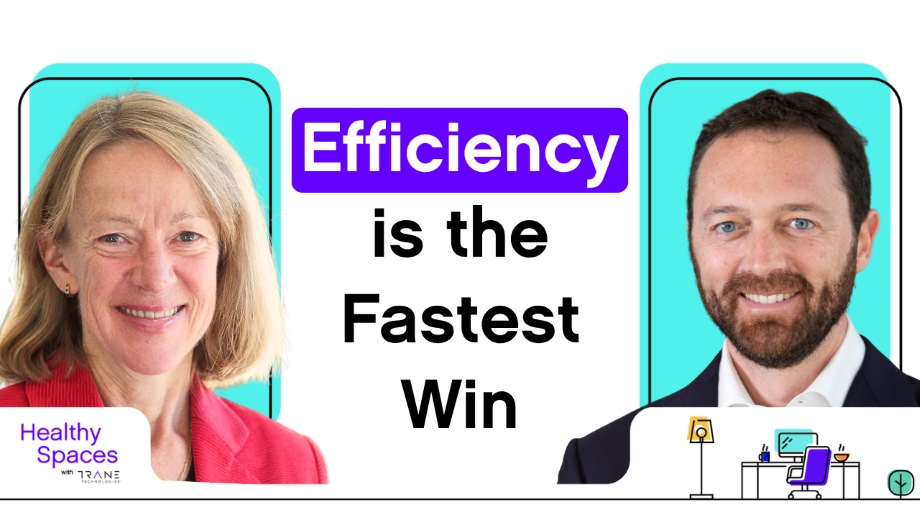
Yes. And it's this idea of enhanced efficiency that really stuck with me. Efficiency is not just about consuming less resources and consuming less energy, it's also about extracting more value from the energy already in the system, whether that means repurposing and harvesting, whether that just means reducing our losses too. And for all of that to happen, it's not just about technology. Claudio talked a lot about digitalization and controls. We talked about infrastructure, the need to continue with policy development to help us in this energy transition. And I love that we talked about people, the need to keep upskilling the workforce to be able to support and sustain the cold chain infrastructure.
Scott Tew:
We're talking about moving from just decarbonizing individual technologies to really transforming an entire system, and that's exciting.
Dominique Silva:
Yes. So a very big thank you to Dr. Liz Goodwin and Claudio Zanframundo for joining us today, and thank you for listening.
Scott Tew:
This has been Healthy Spaces with me, Scott Tew, and my co-host, Dominique Silva. We're back in two weeks, so make sure you like and subscribe so that you never miss out.
Decarbonization strategies for a smarter, cleaner cold chain
How do we keep food fresh while reducing emissions across the global cold chain? Decarbonizing refrigerated transport and storage is both a sustainability challenge and a major opportunity.
The cold chain moves food through farms, warehouses, ships, trucks, stores and homes, often over days or weeks. Because it depends heavily on diesel-powered refrigeration, it is a critical focus area for effective decarbonization strategies. At the same time, growing demand for fresh food makes it even more urgent to find scalable, lower-emission ways to protect products in transport.
Dr. Liz Goodwin, Director of Food Loss and Waste at the World Resources Institute, highlights the scale of the issue: as much as 40% of the world’s food is lost or wasted. She challenges the idea that expanding refrigeration alone is enough to solve the problem. Cold chain growth is only effective when it is supported by market demand, operational expertise and the broader systems needed to sustain it.
Claudio Zanframundo, President of Thermo King EMEA & APAC, shares how digital solutions are helping transform the cold chain. With digital tracking and AI, operators can better monitor conditions, reduce inefficiencies and help protect valuable cargo in real time.
Just as important, the conversation goes beyond technology alone. Meeting decarbonization goals will also require strong service networks, enabling infrastructure, supportive regulation and skilled people who know how to run these systems effectively. That is where digital solutions and operational readiness come together to create long-term impact.
Together, they make the case that the biggest gains are in what the system already holds: the food it loses and the energy it wastes. Recovering those, with the right regulation and the people to run the network, is how the cold chain grows and gets cleaner at the same time.
Key moments
- 01:07: How large is the food waste problem?
- 05:01: Why households are a major source of food waste
- 10:13: Building a sustainable food system takes everyone
- 14:00: The complexity of the food chain
- 18:50: How digital tracking reduces waste
- 20:53: Where AI fits into the cold chain
Featured in this Episode:
Hosts:
-
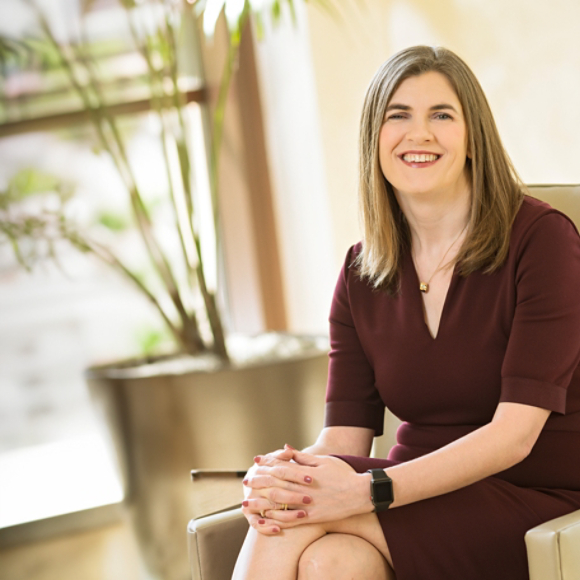
Marketing Leader EMEA, Trane Technologies
-
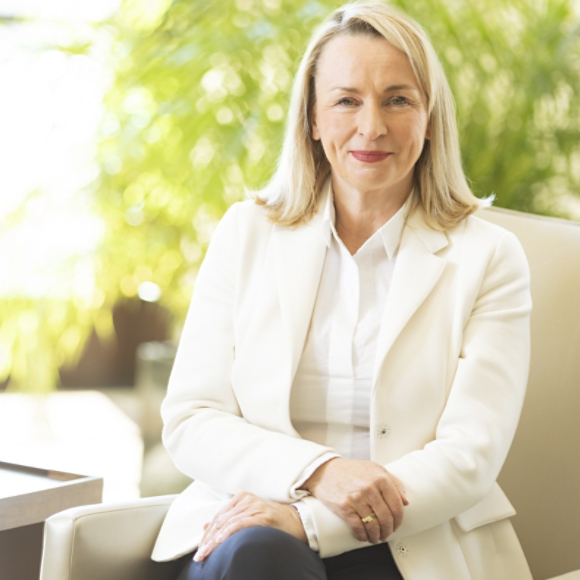
Global Head and VP, Sustainability Strategy, Trane Technologies

Guests:
-
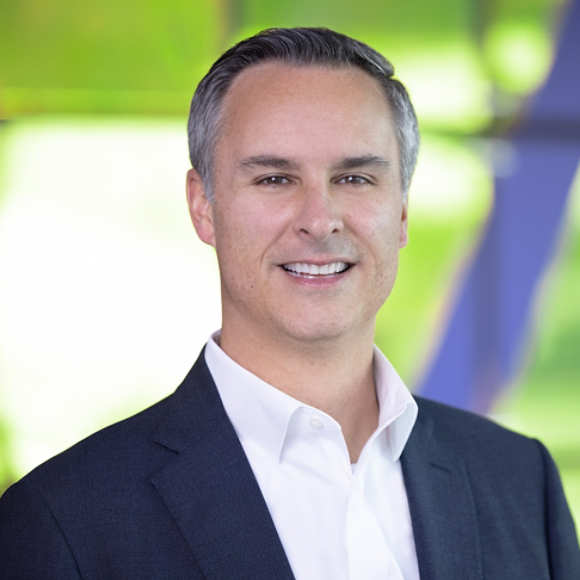
President Thermo King, EMEA & APAC
-
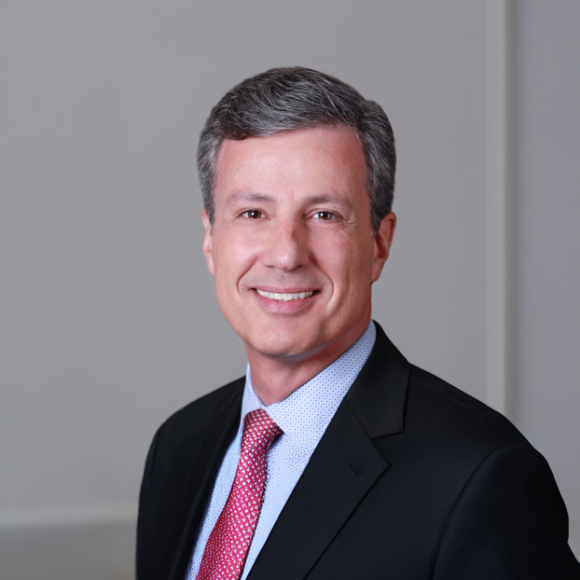
Director of Food Loss and Waste, World Resources Institute

About Healthy Spaces
Healthy Spaces, a podcast by Trane Technologies, brings together engineers, innovators and industry leaders for bold conversations at the frontier of sustainable technology.
In Season 6, we zero in on the moment when innovation becomes infrastructure - when breakthroughs move beyond the lab and start transforming industries.
From pioneering AI research and next-generation data center cooling to climate-resilient cities and pathways to decarbonization, each episode explores the innovations at the cutting-edge of sustainable technology.
Designed for leaders, builders and anyone with a stake in the future of sustainable technology, the series offers a front-row seat to the ideas and innovations shaping what comes next.
The challenges are real. The solutions are being built now.




Topic Tags