English
November 18, 2026
The Demand-Side Fix: Powering the Future We're Building
Season 6 Episode 6: How rising electricity demand is putting new pressure on aging grid infrastructure, and why energy resilience, building efficiency and AI-enabled demand management are becoming essential to a more reliable, secure and sustainable energy future.
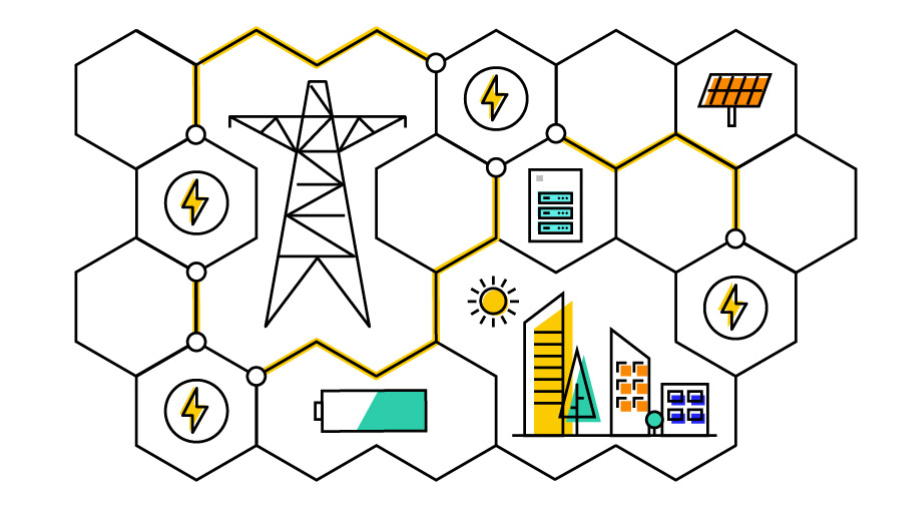
Permitting and physical planning, execution and bringing things online can take years. But what can be executed much faster are efficiency plans, because the energy you don't have to build is the cheapest. If you put in software efficiency plays and figure out how to improve demand management, you can make a more secure grid with the power already in production.
That demand part is an extremely important part of the solution. And we have a role to play; we can have an impact there. The reason is very simple: commercial buildings consume 30% of the energy and 26% of energy-related emissions... we know 30% of energy in buildings is wasted. We deeply understand that and are taking action to contribute to solving that equation.
Scott, I have a question for you.
Okay.
How often do you use AI?
How often? I mean, more than ever before. Certainly more than a year ago. Certainly 10 times more than two years ago. So a lot is the answer.
Right.
Me too. And it's not even always on purpose. I mean, you can't even do a search on the internet without an AI summary popping up. The phones on our cameras are using AI.
I mean, we're all using AI so much more than ever before. And with the use of AI comes a new source of energy use that is increasing the demand globally.
Yep, and for quite a while on this podcast, we've also been talking about electrification of heat, of transport, and that's also putting more constraints on our grid. So there's no question that our grid is currently facing an unprecedented level of demand, right?
Absolutely, I mean, in fact, the global demand for electricity, according to the IEA, is projected to increase by about 4% through 2027. I mean, that seems like a small percentage, but it's actually more than the total energy consumed by the entire country of Japan in a year.
Wow, I'm glad you offered that perspective because 4% did sound like a small number.
So here comes the big question. How is this surge in demand actually affecting our energy systems all around the world? I mean, is the grid actually prepared to deal with such a large and fast-growing increase?
Well, I mean, another question would be if it's not, what needs to be done to get it ready?
All right. Big questions and big answers. So let's speak to Dr. Sarah Kapnick, she's the Global Head of Climate Advisory at J.P. Morgan, to find out more about what's happening to energy systems around the world.
I'm Dominique Silva.
And I'm Scott Tew, and this is "Healthy Spaces," conversations at the frontier of sustainable technology.
If we look at it globally, electrification is increasing demand and expected to in the coming years by 25%. And addition of AI and data centers is 9%. So on the global scale, electrification is really driving this and driving a need for more energy. If you look at individual countries and particularly really developed nations where they are building out AI, that number increases. But suffice it to say, all around the world, the grid needs investment. I've put this out in my "Climate Intuition" series in a discussion about what is needed for grid resilience. Globally, investment is required of 5.8 trillion over the next 10 years.
Wow.
If you look at the United States, it's a trillion. If you look across UK and Europe, it's another trillion. If you look at China, it's over 1.5 trillion. So every region needs investment in the grid, and it's for two reasons. So the developed nations that have had grids that have been built out over decades, the grids on average are 50 to 60 years old. So you're not just adding to the grid, you also need investment of just replacing what is old and breaking. And then in places that are building out expansively, like in China, they have a grid that's relatively modern, but they need to add significantly more. So everywhere around the world, we're seeing this demand increase, this forecast of a need for investment that is on a multi-trillion dollar scale, and it's hardware, it's software, and it's all the modernization that needs to happen around that to bring it all together.
There's something very interesting you brought up, which is not just modernization, but it's the maintenance. And it made me think, for those of you who don't know, I'm actually South African, you know, very proud. And, you know, South Africa has always had huge issues with energy systems. And of course, an increase in demand was a big reason for that. But what they actually found was that our power generation plants were so not well maintained that they had started to lose efficiency and just were producing way less energy than what they were actually designed to do, right? So it wasn't just an increase. So it's really complex. It's not just build more, right?
Well, if you think back to the engineering as these things were being built, we were rapidly creating the materials and the capabilities to build up the grid at the time when it was happening in the 1950s, but we didn't have multiple decades to test them before we implemented them. And so that design was made and it was built out rapidly because everyone was trying to deliver energy and energy system capabilities, but we couldn't actually go through a full engineering cycle to understand how long it would last. And so now what we're seeing in many of the places that have the aging infrastructure is they need to be upgraded. And so this gives us the opportunity now in the face of needs for resilience to think through how do we improve it going forward?
Yeah, that's a great point. But I love how you frame this as an opportunity for us to upgrade some of that infrastructure to become more efficient, I think is always the first thing that we're trying to resolve, right? How do we make more with less, but ultimately to become more safe, if I can use that word, or resilient. So Sarah, you've written a lot on this topic, but tied as well to national security concerns. So can you talk me through that a little bit of what is the connection between national security and energy resilience?
So energy resilience is now tied to national security because of its importance and growing importance around availability of AI and economic development and industrialization. So if you can't actually scale the power needs that you have on the AI side, you then have lack of AI, which we think will lead to innovation. It's being incorporated to tools and understanding of what the future is and forecasting. And then also on the industrial, like, how you actually produce things and have a continued economic activity, if you can expand the grid, you can't also then expand what you need in terms of production. So it can limit growth through both those ways. Next, you also have increasing vulnerabilities because of the modernization requirements and the software requirements. There are concerns that cybersecurity is growing. The grid has always been a critical piece of infrastructure that is exposed, but that link to the economic security and growth will just further make that an issue. Next, it's broadly safety. If you don't have access to energy during a major heat wave, it becomes a health concern. And so also the security of the grid in a warming climate becomes even more important for making sure that people are safe. And so all those things come together in making the grid increasingly a portion of national security because of its economics, its vulnerability to the population, as well as to health and security.
Right, so there's a fundamental need to keep economies running, and energy and access to energy is a fundamental part of that. I think bottom line, we can say there's a lot of upgrade and modernization that we need to invest into the grid to be able to keep up with supply and build more resilience. Now, these things do not sound very cheap.
So this is the uncomfortable discussion I'd like to have with you, which is really around how are governments able to even fund this kind of thing? And is this a risk in itself?
Well, it's not just governments that will fund this. So you have the regulated public utilities, but then you also have the privately held ones. And so the funding will also be coming from the private sector. And we're actually already seeing this transition in funding into grid infrastructure and technology and modernization solutions is actually already happening in the venture capital and the private equity space. The funding will come from a mixture of sources and investors see the opportunity in this, but the issues will be how does that take place over the coming years? Do you actually build at the speed that you need to build? Will the supply chains be there to ensure that you have what you need in terms of the materials, the parts, and how do you deploy quickly? And I'm excited about the grid modernization software and tools because a lot of that can be implemented more quickly than the time it takes to build. And so that enables you to improve efficiency and use of the grid today as it takes longer to build things for tomorrow, but then also upgrades you to the modernization requirements as the grid becomes more complex and larger over time.
You know, touched on something I also wanted to ask you about, right? I'm sitting on the technology provider side. We've talked about electrification. We've talked about acceleration of AI, which is driving more need for data sensor capacity. And these are all things that are happening today at incredible pace, and we can't necessarily wait for the grid infrastructure to catch up. So what can we be doing now to cope with the sudden increase in demand?
So permitting, and actually just physical things, planning for it, doing the permitting, doing the execution, knitting it all together, bringing it online, that can take years. But what can be executed much faster are efficiency plans because the energy you don't have to build is the cheapest. It's actually you put in those software efficiency plays, you figure out how to improve demand management, and you can actually then make a more secure grid with the power that you already have in production. And that can take months to, you know, a year or two of finalizing the software, implementing it, doing the testing, ensuring that it's stable, but it takes significantly less time than it takes to actually build a physical thing. And so if you are trying to buy time to build the physical things, you need to have those software modernization upgrades taking place today.
Excellent, well, we've talked through some specific examples of what we can already be doing today, but as we know, things change very rapidly. So Sarah, I'd love to take us into the future, and we don't really know what it looks like.
What are things that we should be doing today to be able to respond to those risks that we might not even know what they are?
Yeah, I think of this in terms of future threats as one way for scenario planning. I think about cybersecurity also with AI unlocks new ways for cyber to be able to have exposures that are used and vulnerabilities need to be addressed there. On climate, physics gives us some insight into the future. So there's a lot more is known and there's scenario planning around thinking about physical vulnerabilities and how to build a grid for that. And then there's some scenario planning around shifts from demand that may occur and actually really just accounting for potentials of volatility. It also needs to be done where there's optimization where you're bringing the scenarios together because often you can find that there might be synergy in how you're treating these problems. More broadly, the advice that I give is number one, you need to be thinking about what are your financial exposures, you know? Because for a company, for a public utility, if you can't continue to deliver your product and if you have financial losses, you will have problems. And so ultimately that needs to be your guide of what are the financial impacts of these things and how are you scenario planning for that? And then for what actions you take, number two, it's what are those return on investment of different actions in the short term and long term and making sure that you're investing each dollar efficiently for what you're hoping for resilience for the short and long term. And sometimes they can be in conflict, so you need to have a five-year plan and a 10-year plan on these different issues. And then the third point that I always say is you need to have a cadence of these discussions of how you're measuring and monitoring. You need to think like a scientist. You need to constantly be testing, bringing in new information, changing your hypothesis, and then executing on that.
I guess the only thing we can be certain about, Sarah, is change, right? So it's really around how do we plan for it and just be agile and continuously adapt?
Sarah paints a pretty clear picture of the need for grid resilience with the current imbalance between energy supply and demand. But it's not just about keeping up with supply. This is also a big topic tied to national security, energy security, and it's not just about building the grid. This grid needs to be maintained. It needs to continuously be modernized. So a huge amount of investment and planning is going to be required, and this is all going to be happening under time pressure because demand isn't going to slow down. But with all this, I just loved her positive take on the future of the grid. It's really about how we look at this as an opportunity to develop grid modernization software and tools that can not only be implemented quickly, but also at lower costs.
Yeah, I mean, one opportunity that Sarah mentioned, Dominique, that really stood out to me was energy efficiency planning. She said, "The energy that you don't have to build is the cheapest," which of course is right. I mean, software can identify inefficiencies. We can use power that we already have to make the grid more secure. It made me think, we always talk about increasing supply, like everybody's like, "We have to build more. We have to build faster." But maybe we should be approaching this from the opposite direction. Can we shift our focus from increasing supply to managing the demand that we have?
And that, Scott, was exactly the topic of my conversation with Karin De Bondt. She's the Senior Vice President and Chief Strategy Officer at Trane Technologies.
That demand part is an extremely important part of the solution so that they optimize supply, but also optimizing demand is a huge part of the solution. And we have a role to play. I mean, we can have impact there. And the reason is it's very simple because, you know, in commercial buildings, they consume 30% of the energy, 26% of the energy-related emissions. So that's one. But two is, from our experience and doing a lot of audits and a lot of data we have, we know 30% is wasted of that energy in buildings. So we deeply understand that and hence are taking a lot of actions and investing to really contribute on solving that equation.
That's massive, Karin. I never thought of it from that perspective, right? So we're not just talking about, "Oh, we need to consume less." It's 30% of energy being wasted after the meter, right? So it's crazy. And I'd love to dig down, deep down a little bit in this to figure out what are the different opportunities that you're seeing as to how we can close this gap a little bit.
Yeah, let's start maybe with the most natural one, if we can say that, is that our equipment, our systems we offer to our customers. I mean, we have deep, deep knowledge in thermal management. That's our core. That's where we grew up. That's where, you know, we really make the difference for our customers. What we have been working on and continue to work on investing is energy-efficient systems. And this has various components. So one is the units in the system or the components in the systems we try to really optimize. But second is also we want to optimize the system. And there's a lot of work by our engineers across the world really, testing, auditing that we have those efficient setups. On top of that, we have deep understanding of our customers and application knowledge, which we use in setting up these really optimal systems.
I love it. So it's all about increasing efficiency. And, you know, I work in marketing, right? And I think in my 10 years of experience, there's never been a time we've launched a product which was not more efficient. So indeed, you know, our engineers are continuously finding ways to keep gaining those incremental gains, looking at refrigerant choices, looking at component design, and that's all important. You're sort of bringing this up to even more broader level, which is the system optimization. So can you tell us a little bit more about that? And do you have maybe any stories or examples that you can share of how this is already being done?
There are two other components, I would say, is one is when you design the system, of course, it has to be at the right size. I mean, if you over spec or have a too big a system for what the need is, of course you consume too much energy. Because we have so much data, we have building management systems, many, many years, a gold mine of data, we can really rightsize our system. And that's an important component of our success, also why customers love working with us. And as I said, we deeply understand them on how to design that, and it's based on a lot of data we have from history.
That's a really interesting observation, right? So you can even have the most efficient technology installed in your building, but if you have oversized it because you haven't used data and simulation tools to actually understand what you need, then all that efficiency is thrown away, right? And so again, you have a lot of waste. So that's interesting. So we've talked about there's still a lot of innovation being done at a unit level, at equipment level, technology level to get more efficiency. We see designers and engineers becoming smarter at understanding what their building needs are, not just today, but even for the future. Here's the challenge to you, Karin, that I'm gonna poise. These things might change, right? You build a building and it could be used in a completely different way in 50 years from now. So how do you think clients are dealing with that?
Yeah, I think the other bucket we were talking about is really internal data. So what's in the building and all that. I think what's important and the step forward we have taken is also to have external data. And that is I'm talking about weather forecasts, amongst one of them. You can also have prices of electricity, things we're working on now to have other sources of energy. So there's an external factor now coming in, and that's where our acquisition of BrainBox was really key. This is, you know, our AI building management tool where they are using external data and algorithms to really optimize the building. So if the weather changes and then we adjust the system in the buildings. So that's like a key milestone. And so really offering BrainBox across our company, across our customers will be key for them to achieve these savings with our systems.
Well, that is really interesting, Karin 'cause, you know, we have spent quite some time on this podcast talking about the increase of demand for AI and how AI is creating this demand for energy. And here you are giving me an example of how we're actually using AI to reduce energy consumption and demand. Is this theoretical or do you already seeing this being implemented today?
Absolutely, we have some great success stories and many of them, but, you know, maybe to point out one, is your customer in the US, Dollar Tree, where we, you know, installed BrainBox over 600 locations and allowing here our customer then to achieve like a million dollars of savings.
Wow.
And that's just one of them and we have many more. And it's just one of the keys for solving this equation is like AI will help us to optimize our energy consumption.
And based on this example you've given me, it also sounds really scalable. And this is what I love about it, right? The more you install, the more you learn, the more you improve over time. But you started this conversation by sharing that around 30% of the energy that buildings are consuming are actually being wasted before they turn into something useful, which in this context could be heating, cooling, ventilation. So I need to pick your brain on this, Karin. We hear a lot about this term of waste heat. And maybe for our listeners that don't really understand what this is, the way I like to explain it to my friends and my mother is your fridge at home, right? Your fridge has the purpose of constantly cooling, right? That's what it's doing. I dare you tonight to go behind your fridge and put your hand right next to the heat exchanger. What are you going to feel? It's heat. And that's really because fundamentally, this is basic thermodynamics, the process of cooling is really just around removing heat from a space and rejecting it. I'd love to hear from your perspective where do you see this becoming actually an opportunity? How are industries thinking differently about this waste heat?
Yeah, and Dominique, as always, you're spot on. And you can think about it in industrial processes. You can think about it in buildings, the reuse, and you can think about it in an ecosystem. So definitely that's an opportunity. And we have concrete examples. You know, if it's in a hospital, some spaces need to be cooled, other need to be more heated waiting rooms, and we reuse that. So on an individual level, we are having solutions like this. I think the broader one is probably what is now, of course, in the media a lot is data centers. A lot of heat gets rejected. How can we reuse that heat? And we're doing a lot of innovation working with our customers on that. But today we also have examples, and especially in Europe, the team there in Aalsmeer, has really, you know, used the heat that is rejected from the data centers and used that in childcare or sports complexes nearby. So that's where the ecosystem is starting to work where the heat that gets rejected in one place then gets reused in others.
I guess it all starts with the mindset, right? Even this example you just shared, why are we still calling it waste heat, right? We should be calling it heat we shouldn't be wasting, right? I'm the marketing person here, right? Maybe we need to do a rebranding exercise, but I love it. It's all really about changing the perspective and we've never been as energy constrained as we are today, so now's the time to make those changes.
Yeah, and I love what you said, and I think we should rebrand it. And you are the very smart person, is it reuse of heat or we give it a flashy name? And I think the next step, and that's also what we're working on, is like the sources in a building or in a data center is like battery storage. So how can we be flexible there? We're testing already. We have some examples and, you know, heavily investing in that area. And I think that's the next horizon where we will really make a difference that we're again at the forefront. We can make a difference on the demand side. We just need to talk about it. Everywhere we go, we need to talk about the difference we're making and the impact we're having.
Karin's right. This is too big of an opportunity for us to miss, right? If 30% of energy after the meter is being wasted, that's a huge amount which could actually help us offset demand. So we have to shift our focus from increasing supply to optimizing demand. And this shift can start with small things. I mean, why do we even call it waste energy, Scott, right? Why not value energy? It's moving beyond thinking about chillers and heat pumps and thermal equipments to really thinking about thermal ecosystems. And what I love the most is that these things are actually much faster to implement compared to building a grid, right?
I mean, one of the most exciting takeaways from your conversation for me was just seeing how many different ways there are for us to approach optimizing energy demand.
And it's not just a hypothesis. I mean, Karin has seen these innovations in action, saving millions of dollars for customers all around the world. So profitability and sustainability can both be achievable, and that sounds like a pretty exciting prospect to me.
This has been "Healthy Spaces" with me, Scott Tew, and my co-host, Dominique Silva. We're back in two weeks with another episode, so be sure to like and subscribe so that you don't miss out.
Why energy demand management supports a more resilient grid
Electricity demand is rising fast, fueled by AI, electrification and a growing digital economy. Global demand is expected to increase nearly 4% through 2027, raising an important question: can the grid keep pace?
The answer starts with the infrastructure already around us. Much of today’s grid is decades old, which makes maintenance and modernization urgent. Dr. Sarah Kapnick, Global Head of Climate Advisory at J.P. Morgan, highlights the scale of investment ahead and the growing importance of energy resilience as both an economic and national security priority. She also points to efficiency and software as near-term opportunities that can move faster than new physical capacity.
Karin De Bondt, Senior Vice President and Chief Strategy Officer at Trane Technologies, brings the focus inside buildings, where large amounts of energy are still wasted every day. Through efficient systems, data-driven right-sizing, AI-enabled building management with BrainBox and strategies to recover and reuse waste heat, buildings can play a much larger role in easing strain on the grid.
Energy demand management offers a practical way forward. Maintaining and modernizing existing infrastructure while reducing unnecessary demand can help communities respond faster to rising energy needs. Many of the tools are already here. The opportunity now is to put them to work.
Key moments
- 00:50: The investment the grid needs
- 02:00: Why aging infrastructure is the real problem
- 07:30: The cheapest energy is the one you don’t build
- 11:20: From increasing supply to managing demand
- 12:20: The 30% of building energy we waste
- 17:00: Using AI to cut energy use
- 18:40: Real savings: the Dollar Tree example
- 22:40: Battery storage and the next horizon
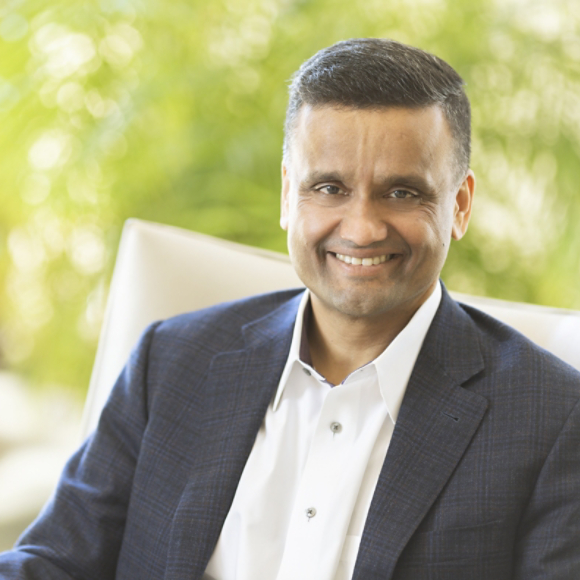
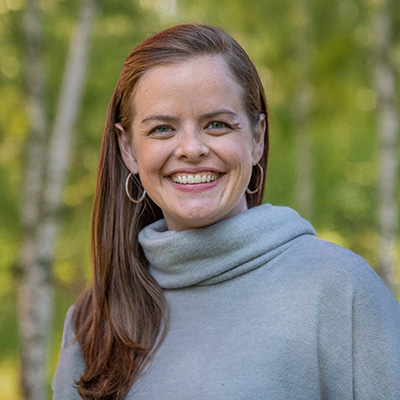
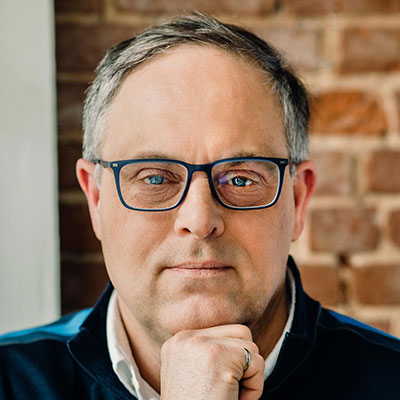
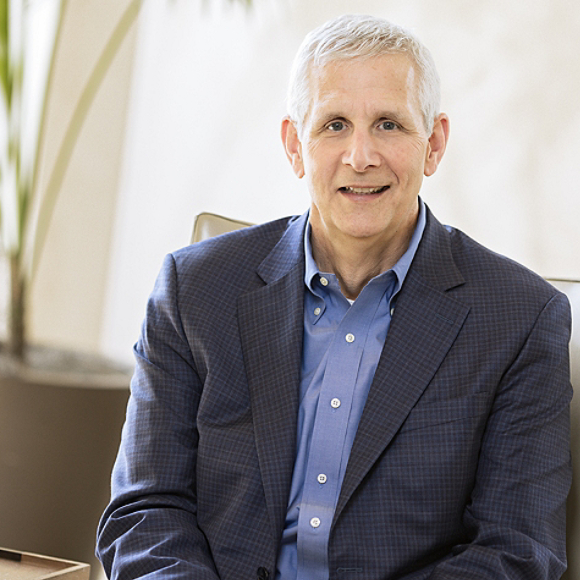
Featured in this Episode:
Hosts:
-

Marketing Leader EMEA, Trane Technologies
-
Global Head and VP, Sustainability Strategy, Trane Technologies

Guests:
-
Senior Vice President and Chief Strategy Officer, Trane Technologies
-
Global Head of Climate Advisory, J.P. Morgan

About Healthy Spaces
Healthy Spaces, a podcast by Trane Technologies, brings together engineers, innovators and industry leaders for bold conversations at the frontier of sustainable technology.
In Season 6, we zero in on the moment when innovation becomes infrastructure — when breakthroughs move beyond the lab and start transforming industries.
From pioneering AI research and next-generation data center cooling to climate-resilient cities and pathways to decarbonization, each episode explores the innovations at the cutting-edge of sustainable technology.
Designed for leaders, builders and anyone with a stake in the future of sustainable technology, the series offers a front-row seat to the ideas and innovations shaping what comes next.
The challenges are real. The solutions are being built now.




Topic Tags